 WhatsApp Us (24/7)
 +91 926 888 0303 (24/7)


Abstract: The vaginal microbiota is a complex and dynamic ecosystem, predominantly composed of Lactobacillus species, which play a vital role in maintaining vaginal health and influencing broader reproductive and systemic health outcomes. This review discusses the protective roles of the microbiota in infection prevention, pregnancy, and sexual health, and explores emerging insights and therapeutic applications, including probiotics and vaginal microbiota transplants. As research continues to expand, the vaginal microbiota is proving to be central to the development of personalised medicine in women’s health.
Key words: Vaginal Microbiota, Lactobacillus, Bacterial Vaginosis, Gardnerella vaginalis, Atopobium vaginae, Prevotella Species, Vaginal Dysbiosis.
Introduction
The vaginal microbiota is a complex ecosystem of microorganisms, including bacteria and fungi, that resides inside the vagina.1 A healthy vaginal microbiota is typically dominated by Lactobacillus species, which produce various antimicrobial compounds such as lactic acid and hydrogen peroxide. These organisms form a homeostatic and mutualistic relationship with the human host,2,3 providing protection against pathogenic microbes in exchange for nutrients and shelter. This harmonious interaction supports a healthy vaginal environment, which is essential for reproductive and systemic health.4 However, the composition of vaginal microbiota is not uniform across all women.2 The communities dominated by Lactobacillus are a common feature of many, yet there are those with mixed microbiota that show no symptoms.2 While Lactobacillus-dominated communities are common, some women have a more diverse or mixed microbiota without exhibiting any symptoms. This variation challenges the definition of what constitutes a ‘normal’ vaginal microbiota and highlights the need for personalised therapeutic approaches.3,4
Importance of Maintaining Vaginal Health
The female’s vagina is a closely balanced and flexible ecosystem that relies on her interactions with existing living microbes, and can be disrupted by various intrinsic or extrinsic factors.5 Nowadays, women commonly choose to use intimate hygiene products to cleanse the vulvovaginal area as part of their daily routine.6 A national cross-sectional survey in Canada found that over 95% of respondents reported using at least one product in or around the vaginal area, including vaginal/genital moisturisers, anti-itch creams, feminine wipes, washes, suppositories, sprays, powders, and pubic hair removal practices.7 Vagina is a self-cleaning organ.8 The vaginal area and vulva are resilient and do not require special care; the key to maintain vaginal health is a perfect balance of pH and vaginal microbiome.9
Microbes and Their Role in Vaginal Health
- Lactobacillus (most beneficial resident): The lactobacillus species are gram-positive anaerobic microorganisms which naturally colonise the vaginal mucosal surface. They are essential in promoting vaginal health by inhibiting the overgrowth of potentially harmful microorganisms. This is mainly done in two ways, they stick with the epithelial cells that form the vaginal wall and they also secrete antimicrobial substances. Glycoproteins, such as fibronectin, on the surface of these cells facilitate the attachment of lactobacilli to the vaginal epithelium, and the acidic nature of the vagina contributes to this attachment. Although further studies are required, it is believed that other components, such as host proteins, carbohydrates, glycoproteins, lipoteichoic acids, and certain metal ions, also play facilitating roles in this process. Lactic acid is one of the most significant protective substances secreted by lactobacillus and it assists in maintaining the vaginal acid of approximately 3.5 pH to 4.5 pH, which therefore, has the effect on inhibiting the growth of pathogenic organisms. In the vagina, the two primary sources of lactic acid are the vaginal epithelium (contributing an estimated 10%–20%) and the microbiota, mainly lactobacillus species (estimated to provide 80%–85%). These bacteria metabolise glycogen to produce lactic acid: lactobacilli produce both the L and D isomers, but the ratio of the two forms depends on these species. Oestrogen controls the synthesis of glycogen in vaginal epithelial cells, and when these cells are shed through a process known as desquamation, the glycogen is degraded into glucose, which is then converted into pyruvate and subsequently into lactic acid. Moreover, glycogen stores in the vaginal lumen are converted into smaller sugars by enzymes such as alpha-amylases and lactatedehydrogenase then utilises them to produce lactic acid. This sustained production of acid is required to uphold the acidic vaginal pH and favours the overall microbial equilibrium. Besides lactic acid, hydrogen peroxide (H2O2) is produced by certain lactobacillus strains and is capable of inhibiting opportunistic pathogens, such as sexually transmitted pathogens. Bacteriocins are small polypeptide bactericidal compounds that have demonstrated activity under laboratory conditions. These bacteriocins constitute another type of protective substance produced by lactobacillus, and their effects have primarily been studied in vitro. Collectively, these mechanisms highlight the complex role of lactobacillus in preserving vaginal homeostasis, providing defence against infection, and positively influencing overall reproductive health.10
- Gardnerella vaginalis (G. vaginalis: problematic opportunist): G. vaginalis is a facultative anaerobic, Gram-variable rod-shaped bacterium that, together with several other predominantly anaerobic bacteria, is implicated in bacterial vaginosis (BV) in some women. This condition results from disruption of the normal vaginal microflora. The acidic environment of the vagina is maintained by the resident facultative anaerobic lactobacillus population. When this normal flora is displaced by anaerobic bacteria, treatment with prescription antibiotics targeting anaerobes may be required to restore the vaginal ecosystem’s homeostasis. G. vaginalis is not the sole cause of bacterial vaginosis but rather functions as a sentinel organism indicative of an altered microbial community marked by the proliferation of multiple bacterial strains. While G. vaginalis is commonly isolated from genital specimens, it can also be detected in blood, urine, and pharyngeal samples. Despite being a predominant species in bacterial vaginosis, G. vaginalis may also be present in asymptomatic women without any signs of infection.11
- Atopobium vaginae (secondary invader in BV): Atopobium vaginae is a relatively recent discovery, commonly found in women with BV. The name Atopobium, meaning ‘strange living thing’ in Greek, was established in 1992 to reclassify certain bacteria formerly included in lactobacillus and streptococcus. It belongs to the corio-bacteriaceae family and includes species such as A. minutum, A. rimae, and A. parvulum. A. vaginae was first isolated in 1999 from a healthy woman in Sweden. These bacteria are anaerobic, non-motile, gram-positive, and range from elliptical to rod-shaped. They mainly produce lactic acid, along with acetic and formic acids. A. vaginae is strongly linked with BV symptoms, including abnormal discharge, raised vaginal pH, and clue cells. In high quantities, especially alongside Gardnerella vaginalis, it has been associated with miscarriage and preterm birth. Studies indicate A. vaginae can stimulate the immune system via tolllike receptor 2 (TLR2), promoting proinflammatory mediators such as interleukin-6 (IL-6), interleukin-8 (IL-8), and antimicrobial peptides. This suggests it plays a role in BV development. Due to its strong association with BV, diagnostic methods detecting both A. vaginae and G. vaginalis are being considered to enhance diagnostic accuracy.12
- Prevotella species (anaerobic disruptors): Prevotella species are anaerobic microbes that usually participate in BV. The glucose, which may be derived by host enzyme degradation of glycogen, is fermented to produce short-chain fatty acids (SCFAs) including acetic, propanoic, and butyric acid. Although these acids have a minor effect in lowering vaginal pH, they are considerably less potent than lactic acid, and without the predominance of lactobacilli, they are unable to maintain an acidic environment. This helps raise the pH characteristic of BV. Under glucose-depleted conditions, particularly in lowoestrogen conditions, prevotella reliance is on readily available amino acids that are shed by the host epithelium or provided via bacterial enzyme activity.13 This leads to generation of alkaline by-products such as ammonia that increases vaginal pH and provides an excellent environment to anaerobes. Other by-product substances are putrescine and cadaverine which create the fish odour that BV has and hydrogen sulfide which is the cause of tissue irritation and bad smells. Such metabolic processes also disrupt vaginal homeostasis and inhibit the good lactobacilli. Prevotella is another bacterium that forms biofilms in most cases alongside other bacteria like G. vaginalis. Biofilms also enable bacteria to resist antibiotics and the immune system, making BV more persistent. The stabilisation of these microbial communities through the production of extracellular polysaccharides, combined with enzymes that weaken the epithelial barriers — such as sialidases and proteases — facilitates the shedding of nutrients that contribute to inflammation and promote further bacterial proliferation.14 Prevotella tends to be synergistic with other BV-associated bacteria e.g. G. vaginae and Fannyhessea vaginae. When they are combined, they enhance the synthesis of toxic substances such as ammonia, biogenic amines, hydrogen sulphide, SCFAs, which favour a toxic and alkaline milieu, thus altering the vaginal microbiome and worsening the BV symptoms.15
Putative Model for the Establishment of BV
Healthy vaginal microbiome is dominated by lactobacillus species (Figure 1). Lactobacilli enhance the vaginal secretions with lactic acid that decrease its pH and defends against invading or pathogenic bacteria or pathobionts. In healthy epithelial cells, antimicrobial peptide (e.g. secretory leukocyte protease inhibitor [SLPI]) and cytokine secretion is constitutive. Moreover, epithelial and immune cells contribute to homeostasis in production of anti-inflammatory cytokines (e.g. interleukin-1 receptor antagonist [IL-1RA]) (Figure 1A). G. vaginalis is the first step in the initiation of vaginal dysbiosis, and the enterococcal facultative anaerobe is normally introduced through sexual exposure. G. vaginalis infects the epithelial cells of the vagina, displaces lactobacilli and gives biofilm foothold. Subsequent to G. vaginalis colonisation the strict anaerobe, Prevotella bivia, is recruited into the biofilm. The metabolism of ammonia and amino acids promotes the growth of the G. vaginalis and P. bivia. Both G. vaginalis and P. bivia have the ability to produce enzymes, e.g. sialidase, that can help in mucus degradation and destruction of barriers. No active inflammation is noted; therefore, it may be assumed that these two species of bacteria can avoid host immunity via some unknown ways (Figure 1B). The biofilm has other secondary colonisers recruited e.g. A. vaginae and Sneathia spp. This point involves in shedding of the epithelial cells which are covered with the polymicrobial biofilm. They are identified in vaginal fluid wet mounts and are involved in the Amsel criteria, these are also called as clue cells. The synthesis of biogenic amines and additional metabolites generated by BV-related microbes is supposed to cause high vaginal pH and BV symptoms that include foul odour. Pro-inflammatory cytokines and chemokines are created by epithelial cells and recruited immune cells, and these molecules might cause genital inflammation (Figure 1C).16
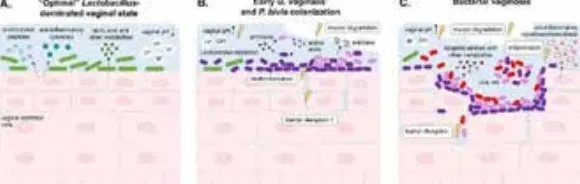
Abbreviations: IL: Interleukin; TNF: Tumour Necrosis Factor. A. Optimal Lactobacillus-dominated vaginal state, B. Early G. vaginalis and P. bivia colonisation C. Bacterial vaginosis.
Pregnancy and Reproductive Outcomes
A healthy vaginal microbiome is essential in the maintenance of pregnancy. These imbalances correlate with preterm labour risks, miscarriage, and other complications. Microbiota dominated by lactobacillus influence immune activity and enhance mucosal barriers, which are particularly important to a healthy gestational environment. Recent research indicated that microbiota profiling could help diagnose painless and pregnancyrelated complications, stating that early dysbiosis detection could help predict and prevent pregnancy complications, thus it can be used in prenatal care.17
Preterm birth: Preterm birth is the biggest cause of mortality in children below five years old all over the world and those who survive are often afflicted throughout their lifetime due to motor, sensory, cognitive, and respiratory conditions. The spontaneous prelabour membrane rupture before 37 weeks of gestation and prior to the onset of labour known as preterm prelabour rupture of membranes (PPROM) is associated with up to 30% of preterm births. Infection is the core mechanism of pathogenesis of membrane rupture as well as morbidity of the mother and newborns thereafter. The ability of pathogenic bacteria to colonise the vagina may initiate an inflammatory process that compromises the strength of foetal membranes causing rupture. After rupture, 80% of women give birth in 9 days, thereby exposing the foetus to an ascending infection and complications like chorioamnionitis and funisitis.18
During pregnancy, the vaginal microbiota is typically dominated by a stable, low-diversity community of lactobacillus species, which help to prevent infections. However, domination by L. iners or an absence of lactobacillus, combined with polymicrobial colonisation, are recognised risk factors for PPROM, preterm birth, and histological chorioamnionitis. Despite this, there is a paucity of literature examining the vaginal microbiota specifically in PPROM cases, and much of the available data are limited to small cohorts of women with previously ruptured membranes. The management of PPROM involves balancing the extension of pregnancy with the risk of infection. The ORACLE I trial has informed current standard practice, which includes administration of corticosteroids and a 10-day course of erythromycin as prophylaxis. Nevertheless, the long-term benefits of erythromycin are contentious; critics argue that it may not provide adequate coverage of all pathogens and that its use is associated with increased antibiotic resistance and adverse effects such as cerebral palsy, epilepsy, asthma, and obesity.19
Miscarriage: Miscarriage is a common issue in obstetrics, complicating about 25% of pregnancies worldwide and leading to an estimated average of 44 pregnancy losses per minute.20 Miscarriages can be divided into two categories based on the time point of occurrence: early miscarriages, happening before 12 weeks gestation, and late miscarriages, happening between 12 weeks and 22 weeks of gestation. Also, recurrent miscarriage, defined as three or more consecutive miscarriages, constitutes another variation of the condition.21 The relationship between the vaginal microbial landscape and miscarriage was the focus of many studies. First, women who have a miscarriage tend to develop a vaginal microbiome with greater diversity and richness relative to those with successful current pregnancies. This heterogeneity may be attributed to variations in the abundance rates of Bacteroides plebeius, B. breve, G. vaginalis, M. girerdii, L. iners, Gardnerella, and Prevotella, respectively. Furthermore, a moderately large prospective analysis noted that first and second trimester miscarriage are related to Lactobacillus type decline and high bacterial mix precedes miscarriage diagnosis.22
Gestational diabetes mellitus (GDM): GDM poses a significant challenge not only to the health of the pregnant woman but also to the healthcare system, with an estimated prevalence of 5%–20%. Part of the pathophysiology of GDM involves changes in the hormonal and metabolic profile during pregnancy, which lead to reduced insulin sensitivity and may occasionally result in the development of glucose intolerance and GDM.23 During pregnancy, the vaginal microbiome undergoes significant changes. In cases of GDM, alterations in the microbial composition have been observed, including increased bacterial diversity and a higher presence of certain genera. Additionally, women with GDM tend to exhibit a more diverse fungal community, with increased richness and evenness compared to typical pregnancy. However, findings on these associations remain inconsistent, with some evidence suggesting no significant differences in the vaginal microbiome between women with GDM and those without.24
Preterm premature rupture of membranes (PPROM): The prevalence of PPROM varies globally from 1%–4% and its association with PTB has been well established, contributing to virtually 30%–40% of premature births. One study attempted to provide insight into the relationship between the characteristics of the vaginal microbiome and PPROM. The bacterial composition in the context of alpha diversity analysis differed significantly in richness, evenness, and diversity between the two groups. Also, increased relative abundance of L. iners, G. vaginalis, P. bivia, Ochrobactrum sp., Prevotella timonensis, and Ureaplasma parvum, and decreased relative abundance of L. gasseri were correlated with PPROM.25
Preeclampsia: Vaginal dysbiosis may contribute to abnormal placental development. Pathogenic bacteria from the vaginal tract can ascend to the upper reproductive system, causing inflammation at the maternal-foetal interface. A study published showed that 12.7% of placental samples from women with preeclampsia contained bacteria such as prevotella and sneathia, while none were detected in the control group.26
Ectopic pregnancy: In ectopic pregnancy, there is an association of the disease with chronic inflammation of the fallopian tubes due to dysbiosis common pathogens. This has the capacity of ruining cilia and tubal structure putting more risk of implantation, outside uterus. A metaanalysis revealed that women with bacterial vaginosis were exposed to an additional risk of ectopic pregnancy by 54% and colonisation of the cervix with pathogens increased this risk by 16%.
Conclusion
The vaginal microbiota functions both physically and centrally in determining systemic as well as reproductive health in a woman by preventing infections, regulating immunology, and retaining pregnancy as well. The beneficial microbiota is enriched by lactobacillus species and induces a protective low-pH environment by the production of lactic acid, hydrogen peroxide and bacteriocins. These mechanisms of antimicrobials maintain the vaginal homeostasis and prevent the colonisation as well as the growth of pathogenic organisms. Any imbalance in this balance, also known as vaginal dysbiosis, may be quite serious, at least when a woman is pregnant.
Dysbiosis is strongly associated with the negative development during pregnancy, such as preterm birth, PPROM, miscarriage, preeclampsia, and ectopic pregnancy. For example, overgrowth of G. vaginalis, A. vaginae, Prevotella and Sneathia has been shown to impair the mucosal barrier, trigger pro-inflammatory responses, and compromise the integrity of reproductive tissues. Such alterations enable the development of ascending infections, weaken foetal membranes, and make it possible to disrupt placental formation, which is linked to such complications as premature labour or a miscarriage. Particularly, microbial colonisation in the placenta of women affected by pre-eclampsia was observed in 12.7% of cases, compared with zero in the controls, and bacterial vaginosis increased the susceptibility to ectopic pregnancy by up to 54%.
The knowledge of the composition and dynamics of vaginal microbiota contributes to new possibilities of clinical interventions. The prevention of complications and the enhanced outcomes of pregnancy might be prevented by observing dysbiosis at an early stage in terms of microbial profiling and intervening promptly with specialised therapeutic measures, including probiotics or vaginal microbiota transplantation. Finally, the addition of microbiome monitoring to prenatal care can open a new frontier in the field of individualised medicine when it comes to women's health and would offer a preventative model of reproductive health management and the elimination of pregnancy-related morbidity and mortality.
Financial support and sponsorship - Nil
Conflicts of interest: - There are no conflicts of interest
Sudhanshu Shukla. Vaginal Microbiota: A Critical Component of Reproductive Health and Pregnancy
Outcomes. MMJ. 2025, September. Vol 2 (3).
References
- Thomas-White K. Vaginal microbiome: What it is and how to improve it. Evvy.com. Evvy; 2021. Available at: https://www.evvy.com/blog/vaginal-microbiome. Accessed on: 8th July 2025.
- Chen X, Lu Y, Chen T, et al. The female vaginal microbiome in health and bacterial vaginosis. Front Cell Infect Microbiol. 2021;11:631972.
- Holdcroft AM, Ireland DJ, Payne MS. The vaginal microbiome in health and disease—what role do common intimate hygiene practices play? Microorganisms. 2023;11(2):298.
- Farage MA, Miller KW, Sobel JD. Dynamics of the vaginal ecosystem-hormonal influences. Infect Dis Res Treat. 2010;3:1–15.
- Chen Y, Bruning E, Rubino J, et al. Role of female intimate hygiene in vulvovaginal health: Global hygiene practices and product usage. Womens Health (Lond Engl). 2017;13(3):58–67.
- Crann SE, Cunningham S, Albert A, et al. Vaginal health and hygiene practices and product use in Canada: a national cross-sectional survey. BMC Womens Health [Internet]. 2018;18(1):52.
- The care and keeping of your vagina. Ohsu.edu. Available at: https://www.ohsu.edu/womens-health/care-and-keeping-your-vagina. Accessed on: 8th July, 2025.
- Cornell. Available at: https://health.cornell.edu/sites/health/files/pdf-library/Maintaining-Vaginal-Health.pdf. Accessed on: 8th July, 2025.
- Barrientos-Durán A, Fuentes-López A, de Salazar A, et al. Reviewing the composition of vaginal microbiota: inclusion of nutrition and probiotic factors in the maintenance of eubiosis. Nutrients. 2020;12(2):419.
- Kairys N, Carlson K, Garg M. Gardnerella Vaginalis. StatPearls Publishing. [Updated 2023 Nov 12]. Available at: https://www.ncbi.nlm.nih.gov/books/NBK459350/. Accessed on: 8th July 2025.
- Mendling W, Palmeira-de-Oliveira A, Biber S, et al. An update on the role of Atopobium vaginae in bacterial vaginosis: what to consider when choosing a treatment? A mini review. Arch Gynecol Obstet. 2019;300(1):1–6.
- Meng L, Meng M, Zhang R, et al. Microbiome-producing SCFAs are associated with preterm birth via trophoblast function modulation. mBio. 2024;15(2):e0270224.
- Könönen E, Fetita D, Gursoy UK, et al. Prevotella species as oral residents and infectious agents with potential impact on systemic conditions. J Oral Microbiol. 2022;14(1):2079814.
- Saito K, Takahashi N, Horiuchi H, et al. Effects of glucose on formation of cytotoxic end-products and proteolytic activity of Prevotella intermedia, Prevotella nigrescens and Porphyromonas gingivalis. J Periodontal Res. 2001;36(6):355–60.
- Muzny CA, Łaniewski P, Schwebke JR, et al. Host-vaginal microbiota interactions in the pathogenesis of bacterial vaginosis. Curr Opin Infect Dis. 2020;33(1):59–65.
- Holdcroft AM, Ireland DJ, Payne MS. The Vaginal Microbiome in Health and Disease-What Role Do Common Intimate Hygiene Practices Play? Microorganisms. 2023;11(2):298.
- Ohuma EO, Moller AB, Bradley E, et al. National, regional, and global estimates of preterm birth in 2020, with trends from 2010: a systematic analysis. Lancet. 2023;402(10409):1261–71.
- Gerede A, Nikolettos K, Vavoulidis E, et al. Vaginal Microbiome and Pregnancy Complications: A Review. J Clin Med. 2024;13(13):3875.
- Quenby S, Gallos ID, Dhillon-Smith RK, et al. Miscarriage matters: The epidemiological, physical, psychological, and economic costs of early pregnancy loss. Lancet. 2021;397:1658–67.
- Devall AJ, Coomarasamy A. Sporadic pregnancy loss and recurrent miscarriage. Best Pract Res Clin Obstet Gynaecol. 2020;69:30–39.
- Al-Memar M, Bobdiwala S, Fourie H, et al. The association between vaginal bacterial composition and miscarriage: A nested case-control study. BJOG Int. J. Obstet. Gynaecol. 2020;127:264–74.
- Hasain Z, Mokhtar NM, Kamaruddin NA, et al. Gut microbiota and gestational diabetes mellitus: a review of host-gut microbiota interactions and their therapeutic potential. Front. Cell Infect. Microbiol. 2020;10:188.
- Kuklina EV, Ayala C, Callaghan WM. Hypertensive disorders and severe obstetric morbidity in the United States. Obstet. Gynecol. 2009;113:1299–1306.
- Yan C, Hong F, Xin G, et al. Alterations in the vaginal microbiota of patients with preterm premature rupture of membranes. Front. Cell Infect. Microbiol. 2022;12:858732.
- Yao Y, Cai X, Chen C, et al. The role of microbiomes in pregnant women and offspring: research progress of recent years. Front. Pharmacol. 2020;11:643.
- Ferrante M, Conti GO, Pulvirenti E, et al. The vaginal microbiota and preterm birth: A systematic review. Eur J Obstet Gynecol Reprod Biol. 2025:114007.