 WhatsApp Us (24/7)
 +91 926 888 0303 (24/7)


Abstract:
Pancreaticoduodenectomy (PD) is a major procedure with high morbidity even in elective settings. Emergency pancreaticoduodenectomy (EPD) is a rare procedure, reported mostly for traumatic injury to pancreas, duodenum, or surrounding structures. It is an extremely rare procedure performed in a non-trauma setting, constituting 0.3%-3% of total PDs. EPD carries significant morbidity and mortality, thus presenting a major challenge for the surgeon and patient. In non-traumatic settings, it is further challenging for both the patient and surgeon, as these the patients are in a compromised condition due to associated conditions such as sepsis, bleeding, malignancy, etc. Very few cases have been reported in the literature where EPD has been performed in nontraumatic settings, with different methods of management and varying outcomes. We report one such case that was managed as a two-stage procedure and the patient recovered very smoothly.
Key words: Emergency Pancreaticoduodenectomy, Non-Traumatic, Staged Reconstruction.
Introduction
Pancreaticoduodenectomy (PD) is a technically complex procedure; the morbidity and mortality of the elective procedure has decreased in recent years, especially due to appropriate preoperative management, although morbidity rates remain high (30%-50%). Mortality has decreased considerably in elective settings (<5%) due to good preoperative preparation and planning.1,2 Reported morbidity and mortality for emergency pancreaticoduodenectomy (EPD) are 50%-80% and 0%-40% respectively.3-6 The lack of such preoperative preparation makes EPD even more demanding and challenging. The technical complexity of EPD is amplified by other underlying factors, such as malignancies, local infection, blood loss, coagulation disorders, and a severely altered general condition.7 In this article, we present a case and discuss the indications and outcome of EPD in non-traumatic settings.
Case Report
A 50-year-old male presented with jaundice of recent onset to Max Super Speciality Hospital, Mohali. Evaluation revealed a mass in the ampullary region on contrastenhanced computed tomography (CECT) of the abdomen (Figure 1). Side-viewing endoscopy revealed a large ulceroproliferative lesion at the ampulla (Figure 2). A biopsy was taken from the lesion. Post-procedure, the patient developed hypotension with passage of blood in the stool. Relook endoscopy revealed bleeding from the lesion. Endoscopic and interventional radiology control of bleeding were attempted but failed. The patient’s condition continued to deteriorate despite adequate blood transfusion and being on triple inotropic support.
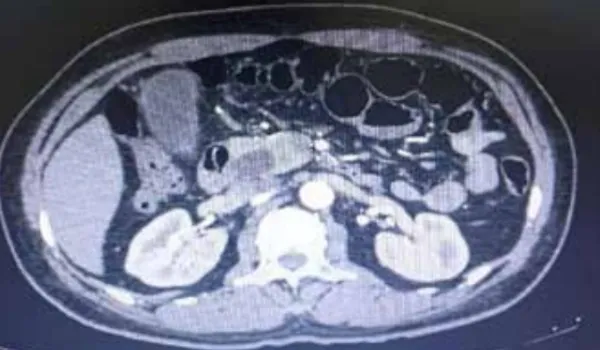
Figure 1: Contrast-enhanced computed tomography (CECT) of the abdomen showing ampullary mass.
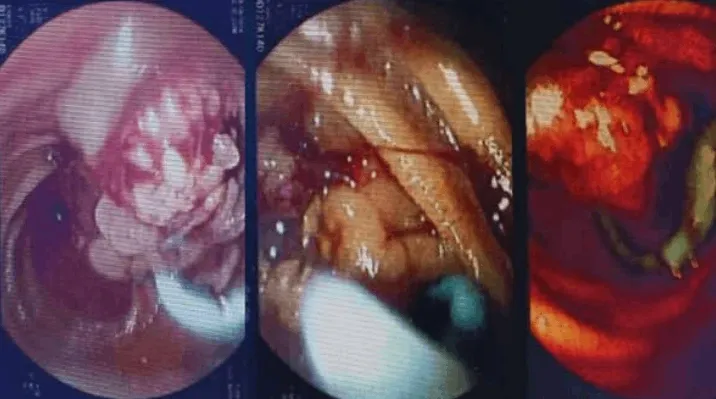
Figure 2: Endoscopy showing a proliferative lesion at ampulla with stent in situ
The only option left to control bleeding was surgery, which entailed PD. As the patient was very sick, with haemoglobin of 3 gm% and on triple inotropes, surgery itself was extremely high risk. After counselling relatives and obtaining informed consent, the patient was taken up for surgery
EPD was performed. As the patient was sick and there was considerable bowel wall oedema due to resuscitative efforts, it was decided to do reconstruction as a staged procedure. The common bile duct (CBD) and pancreatic duct were cannulated and exteriorised. The stomach was closed with a stapler. The abdomen was left open as a laparostomy and covered with sterile dressings. The patient was shifted back to the intensive care unit (ICU) on a ventilator and stabilised by infusing blood products. He was taken up for reconstruction on postoperative day 3 after he had remained stable for a continuous 24 hours without inotropes.
Reconstruction was done by duct-to-mucosa pancreaticojejunostomy (PJ), end-to-side hepaticojejunostomy, and end-to-side gastrojejunostomy. A feeding jejunostomy was performed to start feeding as soon as possible after surgery. The abdomen was closed. He recovered well after reconstructive surgery and was extubated after 2 days. Jejunojejunal (JJ) feed was started from day 1 after surgery, and oral diet was started on day 3. He made a very good recovery without any complications except for a wound infection, which was managed with local dressings. He was discharged from the hospital on day 7 after reconstructive surgery. Biopsy revealed villous adenoma with low-grade dysplasia.
Discussion
EPD in non-traumatic settings is rare, and very few cases, either as as isolated case reports or small case series, have been reported. EPD in non-traumatic settings has been reported in 0.3%-3% of total PD series.4
EPD is usually classified under trauma or non-trauma causes. Non-traumatic causes are further classified as uncontrolled bleeding, perforation, ischaemia, and iatrogenic injuries. Uncontrolled bleeding seems to be the most common cause for EPD, followed by perforation due to endoscopy, surgery, or tumour.4 Morbidity and mortality for EPD in non-traumatic settings has been reported to be around 50%-80% and 0%-40% respectively.3-6 This increased morbidity and mortality has been attributed to a lack of preoperative preparation and the sick general condition of the patient at the time of surgery. The technical complexity of EPD is amplified by other underlying factors, such as malignancies, local infection, blood loss, coagulation disorders, and a severely altered general condition.7 Postoperative pancreatic fistula (POPF) has been reported as the main cause of morbidity in elective PD. POPF and sepsis remains the main cause of morbidity and mortality in EPD. In the analysis of a 66-patient cohort, Popa et al. found a morbidity rate of 62%, POPF rate of 21.21%, blood loss of 800 mL, and a length of hospital stay of 27 days for EPD.8,9 It has also been reported that morbidity and mortality are affected by the indication for EPD. Patients suffering from perforation undergoing EPDs had a significantly higher association with surgical mortality than those suffering from bleeding.4
There are differences of opinion regarding the management of the pancreatic stump. A two-stage PD with delayed fashioning of PJ has been advocated to bridge severely ill patients in emergency settings and avoid POPF development.3 However, a study has shown that there is no difference in mortality between one-stage and two-stage EPD for haemodynamically unstable trauma patients.10 Few studies have advocated pancreaticogastrostomy to drain a soft pancreas with a non-dilated duct where the jejunum is unsuitable for anastomosis due to oedema, making PJ anastomosis technically demanding.6,7 Other methods of managing the pancreatic stump include primary closure of the stump or tube drainage of the pancreatic duct, thus forming an external pancreatostomy. These procedures were done in unfavourable circumstances.8,9
Although there is increased morbidity and mortality, EPD is still justified in desperate, life-threatening situations to save a patient’s life. The involvement of experienced hepatopancreatobiliary (HBP) surgeons, the indication for operation, and timely surgery are important for optimal surgical outcomes. Long-term survival is possible if complications and POPF can be successfully managed in the early postoperative period.
Conclusion
EPD is a formidable, lifesaving operation reserved for pancreaticoduodenal trauma, perforations, and bleeding not manageable by a less invasive approach. It is a rare operation that carries a higher morbidity and mortality than elective PD. It is performed in desperate, life-threatening situations and can be a life-saving measure in most cases, as shown in the literature.
Manmohan Singh Bedi, Amrit Suman. Emergency Pancreaticoduodenectomy in a Non-Trauma Setting: A
Rare Procedure with Rare Indications – Case Report and Review of Literature. MMJ. 2025, June. Vol 2 (2).
References
- Hüttner FJ, Fitzmaurice C, Schwarzer G, et al. Pyloruspreserving pancreaticoduodenectomy (pp Whipple) versus pancreaticoduodenectomy (classic Whipple) for surgical treatment of periampullary and pancreatic carcinoma. Cochrane Database Syst Rev. 2016;2(2):CD006053
- Mezhir JJ. Management of complications following pancreatic resection: An evidence-based approach. J Surg Oncol. 2013;107(1):58-66.
- Nentwich MF, Reeh M, Uzunoglu FG, et al. Non-trauma Emergency Pancreatoduodenectomies: A SingleCenter Retrospective Analysis. World journal of surgery. 2016;40(9):2261-6.
- Tsai CY, Lai BR, Wang SY, et al. The impact of preoperative etiology on emergent pancreaticoduodenectomy for nontraumatic patients. World J Surg. 2017;12:1-5.
- Lupascu C, Trofin A, Zabara M, et al. Emergency backwards whipple for bleeding: formidable and definitive surgery. Gastroenterol Res Pract. 2017;2017(1):2036951.
- Schlanger D, Popa C, Ciocan A, et al. Emergency pancreatoduodenectomy: a non-trauma center case series. J Clin Med. 2022;11(10):2891.
- Standop J, Glowka T, Schmitz V, et al. Emergency KauschWhipple procedure: indications and experiences. Pancreas. 2010;39(2):156-9.
- Sakakima Y, Inoue S, Fujii T, et al. Emergency pyloruspreserving pancreatoduodenectomy followed by secondstage pancreatojejunostomy for a gastrointestinal stromal tumor of the duodenum with an intratumoral gas figure: report of a case. Surg today. 2004;34:701-5.
- Popa C, Schlanger D, Chirică M, et al. Emergency pancreaticoduodenectomy for non-traumatic indications—a systematic review. Langenbeck's Arch Surg. 2022;407(8):3169-92.
- de Carvalho ME, Cunha AG. Pancreaticodudonectomy in trauma: One or two stages? Injury. 2020;51(3):592-6.