 WhatsApp Us (24/7)
 +91 926 888 0303 (24/7)


Yes, we’ve all met her. The ‘Daughter from California’ was described by David Molloy in 1991 in an article in the Journal of the American Geriatrics Society. The case vignette involved an 83-year-old dementia patient residing in a nursing home. She had a hip fracture. Her daughter suddenly arrived from California and demanded irrational, aggressive treatment for her mother, who was on palliative care. She was abusive and accused the medical staff of negligence. This was quite contrary to the other daughter’s wishes, despite the fact that she had been the long-term caregiver and had seen the cognitive decline and terminal condition of her mother. The behaviour of the daughter visiting from California is attributed to the feeling of guilt stemming from neglecting her mother’s health needs and the denial of accepting her current condition. There is a clash of egos and conflict between the family members in decision-making for a mentally incompetent patient at this critical juncture. I am sure all of us have met these uninvolved sons and daughters from California, New York, Ontario, or Timbuktu, making sudden appearances during the family meetings and counselling sessions for terminally ill intensive care, neurology, and oncology patients. Why is it that ‘code violet’ is becoming more common in this day and age?
There are very pertinent questions that arise during the family meetings on our daily rounds. We need to figure out the family dynamics, understand their emotional state and feelings of guilt and self-reproach, address their queries clearly and prognosticate. It is quite a challenge to draw out a rational care plan, keeping in mind the patient’s dignity and quality of life. At the same time, it is a challenge to keep our cool and not be frustrated if the family cannot reach a consensus.
The Supreme Court of India passed a landmark judgement in 2018 (Non-Governmental Organisation [NGO] Common Cause v. Union of India), which recognised the ‘right to die with dignity’ as a ‘fundamental right’ under Article 21 of the Constitution. America had laid down provisions for a ‘living will’ way back in 1998. A ‘Living Will’, in layman's terms, is called an ‘Advance Medical Directive’ in legal parlance. This permits an individual to specify what treatment he is willing to receive or whether to refuse life-saving interventions in case he becomes terminally ill in the future or is not in a condition to communicate his explicit wishes. A living will can be the basis for passive euthanasia in the court of law. A newer, simplified version for executing a living will has been released by the Supreme Court in 2023. An adult with a sound mind can execute a living will, signed by two independent witnesses, and notarised. He needs to nominate a surrogate authorised to give consent for withdrawal of care in case the individual becomes incapacitated. A copy needs to be submitted to the Municipal Corporation office. There are quite a few challenges. Firstly, with our fast-paced lives and lack of meticulous planning, how many of us are going to spend time and effort on planning our death? Secondly, the implementation process is cumbersome, with a primary medical board formed by the hospital, a secondary board to concur with the findings and judicial magistrate oversight before the treatment can be withdrawn. ‘Living Will Clinics’ have been set up to create awareness and to assist people. With the stark rich–poor divide, this may be a tool for only a handful of citizens. In a country where money makes the mare go, this paper can definitely be misused by unscrupulous relatives. Also, patients may have misconceptions that may hinder their decisions while writing a living will. Surrogates may extrapolate or misinterpret the will.
There is also a question of dying peacefully with dignity. Active euthanasia or mercy killing involves administering lethal drugs or life-ending interventions. Some of the countries that allow active euthanasia include the Netherlands, Belgium, Canada, Luxembourg, Spain, New Zealand, Colombia, and Portugal. In the case of ‘Physician- Assisted Suicide’ (PAS), the patient self-administers the lethal substance. Switzerland permits PAS. Under the Bharatiya Nyaya Sanhita, active euthanasia is illegal and considered a culpable homicide.
In 2011, the Supreme Court of India laid down guidelines for ‘passive’ euthanasia while debating the Aruna Shanbaug case. This involves withholding life-saving treatment in exceptional cases involving terminally ill patients, where a medical board reviews the case and gets approval from the High Court. Euthanasia is a hotly debated topic with both schools of thought — those in favour and those against it. The Jain community believes in ‘Santhara’ or embracing death voluntarily by fasting. The Hindus also opine that we cannot defy fate and disrupt the cycle of reincarnation. Others are apprehensive that the guidelines can be misused for financial or property gains. Do doctors and the law have the right to play God? Yet, there is an increasing focus on end-of-life care, palliative medicine and dignity in death. The ‘3 Wishes Program’ is a palliative care programme initiated in many hospitals around the world to make the process of dying more compassionate for the dying patient, their families and the clinician by fulfilling three meaningful, personal wishes of the patient during their final days of life. There may be soothing music, room decorations, a home blanket, birthday celebrations or favourite food, a prayer ceremony — the little efforts matter in humanising the dying process and creating positive memories. As per the American Medical Association, only 5 out of 126 medical schools in the United States of America (USA) offer a course to students on the care of dying.
Who decides if the patient is incompetent to decide? What happens when there is no living will? Aruna Shanbaug, a nurse at King Edward Memorial Hospital (KEM), Mumbai, was a sexual assault victim who spent 42 years of her life in a vegetative state. She was the eighth among six brothers and three sisters and the only one in her family to complete higher education. Her colleagues at KEM looked after her after this incident with utmost love and care, and attempts by the Municipal Corporation of Greater Mumbai (BMC) to vacate the hospital bed she occupied failed. Her family abandoned her and stopped visiting her in the hospital. The accused was only charged with attempted murder and never charged with rape. He was released after a jail sentence of six years. In 2011, activist Pinki Virani filed a plea in the Supreme Court of India for a medical panel to examine her and permit euthanasia. The petition was rejected by the court but paved the way for permitting ‘passive euthanasia’ in India. Shanbaug died of pneumonia four years later.
In the case of Aruna Shanbaug v. Union of India (2011), the Supreme Court gave a landmark judgement and legalised ‘passive euthanasia’ in India. The guidelines allowed withdrawal of treatment, nutrition or water, but the decision-making power for discontinuing life support was in the hands of parents, spouse, close relatives or a ‘next friend’, with court approval. In the Shanbaug case, the KEM nurses looking after her like a child were designated as ‘next friend’ and decided not to withdraw her life support. The same was communicated to the court, and it allowed them the option to change their mind at a later date if they desired. However, the nurses continued looking after her until she finally died. Her funeral rites were performed by the nurses.
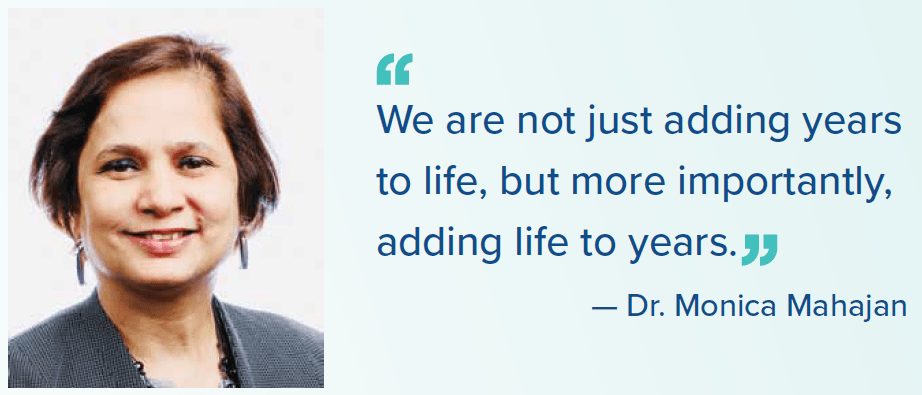
So, the challenge remains whether you resuscitate a terminally ill patient, especially if it is a stalemate and the relatives cannot form a consensus opinion. Documents and directives may be used or misused. The smartly dressed, ChatGPT-educated, articulate daughter is always going to be the angriest and the most unreasonable relative to deal with. You have to be smarter so that you don’t end up in a legal soup. If you are too aggressive in your treatment approach, you are labelled ‘unethical and moneyminded’. If you are more into palliative comfort care, some smart colleague may tell the family that you are ‘outdated’ and that there are newer treatments available. So, decision-making and end-of-life care for the incompetent elderly patient who has lost decision-making capacity is a tough situation where the doctor and the daughter need to be playing for the same team. You need to respect the spiritual, cultural and religious beliefs. After all, we are not just adding years to life but, more importantly, adding life to years. So brace up, stay cool and reasonable, and go meet the daughter who has just arrived from California. You have to find a common ground while remaining within the realms of medical ethics.
Dr. Monica Mahajan
Editor-in-chief, The Max Medical Journal