 WhatsApp Us (24/7)
 +91 926 888 0303 (24/7)


One of those rare evenings when the air quality in Delhi was bearable, I decided to step out for a stroll. The next thing I knew was that I was attacked by a Great Dane and my leg was bleeding profusely. Mercifully, the femoral artery had escaped injury by a few centimetres. What left me aghast was that the dog owner got her dog to step in to her car and drove away. No apology offered, no assistance provided. While I was limping back home, the only questions ravaging my mind were as to how many patients have survived rabies and how many have ended up getting Guillain–Barré syndrome (GBS) as a side effect of the vaccine?
So here is some of the World Health Organization (WHO) data. Rabies is a ‘Neglected Tropical Disease’ (NTD) with cases all across the globe except in Antarctica. Though the numbers are grossly underreported, an estimated 59,000 victims die of rabies annually, one-third of these being Indians. 99% of rabies is caused by dog bites whereas other mammals like cats, raccoons, coyotes and bats contribute to the rest of the pool. Nearly 40% of patients who die are children. This is a disease with 100% case fatality. Yet, there are ‘thirty-one’ miraculous survivors of rabies over the years, of whom 17 are from India. This is also because we have the highest number of cases of rabies in the world in our country. The two names that stand out are those of Jeanna Giese-Frassetto and Sai Kiran, as they are the only ones that made a meaningful recovery.
It is ironical that we have billions of dollars of research that goes into developing potent antivirals against Human Immunodeficiency Virus (HIV), Hepatitis B and Hepatitis C, but very little breakthrough has been achieved in fighting rabies. As far as the treatment goes, once the symptoms develop, there is zero probability of surviving. Doctors experimented with the ‘Milwaukee protocol’ in 2004 and put Jeanna Giese into a medically induced coma with ketamine and used antiviral drugs like ribavirin and amantadine. They were inspired by an idea suggested by Dr. GR Gode, an anaesthetist at All India Institute of Medical Sciences (AIIMS), Delhi, who suggested that anaesthesia would cut out the exaggerated autonomic nervous system inputs that cause fatality. Later on, the team at the University of Wisconsin used this concept in Jeanna’s case. She had been bitten by a bat she was trying to save. She had not been vaccinated as she never realised how lethal that bite could be. She survived, is happily married and is now a proud mother of twins. The Milwaukee protocol is, however, considered controversial and failed in studies conducted recently at Sawai Man Singh (SMS) Medical College, Jaipur.
17-year-old Sai Kiran from Telangana was bitten by a rabid dog while walking home from school in 2018. He received two doses of the vaccine before the local government hospital ran out of stock, and the vaccination series was left incomplete. His father, being a vegetable vendor, could not afford to take him to another town for vaccines. A few days later, he developed aerophobia and hydrophobia and then slipped into a coma. After three years of ventilatory support, rehabilitation and physiotherapy, he is now one of the rare global survivors and back to studying in high school. Perhaps the two doses of the vaccine did contribute to saving his life. Most other survivors are less fortunate and have remained in a vegetative state or lived with severe neurological deficits. The cost of prolonged hospitalisation results in bankruptcy. Others are just left to die without any dignity.
The challenge is in diagnosing the disease before it is too late. The incubation period for rabies ranges from 6 days to 6 years. The furious form of rabies, which causes hyperactivity, hydrophobia, aerophobia and hallucinations, may be diagnosed more often, whereas the dumb form with paralysis and coma may be misdiagnosed frequently. There may be inadvertent exposure to hospital staff. There is no documented case of human-to-human transmission through a bite. Post-transplant rabies is an extremely rare entity. In 2025, the Centers for Disease Control and Prevention (CDC) reported a case of a kidney transplant recipient in Ohio who died of rabies after 51 days of transplant. The deceased donor had undiagnosed rabies from a scratch from a skunk. The three individuals who received corneal tissue grafts from the same donor were tested. As a precautionary measure, the corneas were removed, post-exposure prophylaxis (PEP) was administered, and all three individuals survived. Risk assessment was done for possible exposure to 357 possible contacts, and PEP was provided to 46 of them. Rabies ribonucleic acid (RNA) was detected in one corneal graft.
Once the bullet-shaped virus reaches the central nervous system, it is a death sentence for the victim. There is no cure, only a very effective vaccine for prevention. The only hope lies in PEP. Louis Pasteur was experimenting with a vaccine in dogs and rabbits. He used an untested rabies vaccine way back in 1885, and Joseph Meister became the first person to be saved by administering the vaccine. 12 doses of the rabies vaccine were given to him every day for ten days. He survived despite 14 bites from a rabid dog and history was created. People travelled long distances to get the vaccine at the Institut Pasteur. Yet, most cases nowadays occur purely due to a lack of awareness or a lack of availability of the vaccine. The monoclonal antibodies are much safer and have replaced the rabies immunoglobulin. Gene therapy for rabies remains experimental. The disease is fully preventable with proper toileting of the wound and timely vaccination.
This severe zoonotic disease is prevalent in over 150 countries. The WHO has aimed at ending human deaths from rabies by 2030 by the ‘One Health Approach’. This encompasses mass vaccination of stray dogs, easy access to vaccines, creating awareness, surveillance and training health care providers. We are amongst the countries with the largest population of free-roaming dogs (FRD), semi-owned and owned dogs. There is inadequate knowledge of vaccination amongst owners. Non pedigreed mongrels are often adopted and allowed to roam freely. There is no adoption policy for history sharing and vaccination of adopted dogs. Leash laws need to be enforced. The veterinary department and the rapid response team may not be notified if a rabid animal dies, and post-mortem rabies testing of the animal's brain is not conducted in a number of instances. Bite wounds are sutured, whereas they are meant to be left as such. The low vaccination coverage amongst dogs makes rabies endemic in India, especially in the northeastern states. Dog bites also spread rabies in the livestock. The cold chain for vaccines is poorly maintained during transportation. Young children have died in Maharashtra and Kerala recently despite completing rabies vaccination, raising concerns about the potency, cold chain and genuineness of the vaccines. The older neural rabies vaccines were associated with GBS, but the newer chick embryo cell-derived vaccines do not increase the risk of this post-vaccination complication. Increased vigilance for this immune-mediated acute neuropathy due to the vaccine is required.
Survival from the disease, albeit with neurological sequelae, is extremely rare, but it is a 100% vaccinepreventable disease. One of the tenets of medicine has been that a rabies patient dies within a few days of the disease onset; if he survives, he does not have rabies.
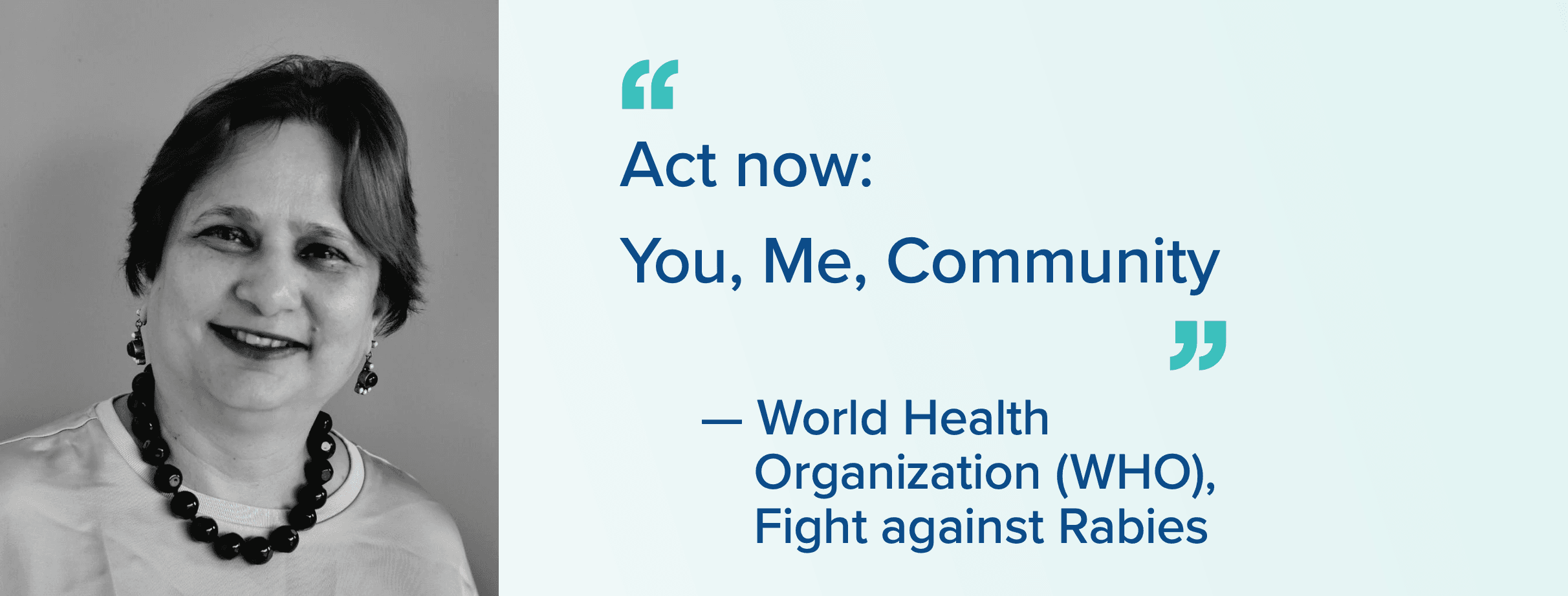
There is a need for better coordination and cooperation between the various stakeholders. The One Health Approach has been successfully adopted and has eradicated rabies from the United Kingdom, Japan, Ireland and Australia. Goa has adopted a mass vaccination policy and is recognised as the first rabies-controlled state in India. Rabies Day is celebrated on 28th September each year. The theme in 2025 was ‘Act now: You, Me, Community’. I hope it does not remain a mere slogan but becomes a ground reality.
I am a proud dog parent, but I learned my lesson the hard way. After completing my vaccination schedule for a category 3 bite, I have realised that it is much safer to work out indoors. It saves my lungs and saves my life.
Dr. Monica Mahajan
Editor-in-chief, The Max Medical Journal