 WhatsApp Us (24/7)
 +91 926 888 0303 (24/7)


Abstract:
Type 2 Diabetes Mellitus (T2DM) requires consistent patient involvement in daily self-care practices to achieve effective management and better glycaemic outcomes. Understanding how well patients adhere to these practices is essential for identifying gaps and improving care strategies. In this context, a cross-sectional observational study was carried out among 500 T2DM patients attending an outpatient department in a tertiary care setting. Self-care behaviours were evaluated using the Diabetes Self- Management Questionnaire (DSMQ), which measures adherence across four key domains: glucose management, dietary control, physical activity, and healthcare utilisation. The overall mean DSMQ score was 1.45 ± 0.49, indicating a moderate level of adherence among participants. Among the 500 patients, 54% exhibited partial adherence, 42% demonstrated good adherence, and only 4% showed poor adherence. Domain-wise analysis revealed that physical activity was the weakest area of adherence, while dietary control and glucose management showed moderate consistency. Healthcare utilisation emerged as the strongest domain, reflecting relatively better adherence in seeking medical support and follow-up care. Despite a reasonable level of awareness about diabetes management, adherence to self-care practices remains suboptimal. These findings highlight the importance of implementing structured patient education programmes along with continuous behavioural support to enhance long- term adherence and improve glycaemic control outcomes.
Key words: Type 2 Diabetes Mellitus, Diabetes Self-Management Questionnaire (DSMQ), Self-care, Glycaemic Control, Patient Adherence.
Introduction
Type 2 Diabetes Mellitus (T2DM) continues to be a leading global public health concern, with a rising prevalence and a multifactorial impact on morbidity and mortality. The World Health Organization (WHO) projects a significant increase in global diabetes prevalence, particularly in low and middle-income nations where healthcare access and adherence to treatment are inconsistent. 1
Maintaining glycaemic control in T2DM remains a challenge, and inadequate self-care contributes to chronic complications such as retinopathy, neuropathy, nephropathy, and cardiovascular diseases. 2,3
Medical treatment, lifestyle change, and self-management are important means of achieving glycaemic control and preventing complications in diabetes. 4
Self-care consists of multiple interrelated behaviours, including medication adherence, dietary planning, regular physical activity, glucose monitoring, and consistent medical consultations.2
Research underscores that successful disease control requires integrating pharmacological treatment with continuous patient involvement in daily self-management.5
A wide range of measuring instruments are available for diabetes self-management. According to several studies, a relatively new instrument, the diabetes self-management questionnaire (DSMQ), shows a consistent relationship with outcomes of diabetes treatment as well, such as glycated haemoglobin (HbA1c).6
Tools such as DSMQ provide an objective framework to evaluate how these behaviours correlate with overall glycaemic outcomes.5
Building upon prior findings, this study expands the focus to 500 participants to better capture the diversity of adherence patterns in a clinical setting. The aim was to assess the magnitude of engagement in diabetes self- care behaviour using the DSMQ and to identify domains in which patients require more targeted interventions.
Methodology
Study design and setting
This cross-sectional observational study was conducted among 500 adults diagnosed with T2DM who were attending the outpatient department at Nanavati Max Super Speciality Hospital, Mumbai, India, between January and February 2025. Eligible participants were ambulatory patients aged 20–60 years with a confirmed T2DM diagnosis and regular follow-up attendance; individuals with type 1 diabetes, those currently hospitalised, or patients outside the specified age range were excluded to focus on stable, community-managed cases suitable for self-care assessment.
Self-care behaviours were evaluated using the DSMQ, a validated 16-item instrument with established reliability (Cronbach's α > 0.84) that measures adherence across four key domains: glucose management (e.g., frequency of blood glucose monitoring and medication adherence), dietary control (e.g., planning and consistency of healthy eating), physical activity (e.g., regular exercise engagement), and healthcare utilisation (e.g., frequency of provider consultations). Each item is scored on a 0–2 scale, where higher scores reflect stronger adherence, and overall scores were categorised as poor (< 1), partial (1–1.5), or good (> 1.5) based on mean thresholds established in prior validation studies. The tool’s reliability and validity have been established in previous studies.¹
Data analysis
Data were analysed using descriptive statistics, including means, standard deviations, frequencies, and percentages, to characterise adherence patterns and demographic distributions. Domain-specific scores were visualised through bar and pie charts for clarity. The study protocol received institutional ethical approval, and written informed consent was obtained from all participants prior to data collection.
Results
Demographic characteristics
Of the 500 participants, the majority (72%) were within the 40–60-year age range, with 8% aged 20–40 years and 20% over 60 years. The sample included 256 males (51.2%) and 244 females (48.8%), reflecting near parity between sexes.
DSMQ score distribution
A total of 270 participants (54%) indicated that DSMQ statements “applied to some degree,” reflecting partial adherence, while 210 participants (42%) achieved “a considerable degree” of adherence. 20 participants (4%) demonstrated minimal engagement in self-care behaviours (Figure 1). The mean DSMQ score was 1.45 ± 0.49, with scores ranging from 0 to 2. The consistency of adherence patterns across this expanded dataset confirms previous trends observed in smaller cohorts (Figure 2).5
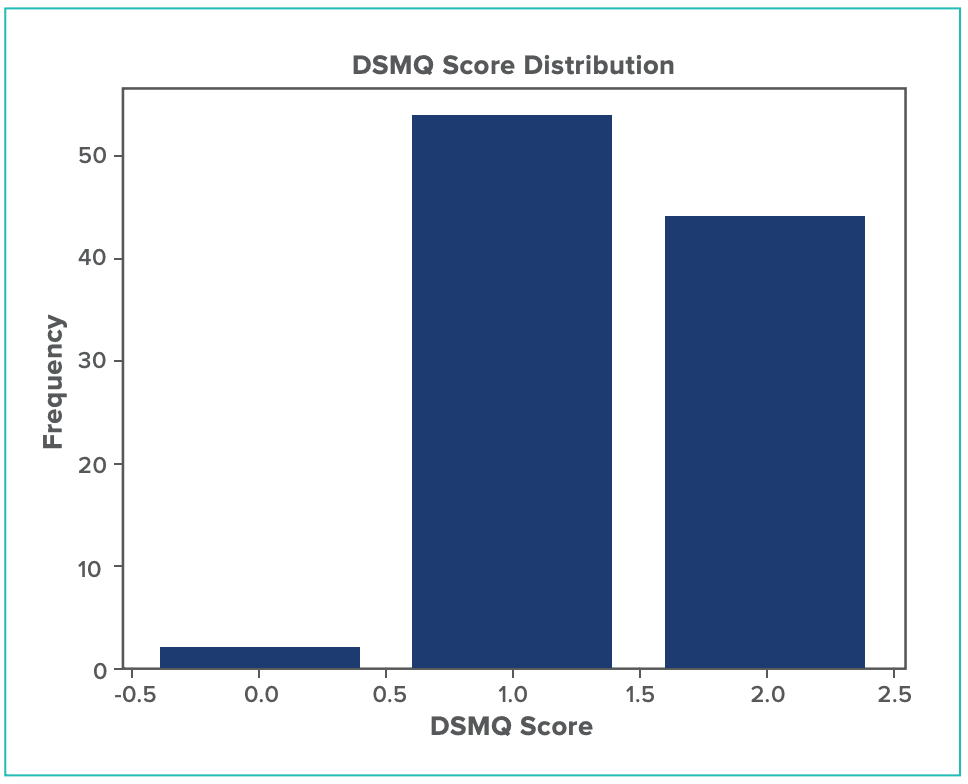
Figure 1: Diabetes Self-Management Questionnaire (DSMQ) score distribution bar chart.
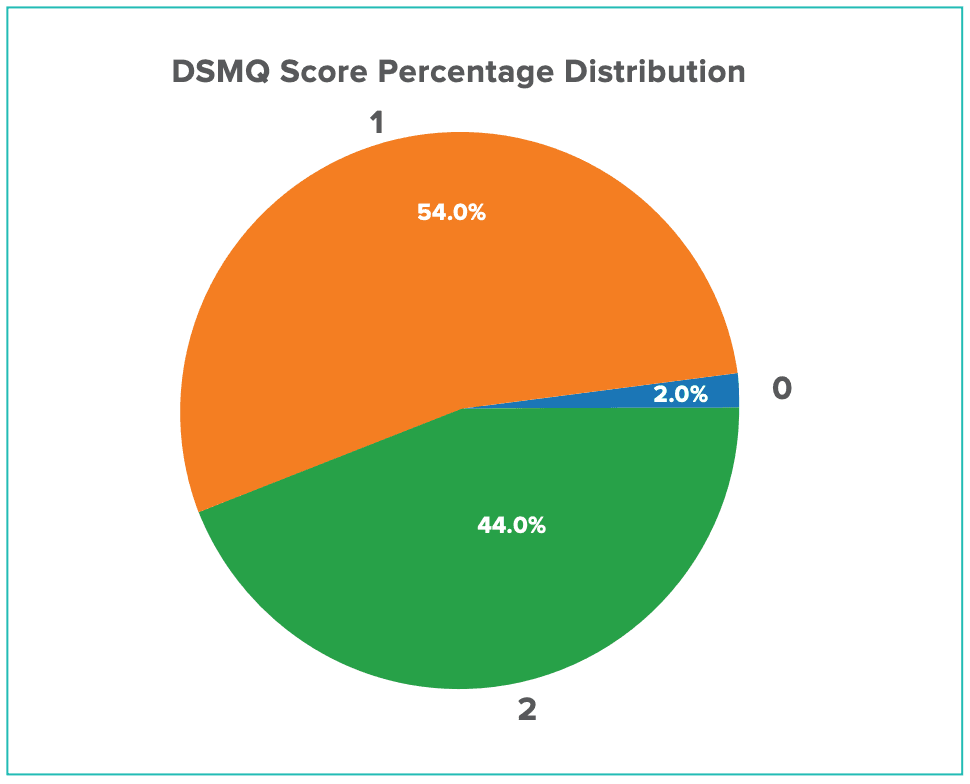
Figure 2: Diabetes Self-Management Questionnaire (DSMQ) percentage distribution pie chart.
Domain-wise findings
- Glucose management: Moderate adherence, with patients generally adhering to medication schedules but showing inconsistency in self-monitoring of blood glucose. 2,5
- Dietary control: Variable adherence, influenced by socio-economic factors and cultural dietary habits.2,3
- Physical activity: Lowest adherence; a large proportion of participants reported sedentary lifestyles, echoing findings of previous studies. 2
- Healthcare use: Highest adherence; most patients maintained regular contact with healthcare providers, although translation of advice into behaviour was inconsistent. 7
Discussion
This large-scale cross-sectional analysis substantiates the observation that while T2DM patients demonstrate awareness of recommended self-care practices, consistent behavioural adherence remains limited. The expanded dataset of 500 participants provides a stronger statistical foundation for these findings.
The moderate mean DSMQ score (1.45 ± 0.49) aligns with previous investigations, signifying that knowledge does not necessarily equate to practice.2 The predominance of participants within the middle-aged cohort (40–60 years) corroborates epidemiological data from the WHO, highlighting this group as particularly vulnerable due to lifestyle and occupational factors.1
The weakest adherence was observed in the physical activity domain, consistent with evidence suggesting that insufficient exercise contributes to poor glycaemic regulation and higher complication risks. This finding highlights an urgent need for structured exercise promotion programmes tailored to patient capacity and cultural context.
Dietary adherence varied substantially, likely due to socio- economic disparities and ingrained cultural eating patterns. Healthcare utilisation, on the other hand, remained relatively robust, confirming that patients actively seek medical care, but struggle to implement continuous lifestyle modifications. This reinforces the recognised knowledge practice gap described in chronic disease management.7
Though biochemical correlation with HbA1c was beyond this study’s scope, prior research has verified an inverse relationship between DSMQ scores and HbA1c, validating DSMQ as a practical surrogate for behavioural adherence assessment.¹
Overall, these findings indicate that effective diabetes control requires not only access to medical care but also sustained education and psychosocial support to enhance behavioural adherence.
Recommendations
- Develop patient-centred diabetes education programmes emphasising sustained behavioural adherence.7
- Promote structured physical activity programmes integrated into clinical settings. 7
- Utilise digital monitoring platforms to enhance motivation and track adherence metrics. 7
- Strengthen follow-up systems with multidisciplinary teams, including educators, dietitians, and physiotherapists. 7
- Conduct periodic DSMQ assessments as part of standard diabetes management to track progress.
Limitations
- Cross-sectional design limits causal inference.
- Self-reported data introduce potential recall bias.
- HbA1c levels were not correlated with DSMQ scores.
- Findings reflect one tertiary centre and may not generalise across regions.
Future studies should include a longitudinal design with metabolic outcome correlations to validate behavioural clinical associations.
Conclusion
The study highlights that while patients with T2DM possess moderate awareness and partial engagement in self-management, overall adherence remains inadequate. Increasing emphasis on behavioural modification, structured educational programmes, and continuous follow-up is essential to achieving optimal glycaemic outcomes. The larger sample confirms the persistence of these challenges across a broader demographic spectrum.
Andrea Fonseca, Sampada Tambe. Understanding Self-Care in Type 2 Diabetes: Insights from the Diabetes Self-Management Questionnaire. MMJ. 2026, June. Vol 3 (2).
DOI: XXXX_XXXX_XXXX_XXXX
References
- Diabetes. World Health Organization. Available at: https:// www.who.int/news-room/fact-sheets/detail/diabetes. Accessed on: 14th March 2026.
- Shrivastava SR, Shrivastava PS, Ramasamy J. Role of self-care in management of diabetes mellitus. J Diabetes Metab Disord. 2013;12(1):
- Simegn W, Mohammed SA, Moges G. Adherence to Self - Care Practice Among Type 2 Diabetes Mellitus Patients Using the Theory of Planned Behavior and Health Belief Model at Comprehensive Specialized Hospitals of Amhara Region, Ethiopia: Mixed Method. Patient Prefer Adherence. 2023;17:3367–
- Márkus B, Hargittay C, Iller B, et al. Validation of the revised Diabetes Self-Management Questionnaire (DSMQ-R) in the primary care setting. BMC Prim Care. 2022;23:
- Schmitt A, Gahr A, Hermanns N, et al. The Diabetes Self- Management Questionnaire (DSMQ): development and evaluation of an instrument to assess diabetes self-care activities associated with glycaemic control. Health Qual Life Outcomes. 2013;11(1):138.
- Vincze A, Losonczi A, Stauder A. The validity of the diabetes self-management questionnaire (DSMQ) in Hungarian patients with type 2 diabetes. Health Qual Life Outcomes. 2020;18(1):344.
- Powers MA, Bardsley J, Cypress M, et al. Diabetes Self- Management Education and Support in Type 2 Diabetes: A Joint Position Statement of the American Diabetes Association, the American Association of Diabetes Educators, and the Academy of Nutrition and Dietetics. J Acad Nutr Diet. 2015;115(8):1323–34.