 WhatsApp Us (24/7)
 +91 926 888 0303 (24/7)


Abstract:
Breast cancer remains the leading cause of cancer-related mortality worldwide, with a rising burden in India, where it often presents at a younger age and at more advanced stages. Triple-negative breast cancer (TNBC), lacking targeted therapeutic options, places greater emphasis on host immune factors such as stromal tumour-infiltrating lymphocytes (sTILs) for prognostication. Elevated sTIL levels have been linked to improved overall survival (OS) and higher rates of pathological complete response (pCR) following neoadjuvant chemotherapy. Obesity, a modifiable risk factor, may influence tumour biology through hormonal, metabolic, and inflammatory mechanisms, potentially impairing anti-tumour immune responses. However, the interplay between body mass index (BMI) and sTILs in determining TNBC outcomes among South Asian women remains underexplored. This retrospective study evaluated 100 South Asian women diagnosed with TNBC between January 2017 and December 2021 at a tertiary cancer centre. Eligible patients had confirmed TNBC, documented BMI at diagnosis, available tumour-infiltrating lymphocyte assessment, and follow-up data. Clinical, demographic, tumour-related treatment, and outcome variables were extracted from electronic health records and cross-verified. Survival outcomes, including disease-free survival (DFS) and OS, were analysed using Kaplan–Meier method, while Cox proportional hazards models were applied to estimate the impact of variables on recurrence and mortality. The analysis demonstrated that BMI at diagnosis did not independently affect survival outcomes, with comparable survival observed across weight categories. In contrast, higher sTIL levels were significantly associated with improved survival and reduced recurrence risk. However, the beneficial prognostic effect of high sTILs appeared attenuated in patients with higher BMI. Notably, increased body weight did not correlate with reduced immune cell infiltration within tumours but may impair the functional effectiveness of these immune cells in controlling disease progression. In conclusion, while BMI alone is not a predictor of survival in TNBC, obesity-related metabolic alterations may weaken the prognostic advantage conferred by tumour-infiltrating lymphocytes. These findings suggest that immune functionality, rather than mere presence, is compromised in obese patients. Tumour immune status remains a key determinant of outcomes, but its impact is modified by host metabolic factors. Integrating weight management strategies alongside standard treatments may help preserve immune-mediated tumour control and improve clinical outcomes.
Key words: Triple-Negative Breast Cancer, Disease Free Survival, Overall Survival, Body Mass Index, TumourInfiltrating Lymphocytes.
Introduction
The leading cause of cancer-related mortality for women globally is breast cancer. It accounts for more than 25% of all cancer cases in women. 1 In recent years, breast cancer has become more widespread in India, surpassing cervical cancer as the most prevalent malignancy in urban areas. In India, breast cancer develops at an earlier age before menopause compared to Western countries, and most patients present with advanced local or distant disease. Breast cancer testing usually includes three biomarkers, which are oestrogen receptor (ER), progesterone receptor (PR), and human epidermal growth factor receptor (HER2), because these biomarkers serve as essential prognostic indicators and determine treatment paths. About 75% of breast cancer patients show ER presence in their tumours. The oestrogen-regulated gene PR shows expression in almost 50% of tumours that test positive for ER.
Unlike hormone receptor (HR)-positive disease, triple-negative breast cancer (TNBC) lacks targeted therapies, making prognosis heavily dependent on host immune factors such as stromal tumour infiltrating lymphocytes (sTIL). In an Indian cohort, a high sTIL (≥ 30%) corresponded with dense immune infiltrates, Th1-dominant gene signatures, smaller tumours, and superior overall survival (OS), defining an “Immunotype1” that parallels findings in Western TNBC. Moreover, the distribution of these immunotypes in Indian patients mirrors the Cancer Genome Atlas (TCGA) and Molecular Taxonomy of Breast Cancer International Consortium (METABRIC) cohorts, underscoring a shared immune landscape across ethnicities.
The recent study confirmed that sTIL has prognostic value in patients who have untreated early-stage TNBC. Higher levels of sTIL also predict pathological complete response (pCR) to neoadjuvant chemotherapy in patients from all molecular subtypes (TNBC, HER2-positive, and ER-positive/HER2-negative), but only longer survival in TNBC and HER2-positive breast cancer, according to a large, pooled analysis. The World Health Organization (WHO) now includes sTIL in its breast cancer classification system because research shows consistent results for sTIL in TNBC, and the St. Gallen International Consensus Guidelines 2019 for TNBC have recommended testing sTIL.
Obesity is a potentially modifiable risk factor that can influence breast cancer biology through hormonal, metabolic and inflammatory pathways. Excess adipose tissue elevates leptin and insulin-like growth factor-1, and promotes chronic low grade inflammation. Changes in the gut microbiome may impair cytotoxic T-cell function, thereby attenuating anti-tumour immunity. Understanding how elevated body mass index (BMI) interacts with sTIL density could clarify why some obese TNBC patients experience poorer disease free survival (DFS) and guide personalised therapeutic strategies, including the selection of immunotherapy based regimens.
Despite these insights, no retrospective Indian study has examined whether BMI modifies the prognostic advantage conferred by high sTIL. Western series report inconsistent associations between BMI and TNBC outcomes, and East Asian work suggests adverse effects of overweight status on DFS, the combined impact of adiposity and tumour immunity remains uncharacterised in South Asian women.
Obesity at the time of cancer diagnosis or before diagnosis predicts bad outcomes for all types of breast cancer, according to research findings. 7,8 The connection between weight changes and prognosis outcomes becomes especially important for TNBC because there are limited treatment options and unknown prognostic factors. Weight control provides an opportunity to improve survival rates through this clarification process. Existing literature either isolates BMI or sTIL as prognostic markers, and no retrospective Indian cohort has evaluated their combined effect on survival and recurrence.
By extracting BMI, quantitative sTIL, and clinical outcomes from Indian TNBC patients treated with standard therapy, the study will determine whether obesity modifies the prognostic benefit of high sTIL. This will refine risk stratification, identify patients who may require intensified or immunotherapy-based approaches, and address the critical evidence void for South Asian TNBC management.
Objectives
Primary objective:
To determine the prognostic significance of BMI at the time of diagnosis and features of the tumour immune microenvironment, including the extent of tumour infiltrating lymphocytes (TILs), in relation to recurrence-free survival and OS among South Asian women with TNBC.
Secondary objective:
- To assess the association between BMI at diagnosis and key immunologic components of the tumour microenvironment, including TIL density and available immune biomarkers such as cluster of differentiation 8-positive (CD8 +), cluster of differentiation 20-positive (CD20 +), and forkhead box P3-positive (FOXP3 +) cell populations.
- To evaluate the relationship between tumour immune microenvironment characteristics and survival outcomes across BMI.
- To examine potential effect modification by BMI on the association between tumour immune features and clinical outcomes in TNBC.
- To provide hypothesis-generating insights into the interaction between metabolic status, as reflected by BMI, and tumour immune contexture in TNBC, to inform future prospective and translational research.
Materials and Methods
Study design and setting:
This retrospective study was performed at the Max Super Speciality Hospital, New Delhi. Women who were diagnosed with TNBC between January 2017 and December 2021 were included.
Study population:
Participants were female patients treated at the institute during the study period with histopathologically confirmed TNBC. TNBC was defined according to the American Society of Clinical Oncology (ASCO) criteria as ER and PR expression < 1%, with no HER2/neu overexpression by fluorescence in situ hybridisation (FISH) analysis.
Inclusion required tumour pathology reports that included TIL assessment, BMI measured at or close to the time of diagnosis, and related follow-up and outcome data. Patients with non-TNBC molecular subtypes or those lacking critical clinical or follow-up data were excluded.
Methodology:
Data was retrieved from electronic health records using the standard data collection framework. Clinical, laboratory, and pathology records were cross-validated to ensure the data were accurate and complete.
Variables collected:
Among the demographic factors were comorbidities, age, and menopausal status. Anthropometric parameters included blood pressure and BMI at diagnosis (classified using standard or South Asian-specific cut-offs). Tumour grade, stage (as per the American Joint Committee on Cancer [AJCC] guidelines), TILs, and immunological markers (CD8 +, CD20+, and FOXP3 +) were among the pathological and tumour characteristics. The kind of surgery, chemotherapy schedules, and reaction to neoadjuvant therapy were all considered treatmentrelated variables. Recurrence, disease progression, mortality, and last follow-up status were among the outcome measures.
Definition of TIL categories:
sTILs were evaluated as percentages. A high TIL group was defined as > 15%, consistent with the median TIL distribution in large TNBC cohorts (e.g., Leon-Ferre et al.
reported a median of ~15% in a pooled TNBC cohort). 7
Statistical analysis:
The initial analysis comprised the demographic and clinical characteristics of the patients, including age, BMI, blood pressure, tumour grade, stage, and comorbidities. Quantitative variables (age, BMI, and blood pressure) were summarised using mean and standard deviation, while qualitative variables (comorbidities, grade, and stage) were presented as counts and percentages. The primary analysis evaluated DFS and OS using the Kaplan–Meier (KM) method to assess survival patterns and estimate median survival time.
Hazard ratios (HR) for recurrence and death were analysed for factors including age, comorbidities, BMI, and type of surgery using Cox proportional hazards regression models. Separate models were constructed for DFS and OS. Statistical significance of factors associated with survival outcomes was assessed at a 5% level of significance. All statistical analyses were performed using the Statistical Package for Social Sciences (SPSS) version 26.
Results
1. Baseline demographic and clinical characteristics:
We analysed data from 100 South Asian women diagnosed with TNBC. The mean age at diagnosis was 53 years, with a range of 31 to 81 years. Most patients presented with high-grade tumours: 89% had Grade 3 tumours, while 11% had Grade 2 tumours. The most common stage at presentation was Stage IIA, accounting for 47% of cases, followed by Stage IIB (25%) and Stage IIIC (13%) (Table 1).
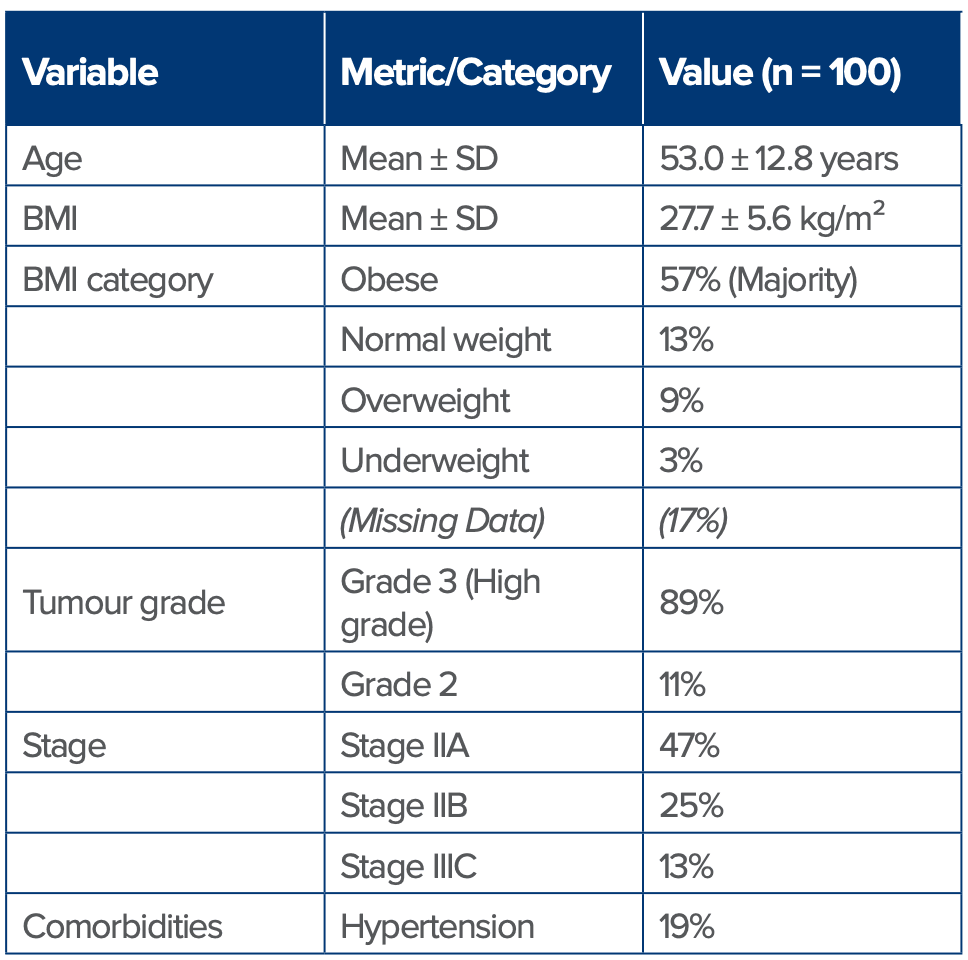
Table 1: Baseline demographic and clinical characteristics of the study population (n = 100), with continuous variables expressed as mean ± SD and categorical variables as percentages; BMI is reported in kg/m² and missing data are indicated where applicable.
Abbreviations: BMI: Body Mass Index; SD: Standard Deviation
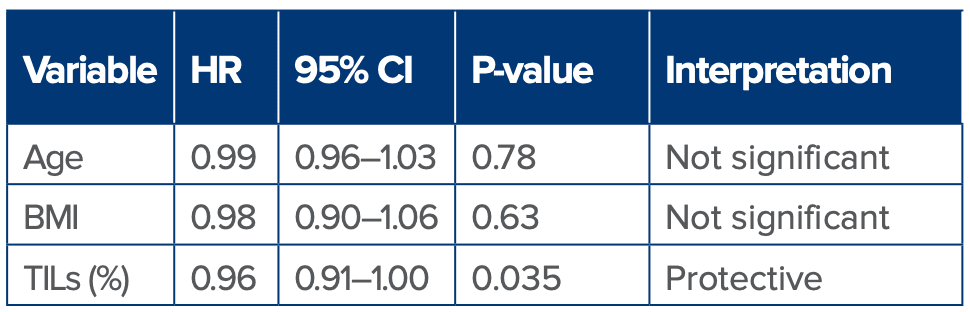
Table 2: Cox Regression Analysis.
Abbreviations: BMI: Body Mass Index; CI: Confidence Interval; HR: Hazard Ratios; TILs: Tumour Infiltrating Lymphocytes.
Metabolic and comorbidity profile
The mean BMI of the cohort was 27.7 ± 5.6 kg/m². Among patients with available BMI data, obesity was highly prevalent, with approximately 57% classified as obese, followed by normal weight (13%), overweight (9%), and underweight (3%). BMI data were missing for 17% of patients.
Hypertension was the most common comorbidity, present in 19% of patients at diagnosis.
2. Survival outcomes:
At the end of follow-up, median OS and median DFS were not reached, indicating that more than half of the cohort remained alive and recurrence-free. A total of 23 deaths and 22 recurrence events were recorded during follow-up.
The dataset demonstrated biologically plausible survival durations, validating all subsequent survival analyses.
3. Primary survival analysis:
Predictors of overall survival Cox proportional hazards regression identified TILs as the only statistically significant independent predictor of OS.
Each 1% increase in TILs reduced the risk of death by approximately 4%–6%, confirming the prognostic importance of the tumour immune microenvironment (Table 2).
4. Impact of BMI on survival:
BMI at diagnosis was not an independent predictor of survival.
- Univariate Cox analysis showed no association between BMI and OS (HR = 0.98, p = 0.63)
- KM survival curves comparing obese and nonobese patients demonstrated significant overlap, with no difference in OS or DFS
- These findings remained consistent after correction of survival data
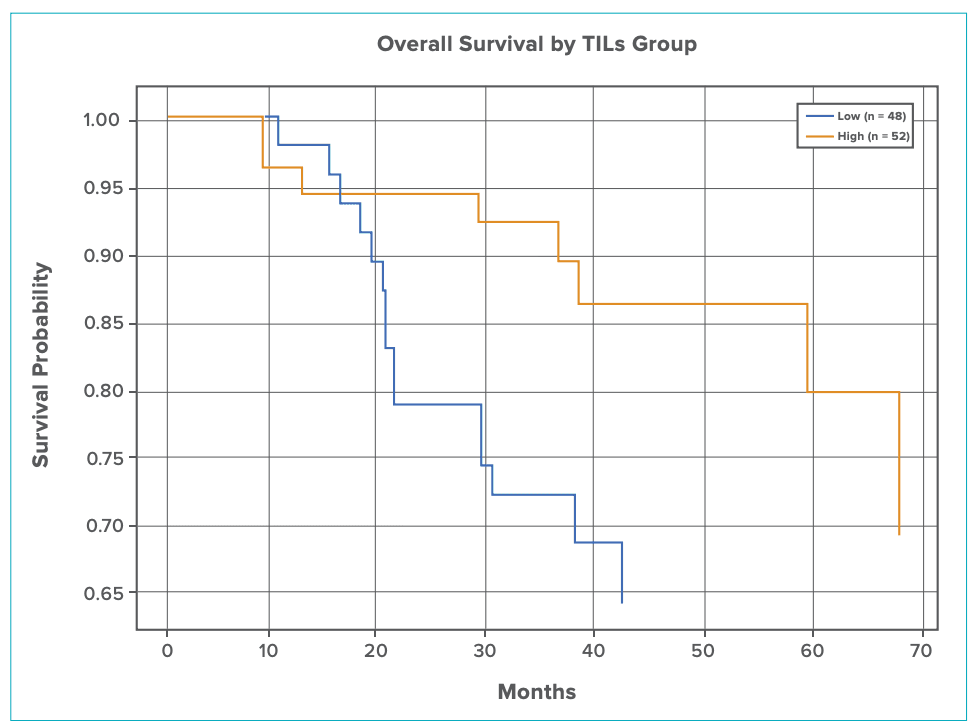
Figure 1: Overall survival by tumour infiltrating lymphocytes (TILs) group.
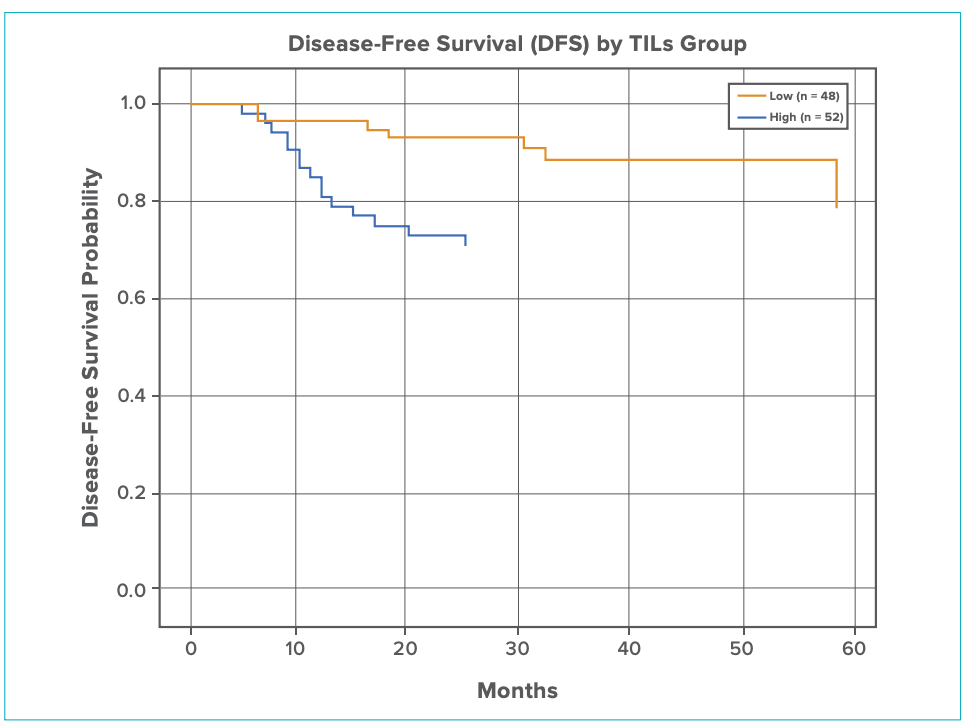
Figure 2: Disease-free survival by tumour infiltrating lymphocytes (TILs) group.
5. Impact of tumour-infiltrating lymphocytes:
TILs emerged as a strong prognostic factor. Higher TIL levels were significantly associated with improved OS (p = 0.035) (Figure 1) as well as improved DFS (p = 0.019) (Figure 2). Patients with high TILs (> 15%) showed a consistent trend toward superior survival compared to those with low TILs.
This confirms the protective role of anti-tumour immunity in TNBC.
6. Secondary analysis Immune–metabolic interplay:
Effect of BMI on immune cell quantity There was no evidence that obesity influenced immune cell recruitment to the tumour.
- No significant correlation between BMI and:
- TIL percentage
- CD8 +, CD20+, or FOXP3 + cell counts
- No significant difference in mean TIL levels across BMI categories (Kruskal–Wallis; p = 0.43)
This shows that obesity does not reduce the quantity of immune infiltration.
BMI–TIL interaction effect A multivariate Cox regression revealed a borderline significant interaction between BMI and TILs (p = 0.056).
The finding shows that:
- Main TIL effect: Strongly protective (HR ≈ 0.79)
- Interaction term: Positive coefficient, indicating attenuation of benefit
- As BMI increases, the protective survival advantage conferred by high TILs diminishes
Biological implication Although obese patients recruit immune cells to the tumour, obesity-associated metabolic dysregulation may impair immune effectiveness, reducing the survival benefit typically seen with high TILs.
7. Final integrated interpretation:
In this cohort of South Asian women with TNBC:
- BMI at diagnosis does not independently predict OS or DFS
- TILs are a strong, independent protective prognostic factor
- Obesity does not affect immune cell quantity, but reduces immune efficacy
- The survival benefit of high TILs is attenuated in obese patients
Discussion
Our retrospective cohort of South Asian women with TNBC confirms that sTIL are a powerful independent prognostic factor (each 1 % increase in TILs reduced the risk of death by ≈ 5% (Table 2). Patients with high sTIL (> 15%) experienced significantly longer OS (p = 0.035) and DFS (p = 0.019) compared with low TIL counterparts, mirroring large Western pooled analyses in which a 10% rise in sTIL improved DFS, distant-DFS (D-DFS) and OS (HR ≈ 0.22), and high sTIL (> 30%) yielded three year invasive disease free survival (iDFS) ≈ 92% and OS ≈ 99%. 9,10
Western neoadjuvant trials (e.g., KEYNOTE 522, IMpassion 130) have demonstrated that elevated sTIL predicts higher pCR rates and, when combined with programmed death ligand 1 (PD-L1) positivity, translates into survival benefits. 11
n contrast, BMI did not emerge as an independent predictor of OS or DFS in our cohort (HR ≈ 0.98, p = 0.63) (Figure 1), a finding consistent with several Western series where obesity failed to retain significance after multivariate adjustment. However, the interaction between BMI and sTIL observed in western datasets — where high sTIL markedly increased pCR and event free survival in lean patients but not in overweight/ obese individuals (Odds ratio [OR] ≈ 4.24, HR ≈ 0.22) suggests that adiposity may blunt immune mediated tumour control. 12 Indian transcriptomic work identified three immune immunotypes, with Immunotype-1 (Th1dominant, dense TIL) associated with smaller tumours, pre-menopausal status and better prognosis, a pattern that aligns with Western immunotype classifications. 1
Molecular profiling of Indian TNBCs identified three immune immunotypes. Immunotype-1 exhibited Th-1 dominant signatures, dense TILs, smaller tumours, and superior prognosis, paralleling the Th1-enriched, high-TIL subgroup reported in Western datasets. This cross population consistency suggests that intrinsic tumour immunity operates similarly across ethnicities, yet obesity related metabolic dysregulation may impair its efficacy. Elevated leptin, insulin like growth factor 1 and chronic low grade inflammation in adipose tissue can suppress cytotoxic T-cell function and promote immunosuppressive macrophages, potentially explaining the observed interaction. 13
We identified a borderline BMI × TIL interaction (p = 0.056), indicating that the survival advantage of high TILs diminishes as BMI rises. This pattern echoes Takada et al., who observed that obesity attenuates the protective effect of TILs despite no reduction in immune-cell quantity. Our data therefore support the hypothesis that metabolic dysregulation in obesity impairs lymphocyte function rather than recruitment.
Losurdo et al. also reported similar higher TILs in younger, lower BMI patients, but did not find a survival correlation, likely because most tumours were early stage. The discrepancy underscores that the prognostic impact of TILs becomes evident in more advanced or heterogeneous cohorts, such as ours. Together, these findings reinforce TILs as a robust biomarker for risk stratification, while highlighting BMI related modulation of immune efficacy that warrants further mechanistic investigation.
In Western populations, similar null associations between BMI and survival have been reported. In a large US series, obesity was not retained as a prognostic variable after multivariate adjustment, and BMI showed no independent impact on OS or DFS.
European data also indicate that BMI alone does not predict outcome in early stage TNBC, although higher BMI is often linked to poorer chemotherapy tolerance. 4 Conversely, several western studies emphasise TILs as a strong, independent biomarker: each 10% increase in stromal TILs improves DFS, D-DFS and OS, and patients with sTIL > 30% achieve > 90% three year iDFS.
The Italian cohort of 159 early stage TNBCs reported higher TIL levels in younger, lower BMI patients but did not observe a survival correlation, likely because most tumours were stage I–II.
Thus, our findings align with Western evidence that BMI is not prognostic, yet they add nuance by demonstrating that obesity may impair the functional efficacy of TILs, a pattern also hinted at in the Japanese pre operative cohort, where obese patients had lower TIL density and poorer outcomes in TNBC.
4,15 Together, the data suggest that while BMI is not an independent risk factor across ethnicities, its metabolic effects can modulate the immune microenvironment and attenuate the survival advantage conferred by robust TIL infiltration.
Our South Asian series reinforces several themes emerging from Western cohorts while adding ethnic nuance. BMI alone failed to predict OS or DFS (HR ≈ 0.98, p = 0.63) and survival curves for obese versus non obese patients overlapped, mirroring the null BMI effect reported in large western TNBC series and in the Black female cohort, where BMI was dropped from the multivariate model (Table 2). 14 Stromal TILs remained a powerful independent prognosticator; a 1 % rise in TILs reduced the risk of death by ~4%, and patients with > 15% TILs enjoyed markedly better OS/DFS, consistent with pooled Western data showing each 10% increase in sTILs improves DFS, D DFS and OS. 9 We observed a borderline BMI × TIL interaction (p = 0.056), indicating that the survival advantage of high TILs wanes as BMI rises. This functional attenuation echoes Italian preoperative data where obesity lowered TIL density and was linked to poorer outcomes in TNBC, and mechanistic work showing obesity reduces cytotoxic CD3 + lymphocytes and skews macrophage/ PD-L1+ populations. 16 Age related patterns persisted: younger patients had higher TILs and lower BMI, echoing findings from an Italian early stage cohort.
Taken together, obesity does not diminish immune cell recruitment but appears to impair effector function, limiting the benefit of a TIL rich microenvironment.
Clinically, BMI should be considered when interpreting TIL scores and when selecting patients for immune checkpoint blockade or dose intense neoadjuvant regimens. Prospective studies integrating metabolic profiling, TIL functional assays, and ancestry specific subtyping will be essential to refine risk stratification and therapeutic decision making across diverse populations.
Collectively, our data reinforce the prognostic centrality of sTIL, highlight BMI as a modifier rather than a direct driver of outcome, and propose that weight management interventions could preserve immune mediated tumour control, especially when combined with optimal chemotherapy intensity and emerging immunotherapies.
Declarations
Data availability
De-identified data underlying this study are available from the author on reasonable request.
Authors' contributions
Conceptualisation: Arya (D), Thatai (A), Mathur (P)
Methodology: Arya (D), Mathur (P)
Formal Analysis: Sharma (S)
Investigation (data collection): Mathur (P), Kaushik (A)
Writing:
Original draft: Pragya, Kaushik (A) Review and Editing: All authors.
Conclusion
This retrospective analysis in South Asian women with TNBC demonstrates that sTILs are a strong and independent predictor of survival and recurrence, while BMI at diagnosis does not independently influence outcomes; however, increasing adiposity appears to attenuate the prognostic benefit associated with high sTILs, suggesting impairment of immune function rather than reduced immune cell recruitment in obese patients. These findings support the clinical relevance of incorporating sTIL assessment into routine prognostic evaluation and highlight host metabolic status as an important contextual modifier of tumour immunity.
The study is limited by its single-centre, retrospective design, modest sample size, and relatively few outcome events. Additional constraints include potential inter-observer variability in sTIL scoring, reliance on BMI measured only at diagnosis without longitudinal follow-up or metabolic profiling, and the absence of functional immune or molecular analyses, which limits mechanistic insight and generalisability. Because the median OS has not yet been reached and follow-up remains limited, the findings should be considered preliminary, and more mature outcome data with longer follow-up are needed to confirm these observations. Future prospective multicentre studies integrating standardised sTIL evaluation, detailed metabolic phenotyping, longitudinal body composition measures, and functional immune profiling are needed to validate these observations and to determine whether metabolic optimisation or structured weight management interventions can enhance immune-mediated tumour control and improve therapeutic outcomes in TNBC.
Devavrat Arya, Poorvee Mathur, Atul Thatai, Pragya, Ayuj Kaushik, Shivam Sharma. Impact of Body Mass
Index and Tumour-Infiltrating Lymphocytes on Survival and Recurrence in Triple-Negative Breast Cancer among South Asian Women. MMJ. 2026, June. Vol 3 (2).
DOI: XXXX_XXXX_XXXX_XXXX
References
- Korlimarla A, Hari PS, Prabhu J, et al. Comprehensive characterization of immune landscape of Indian and Western triple negative breast cancers. Transl Oncol. 2022;25:101511.
- Somal PK, Sancheti S, Sharma A, et al. A clinicopathological analysis of molecular subtypes of breast cancer using immunohistochemical surrogates: A 6-year institutional experience from a tertiary cancer center in north India. South Asian J Cancer. 2023;12(02):104–11.
- Bao PP, Cai H, Peng P, et al. Body mass index and weight change in relation to triple-negative breast cancer survival. Cancer Causes Control. 2016;27(2):229–36.
- Floris G, Richard F, Hamy AS, et al. Body mass index and tumor-infiltrating lymphocytes in triple-negative breast cancer. J Natl Cancer Inst. 2021;113(2):146–53.
- Choi Y, Park SK, Ahn KJ, et al. Being overweight or obese increases the risk of progression in triple-negative breast cancer after surgical resection. J Korean Med Sci. 2016;31(6):886–91.
- Ademuyiwa FO, Groman A, O'Connor T, et al. Impact of body mass index on clinical outcomes in triple-negative breast cancer. Cancer. 2011;117(18):4132–40.
- Leon-Ferre RA, Jonas SF, Salgado R, et al. Tumor-infiltrating lymphocytes in triple-negative breast cancer. JAMA. 2024;331(13):1135–44.
- Lohmann AE, Soldera SV, Pimentel I, et al. Association of obesity with breast cancer outcome in relation to cancer subtypes: a meta-analysis. J Natl Cancer Inst. 2021;113(11):1465–75.
- Zhou Y, Tian Q, Wang BY, et al. The prognostic significance of TILs as a biomarker in triple-negative breast cancer: what is the role of TILs in TME of TNBC? Eur Rev Med Pharmacol Sci. 2021;25(7).
- Dawood S, Lei X, Litton JK, et al. Impact of body mass index on survival outcome among women with early stage triple-negative breast cancer. Clin Breast Cancer. 2012;12(5):364–72.
- Dieci MV, Bisagni G, Bartolini S, et al. Interaction between tumor-infiltrating lymphocytes and BMI in early HER2-positive breast cancer: analysis of the ShortHER trial. ESMO Open. 2025;10(11):105832.
- Abuhadra N, Sun R, Yam C, et al. Predictive roles of baseline stromal tumor-infiltrating lymphocytes and Ki-67 in pathologic complete response in an early-stage triple-negative breast cancer prospective trial. Cancers. 2023;15(13):3275.
- Hossain F, Danos D, Zabaleta J, et al. Immunogenomic diversity of triple-negative breast cancers in obese and non-obese black and white women. NPJ Breast Cancer. 2025;11(1):126.
- Takada K, Kashiwagi S, Asano Y, et al. Clinical verification of body mass index and tumor immune response in patients with breast cancer receiving preoperative chemotherapy. BMC Cancer. 2021;21(1):1129.
- Losurdo A, De Sanctis R, Fernandes B, et al. Insights for the application of TILs and AR in the treatment of TNBC in routine clinical practice. Sci Rep. 2020;10(1):20100.
- Gennari A, Amadori D, Scarpi E, et al. Impact of body mass index (BMI) on the prognosis of high-risk early breast cancer (EBC) patients treated with adjuvant chemotherapy. Breast Cancer Res Treat. 2016;159(1):79–86.