 WhatsApp Us (24/7)
 +91 926 888 0303 (24/7)


Abstract:
Anxiety represents a prevalent yet under-recognised, non-motor manifestation of Parkinson's disease (PD), affecting approximately one-third of patients globally while remaining substantially underdiagnosed, with detection rates of only 50%. This comprehensive review synthesises current evidence on anxiety in PD, emphasising regional Indian data and emerging therapeutic interventions. Epidemiological studies reveal marked geographical disparities, with Indian prevalence ranging from 14.1 per 100,000 in rural Kashmir to 328.3 per 100,000 in Mumbai, and projections indicating 2.8 million cases by 2050. The pathophysiology involves progressive degeneration of dopaminergic, noradrenergic, and serotonergic circuits within frontal-basal ganglia networks, with early raphe nucleus and locus coeruleus involvement often preceding motor symptoms. Electrophysiological investigations demonstrate significant correlations between theta wave activity (4-8 Hertz [Hz]) in basal ganglia structures and anxiety severity, providing novel therapeutic targets. Current assessment relies on gold-standard instruments including the Movement Disorder Society-unified Parkinson's disease rating scale (MDS-UPDRS) and Parkinson's anxiety scale (PAS), though systematic screening remains inadequately implemented. Therapeutic approaches encompass selective serotonin reuptake inhibitors as first-line pharmacological agents, cognitive behavioural therapy, and lifestyle modifications, though PD-specific evidence remains limited. Emerging adaptive deep brain stimulation technologies represent a paradigmatic shift toward precision neuromodulation, utilising closed-loop systems that monitor anxiety-specific neural oscillations and adjust stimulation parameters in real-time. Future directions include large-scale epidemiological investigations, biomarker development, culturally sensitive treatment approaches, and integrated care models combining neurological, psychiatric, and rehabilitation services. This review emphasises the urgent need for improved recognition and evidence-based management while highlighting the transformative potential of precision medicine approaches incorporating genetic profiling and artificial intelligence-driven optimisation.
Key words: Parkinson's Disease, Anxiety, Non-Motor Symptoms, Deep Brain Stimulation, Epidemiology, Neuromodulation, Precision Medicine, Biomarkers.
Introduction
Parkinson's disease (PD) is a progressive neurodegenerative disorder characterised by selective degeneration of dopaminergic neurons in the substantia nigra pars compacta, manifesting clinically as the cardinal motor symptoms of bradykinesia, rigidity, tremor, and
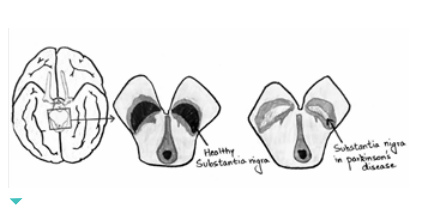
Figure 1: Site of involvement of Parkinson’s disease
Source: Conceived and guided by Dr. (Prof) Man Mohan Mehndiratta, hand-drawn by Dr. Navya Jaitly.
Anxiety in PD is defined as excessive and ongoing worry or fear that can manifest as panic disorder, social phobia, generalised anxiety disorder (GAD), or nonspecific anxiety symptoms. It severely impairs patients' quality of life and ability to function, with a prevalence of 25%.3 It is caused by PD’s effect on the brain’s chemical mediators like dopamine, serotonin, and gammaaminobutyric acid (GABA), and can be termed as a "premotor" symptom before the motor challenges appear. Despite its clinical significance, anxiety in PD remains under-recognised and undertreated, with diagnostic rates approximating only 50% of actual prevalence.4 This comprehensive review synthesises current evidence regarding the epidemiology, pathophysiology, assessment, and management of anxiety in PD, with particular emphasis on regional data from India and emerging therapeutic interventions, including adaptive neuromodulation techniques.
Epidemiological Landscape
Global perspectives
The global burden of PD is projected to reach unprecedented levels, with epidemiological projections indicating a doubling of cases by 2040. Anxiety comorbidity affects approximately 25%–40% of PD patients across different populations, though prevalence estimates vary considerably based on diagnostic criteria and assessment methodologies.5 The anxiety syndromes in PD are believed to be associated with the underlying brain disease, as evidenced by the presence of noradrenergic dysfunction.6
Indian epidemiological data
India faces a substantial and growing PD burden, with projections indicating approximately 2.8 million cases by 2050, representing 10% of the global PD population. Anxiety may manifest as a standalone symptom or as a component of depressive disorders; nevertheless, clinically significant anxiety syndromes are observed in up to 40% of people with PD. These syndromes may precede or accompany a major depressive illness and should be considered distinct from anxiety, which is a rational psychological reaction to motor disability or other personal issues.7 Regional prevalence studies demonstrate marked geographical heterogeneity (Figure 2):8
-
Rural Kashmir: 14.1 per 100,000 (age > 60 years)
-
Bangalore: 27 per 100,000
-
Rural Bengal: 16.1 per 100,000
-
Mumbai: 328.3 per 100,000
-
Rural Gujarat (2019-2020): 42.3 per 100,000 overall prevalence
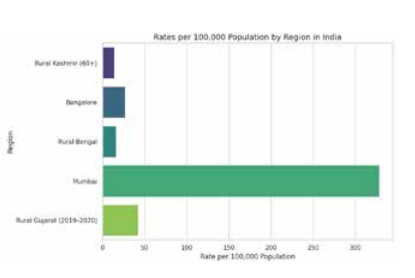
Figure 2: Regional prevalence map of Parkinson’s disease in India showing geographical variations.
Neuropsychiatric comorbidities, including anxiety and depression, affect approximately one-third of Indian PD patients, with tertiary care settings reporting a high prevalence of anxiety, depression, irritability, and apathy.8
Impact of Anxiety in PD
Individuals with PD experience anxiety during their "off" period. Symptoms will be alleviated when an individual consumes their medication. However, these symptoms may occasionally recur prior to the anticipated expiration of a medication dose or prior to the subsequent one. This results in fluctuations in an individual's condition and is referred to as "wearing off." For instance, the individual may experience a sudden inability to continue walking while on a walk or may be unable to rise from a seated position to answer the door. PD is distinguished by the presence of discrete anxiety disturbances at specific periods of the day, such as in the late afternoon or early evening. These episodes, to elaborate, have been identified as being associated with fluctuations in motor function and levodopa levels, with the majority of them occurring during "off" periods.9 The symptoms of anxiety are precisely observed because of the loss of serotonergic neurons, out of which, the particular 5-hydroxytryptamine receptor 1A (5- HT1A) receptor modulates the release of GABA, glutamate, and dopamine, and its modulation can lead to neuropsychiatric complications in the progression of PD. Therefore, the prominent role of the serotonergic degeneration rather than just dopaminergic degeneration in the pathogenesis of the non-motor triad (apathy, depression and anxiety) has also been an established pathway during recent years. Anxiety in PD is linked directly to the increased mortality rate. In order to improve the quality of living, there is an urgent need to treat anxiety in PD. Some patients experience anxiety disorders as a "reactive" response preceding their PD diagnosis. In other cases, it may be secondary to the impairment and limitation caused by motor symptoms. Anti-Parkinsonian medications (e.g., levodopa, pergolide) may also contribute to anxiety in patients with PD.
Aetiopathogenesis
1. Genetic determinants
Most PD cases demonstrate genetic underpinnings involving multiple susceptibility loci. Key genetic determinants include:10
-
α-synuclein gene (SNCA): Point mutations and duplications/ triplications
-
Leucine-rich repeat kinase 2 (LRRK2): Most common genetic cause of familial PD
-
PRKN parkin RBR E3 ubiquitin protein ligase (Parkin), PTEN- induced kinase 1 (PINK1), Parkinson disease protein 7 (DJ-1): Associated with early-onset autosomal recessive forms
-
Vacuolar protein sorting 35 (VPS35), glucocerebrosidase (GBA): Contributing to sporadic PD risk
2. Environmental factors
Environmental exposures significantly contribute to PD pathogenesis, including industrial pollution, heavy metal exposure, agricultural pesticide exposure through contaminated water sources, occupational toxin exposure, and rural-urban environmental gradients.11
3. Anxiety-specific mechanisms
Anxiety in PD originates from complex interactions between neurodegeneration (progressive loss of serotonergic and noradrenergic brainstem nuclei), stress response dysregulation (altered hypothalamic-pituitaryadrenal axis with elevated cortisol levels), oxidative stress (enhanced inflammatory cascades and mitochondrial dysfunction), and psychosocial factors (disease-related stigma and adaptive challenges)12 (Figure 3).
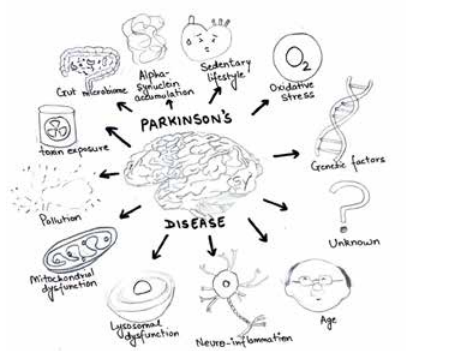
Figure 3: Comprehensive aetiological diagram showing genetic, environmental, and age-related factors in Parkinson’s disease development.
Source: Conceived and guided by Dr. Abhishek Dixit, hand-drawn by Dr. Navya Jaitly
Pathophysiological Mechanisms
Neural circuit dysfunction
Anxiety symptomatology in PD results from progressive degeneration of interconnected subcortical and cortical circuits involving dopaminergic, serotonergic, and noradrenergic neurotransmitter systems.13 The pathophysiological substrate encompasses frontalbasal ganglia circuits with dopaminergic pathways.
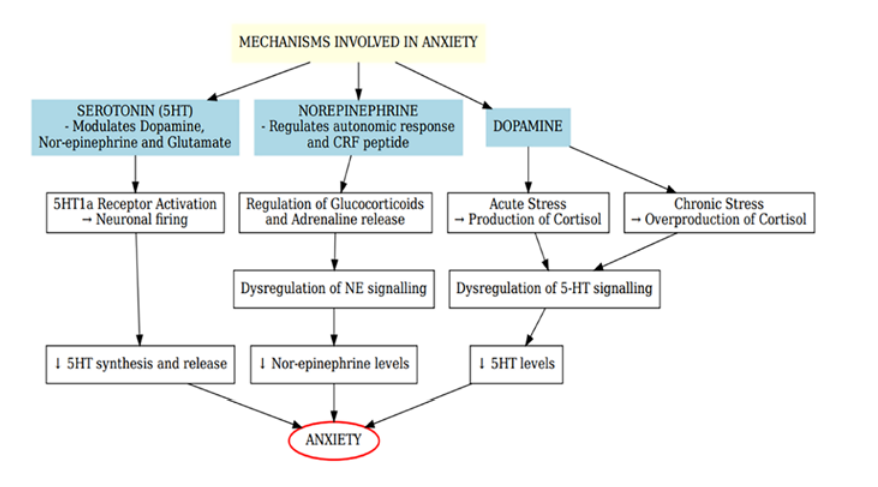
Figure 4: Pathophysiological schematic showing neural circuits involved in anxiety manifestation in Parkinson’s disease.
Temporal progression
Early involvement of the raphe nucleus (serotonin) and locus coeruleus (norepinephrine) frequently precedes motor symptom onset, suggesting anxiety as a potential prodromal marker.1
Electrophysiological correlates
Neuroimaging and electrophysiological investigations demonstrate significant correlations between theta wave activity (4–8 Hz) in basal ganglia structures and anxiety severity, providing novel targets for neuromodulation interventions.14 (nigrostriatal and mesocortical circuit dysfunction), serotonergic systems (raphe nucleus degeneration affecting mood regulation), and noradrenergic networks (locus coeruleus pathology contributing to anxiety manifestations) (Figure 4).
Assessment and Diagnostic Approaches
The non-motor symptoms of PD are frequently disregarded. The following possibilities were cited as the basis for this investigation:14Constrained consultation time
-
Constrained consultation time
-
The patient and their attendant believe that their symptoms are unrelated to the disease (e.g., visual hallucinations or diplopia)
-
The physician's lack of awareness, as they may only address the motor symptoms of PD
-
The anticipated management of non-motor symptoms in the community, typically by the family doctor or community health nurse
Identifying non-motor symptoms is easier when supported by quantitative, validated assessment tools. These include the Epworth sleepiness scale for sleep-related issues; the hospital anxiety and depressions scale (HADS), Hamilton depression rating scale (HDRS), and Beck depression inventory (BDI) for mood disorders; as well as the PD quality of life questionnaire, the Parkinson’s disease non-motor symptoms questionnaire (NMSQuest), the revised unified Parkinson’s disease rating scale (UPDRS), and others.
Gold-Standard Instruments
Primary assessment tools
-
Movement Disorder Society-unified PD rating scale (MDS-UPDRS): Comprehensive evaluation including motor and non-motor domains15
-
International Parkinson’s and Movement Disorder Society non-motor rating scale: Systematic assessment of anxiety frequency and severity alongside other non-motor symptoms
-
Structured Clinical Interviews: Gold standard for diagnostic and statistical manual of mental disorders-5 (DSM-5)-defined anxiety disorder diagnosis16
Specialised anxiety scales
-
Parkinson's anxiety scale (PAS): Disease-specific instrument for anxiety assessment
-
Geriatric anxiety inventory: Age-appropriate anxiety evaluation
-
Beck anxiety inventory: Validated anxiety severity measurement
Diagnostic challenges
Current evidence indicates substantial underdiagnosis of anxiety in PD, with detection rates approximating 50% of actual prevalence. Contributing factors include symptom overlap with motor fluctuations, healthcare provider unfamiliarity with non-motor symptoms, patient reluctance to report psychiatric symptoms, and absence of routine screening protocols.
Therapeutic Interventions
Pharmacological management
First-line agents
Selective serotonin reuptake inhibitors (SSRIs) are preferred agents due to favourable side effect profiles and minimal interference with dopaminergic therapy, though evidence base is primarily derived from general elderly populations. Buspirone, a serotonin 5-HT1A partial agonist, offers reduced sedation compared to benzodiazepines with favourable drug interaction profiles.17
Second-line options
Benzodiazepines have limited use due to cognitive impairment risk and dependency potential. Tricyclic antidepressants are reserved for refractory cases. Medication timing and dosing require careful optimisation due to motor fluctuation interactions, polypharmacy concerns, and age-related pharmacokinetic changes.18
Non-pharmacological interventions
Psychological therapies
Cognitive behavioural therapy (CBT) serves as an evidence-based first-line psychological intervention. Acceptance and commitment therapy represents an emerging therapeutic approach, while mindfulnessbased interventions provide stress reduction and anxiety management.
Physical interventions
Exercise therapy demonstrates neuroprotective effects and anxiety reduction. Yoga and tai chi serve as mind-body interventions with demonstrated efficacy. Physiotherapy and occupational therapy provide comprehensive rehabilitation approaches.
Lifestyle modifications
These include sleep hygiene optimisation, nutritional counselling, social support enhancement, and stress management techniques.
Emerging therapeutic frontiers
Adaptive deep brain stimulation (aDBS)
Recent technological advances have enabled the development of closed-loop deep-brain stimulation (DBS) systems capable of real-time parameter adjustment based on biomarker feedback.19 Key developments include target identification through theta wave activity (4–8 Hz) in basal ganglia correlating with anxiety severity, adaptive algorithms using machine learning-based stimulation parameter optimisation, and biomarker integration through local field potential (LFP) monitoring for feedback control.
Clinical applications
Clinical applications include subthalamic nucleus (STN) targeting for traditional motor symptom management with anxiety modulation potential, globus pallidus internus (GPi) stimulation as an alternative target with mood stabilisation effects, and novel targets including pedunculopontine nucleus and other anxiety-specific regions under investigation.
Safety and efficacy
Preliminary studies demonstrate superior safety profiles compared to conventional DBS, with enhanced therapeutic precision and reduced adverse effects.19
Future technological developments
Closed-loop systems
These systems feature biomarker-driven stimulation with real-time adjustment based on multiple physiological parameters, artificial intelligence (AI) integration with predictive algorithms for optimal therapeutic outcomes, and miniaturisation advances for improved device tolerability and longevity.
Precision medicine approaches
These approaches incorporate genetic profiling for personalised therapy selection based on genetic susceptibility patterns, neuroimaging biomarkers for structural and functional magnetic resonance imaging (MRI)-guided treatment decisions, and pharmacogenomics for individualised medication selection and dosing.
Surgical Interventions
Deep brain stimulation
Current standards
DBS remains the gold standard surgical intervention for advanced PD motor symptoms, with typical candidacy assessment occurring 10– 13 years post-diagnosis. Established outcomes include 50%–60% reduction in MDS-UPDRS Part II/III scores for motor improvement, significant levodopa dose reduction and dyskinesia improvement for medication management and sustained functional improvements for quality-of-life enhancement.
Non-motor applications
Emerging evidence supports DBS efficacy for nonmotor symptoms, including urinary dysfunction, sleep disturbances, and anxiety and mood disorders. Investigation of anxiety-specific DBS protocols represents an active area of clinical research.20
Future Research Directions
Clinical research priorities
-
Large-scale epidemiological studies involving multiethnic population investigations to establish global anxiety prevalence patterns
-
Biomarker development for early detection and risk stratification markers for anxiety in PD
-
Therapeutic trials through randomised controlled studies of anxiety-specific interventions
-
Cultural adaptation through development of culturally sensitive assessment and treatment approaches
Technological innovation
-
Advanced neuromodulation through refinement of closed-loop DBS systems with anxiety-specific biomarkers
-
Digital therapeutics via smartphone and wearable device-based intervention platforms
-
Telemedicine integration through remote monitoring and treatment delivery systems
-
AI applications for personalised treatment optimisation
Healthcare system integration
-
Integrated care models combining neurology, psychiatry, rehabilitation, and caregiver support
-
Screening protocols for systematic anxiety assessment in routine PD care
-
Healthcare provider education through training programs for non-motor symptom recognition and management
-
Policy development for healthcare system reforms to support comprehensive PD care
Limitations
This review acknowledges several limitations, including the heterogeneity of anxiety assessment tools across studies, the limited availability of PD-specific anxiety treatment data, potential publication bias toward positive results, and varying diagnostic criteria for anxiety disorders across different healthcare systems. Additionally, most of the therapeutic evidence derives from general psychiatric populations rather than PD-specific cohorts.
Conclusion
Anxiety represents a prevalent and clinically significant manifestation of PD that remains substantially under-recognised despite its profound impact on patient quality of life and functional outcomes. The pathophysiological substrate involves complex interactions between neurodegenerative processes affecting multiple neurotransmitter systems, psychosocial factors, and individual susceptibility patterns.
Current therapeutic approaches encompass pharmacological interventions, psychological therapies, and lifestyle modifications, though evidence specifically derived from PD populations remains limited. Emerging technologies, particularly adaptive deep brain stimulation targeting anxiety-specific neural oscillations, offer unprecedented opportunities for precision neuromodulation interventions.
Future research priorities include large-scale epidemiological investigations, biomarker development for early detection and risk stratification, and implementation of integrated care models addressing the complex multidimensional needs of PD patients. The development of culturally sensitive assessment and treatment approaches, particularly relevant for diverse populations such as those in India, is a critical area requiring immediate attention.
The continued evolution of precision medicine approaches, incorporating genetic profiling, neuroimaging biomarkers, and artificial intelligence-driven treatment optimisation, holds substantial promise for transforming anxiety management in PD from a standardised approach to truly personalised therapeutic interventions.
Acknowledgments
The authors acknowledge the contributions of patients and families affected by PD, whose experiences inform our understanding of this complex condition. We thank the multidisciplinary healthcare teams worldwide who provide comprehensive care for individuals with PD and anxiety comorbidities.
Funding
No specific funding was received for this review.
Conflicts of interest
The authors declare no conflicts of interest related to this work.
Author contributions
All authors contributed to the conception, literature review, drafting, and revision of this manuscript. All authors approved the final version for submission
Navya Jaitly, Anushka Khatana, Abhishek Dixit, Tanzeel Wani, Parul Malhotra, Man Mohan Mehndiratta. Silent Saboteurs: Anxiety in Parkinson's Disease. MMJ. 2025, December. Vol 2 (4).
References
-
Dorsey ER, Sherer T, Okun MS, et al. The emerging evidence of the Parkinson pandemic. J Parkinsons Dis. 2018;8(s1):S3–S8.
-
Chaudhuri KR, Healy DG, Schapira AH. National Institute for Clinical Excellence. Non-motor symptoms of Parkinson's disease: diagnosis and management. Lancet Neurol. 2006;5(3):235–45.
-
Parkinson's Foundation. Anxiety and Parkinson's disease [Internet]. Miami (FL): Parkinson's Foundation; 2023. Available at: https://www.parkinson.org/library/fact-sheets/ anxiety. Accessed on: 17th July 2025.
-
Weintraub D, Aarsland D, Chaudhuri KR, et al. The neuropsychiatry of Parkinson's disease: advances and challenges. Lancet Neurol. 2022;21(1):89–102.
-
Dorsey ER, Constantinescu R, Thompson JP, et al. Projected number of people with Parkinson disease in the most populous nations, 2005 through 2030. Neurology. 2007;68(5):384–6.
-
Broen MP, Narayen NE, Kuijf ML, et al. Prevalence of anxiety in Parkinson's disease: A systematic review and metaanalysis. Mov Disord. 2016;31(8):1125–33.
-
Mehndiratta MM, Garg RK, Pandey S. Nonmotor symptom complex of Parkinson's disease—an under-recognized entity. J Assoc Physicians India. 2011 ;59(5):302–13.
-
Radhakrishnan DM, Goyal V. Parkinson's disease: A review. Neurol India. 2018;66(Suppl 1):S26–S35.
-
Tripathi A, Gupta PK, Bansal T. Management of psychiatric disorders in patients with Parkinson’s disease. Indian J Psychiatry. 2022;64(Suppl 2):S330–S343.
-
Miyasaki JM, Shannon K, Voon V, et al. Practice Parameter: evaluation and treatment of depression, psychosis, and dementia in Parkinson disease (an evidence-based review): report of the Quality Standards Subcommittee of the American Academy of Neurology. Neurology. 2006;66(7):996–1002.
-
Je G, Arora S, Raithatha S, et al. Epidemiology of Parkinson's Disease in Rural Gujarat, India. Neuroepidemiology. 2021;55(3):188–95.
-
Müller-Nedebock AC, Dekker MCJ, Farrer MJ, et al. Different pieces of the same puzzle: a multifaceted perspective on the complex biological basis of Parkinson's disease. NPJ Parkinsons Dis. 2023;9(1):110.
-
Ball N, Teo WP, Chandra S, et al. Parkinson's disease and the environment. Front Neurol. 2019;10:218.
-
Wal P, Dwivedi J, Wal A, et al. Detailed insight into the pathophysiology and the behavioral complications associated with the Parkinson's disease and its medications. Futur J Pharm Sci. 2022;8:33.
-
Schrag A, Taddei RN. Depression and anxiety in Parkinson's disease. Int Rev Neurobiol. 2017;133:623–55.
-
Braak H, Del Tredici K, Rüb U, et al. Staging of brain pathology related to sporadic Parkinson's disease. Neurobiol Aging. 2003;24(2):197–211.
-
Gilron R, Little S, Perrone R, et al. Long-term wireless streaming of neural recordings for circuit discovery and adaptive stimulation in individuals with Parkinson's disease. Nat Biotechnol. 2021;39(9):1078–85.
-
Goetz CG, Fahn S, Martinez-Martin P, et al. Movement Disorder Society-sponsored revision of the Unified Parkinson's Disease Rating Scale (MDS-UPDRS): Process, format, and clinimetric testing plan. Mov Disord.
-
American Psychiatric Association. Diagnostic and statistical manual of mental disorders. 5th Edition. Arlington, VA: American Psychiatric Publishing; 2013
-
Khatri DK, Choudhary M, Sood A, et al. Anxiety: An ignored aspect of Parkinson’s disease lacking attention. Biomed Pharmacother. 2020;131:110776.