 WhatsApp Us (24/7)
 +91 926 888 0303 (24/7)


Abstract:
Magnesium plays a crucial role in numerous physiological processes. In critically ill patients, both hypomagnesaemia and hypermagnesaemia have been implicated in adverse outcomes. This study investigates the association of serum magnesium levels with morbidity and mortality in intensive care unit (ICU) patients. A prospective observational study was conducted in a tertiary care ICU in Central India over 18 months. Serum magnesium levels were measured within 24 hours of admission in 150 patients. Patients were categorised into hypomagnesaemia (< 1.7 mg/dL), normomagnesaemia (1.7–2.3 mg/dL), and hypermagnesaemia (> 2.3 mg/dL). Outcomes assessed included acute physiology and chronic health evaluation II (APACHE II) score, ICU stay, need/duration of ventilation, and mortality. Hypomagnesaemia was observed in 49.3% of patients and hypermagnesaemia in 8.7%. Patients with abnormal magnesium levels had significantly higher APACHE II scores, longer ICU stay, higher ventilation needs, and increased mortality. Median APACHE II scores were highest in hypermagnesaemia (52.0), followed by hypomagnesaemia (28.0) and normomagnesaemia (16.0). Mortality was 53.8% in hypermagnesaemia, 37.8% in hypomagnesaemia, and 1.6% in normomagnesaemia. Disturbances in serum magnesium are associated with higher disease severity and poorer outcomes. Regular monitoring and timely correction of magnesium imbalances in ICU settings may improve patient prognosis.
Key words: Magnesium, APACHE II Score, ICU Mortality, Hypomagnesaemia, Critical Illness, Ventilatory Support.
Introduction
Magnesium is the fourth most common cation in the body after sodium, potassium, and calcium. It is also the second most common intracellular cation after potassium, yet its deficiency in critically ill patients is frequently overlooked. Magnesium is essential for human health, and ionised magnesium is involved in the interaction of more than 300 enzyme reactions and is important for electrolyte homeostasis, membrane stability, cell division, and the generation of action potentials. Magnesium disturbance is a common problem in both critical care settings and in the general population. Magnesium dysregulation mainly impacts neuromuscular and cardiovascular functions. The incidence of hypomagnesaemia varies from 20%–65% in intensive care unit (ICU) patients. Hypomagnesaemia may present as tetany, vertigo, reversible psychiatric aberrations, seizures, cardiac arrhythmias, hypertension, muscular weakness, acute cerebral ischaemia, and asthma. In addition, critically ill patients have several potential risks of magnesium dysregulation. It was significantly associated with increased and prolonged need for mechanical ventilation, difficulty weaning, prolonged ICU stay, and increased mortality in critically ill patients. The critically ill patient population is one of the most vulnerable groups in modern medicine, requiring swift and efficient management in the ICU. A myriad of biochemical parameters have been studied as predictors of outcomes in these patients, and emerging evidence suggests that serum magnesium levels might play a critical role in determining both morbidity and mortality. Hence, it has gained attention as a potential prognostic biomarker in critically ill patients.
Recent studies have indicated that aberrations in serum magnesium — whether hypomagnesaemia or hypermagnesaemia — are not merely reflective of the underlying disease state but could actively influence the duration of ICU stay and overall clinical outcome. For instance, a study by Khan et al. (2023)1 demonstrated that hypomagnesaemia was independently associated with increased length of ICU stay and a higher incidence of acute complications, emphasising the fundamental role of magnesium in maintaining bioelectrical stability and metabolic function under critical conditions. Additionally, Smith et al. (2024)2 provided evidence supporting the theory that magnesium supplementation in patients with low serum levels may reduce ICU length of stay, potentially through improved myocardial performance and attenuation of inflammatory responses.
In a tertiary care setting, where patients often present with multifactorial critical illness, understanding the correlation between serum magnesium levels and ICU stay can have significant implications for clinical management. The interplay between magnesium and other electrolytes, such as calcium and potassium, further complicates the metabolic milieu in these patients. This complex relationship necessitates comprehensive studies that not only examine serum magnesium in isolation but also as part of a broader electrolyte and metabolic profile. Recent advancements in critical care research have also shed light on the molecular mechanisms by which magnesium influences cellular function. Magnesium has been observed to modulate the activity of several enzymes that are critical for maintaining homeostasis during systemic inflammatory responses and sepsis — the latter being a leading cause of prolonged ICU stays. Moreover, the role of magnesium in modulating stress responses at the cellular level, including the regulation of cytokine release, further underscores its significance in critical illness.
Given the growing evidence, it is crucial to examine the relationship between serum magnesium levels and ICU stay duration in a tertiary care setting. This study aims to assess the correlation between serum magnesium levels and APACHE II scores at admission and to evaluate magnesium’s potential as a predictor of morbidity and mortality in critically ill patients
Materials and Methods
This was a prospective observational study conducted in a tertiary care ICU in Central India over 18 months. A total of 150 critically ill patients aged over 18 years with at least one organ failure were included. Patients with pre-existing magnesium supplementation, chronic alcoholism, or pregnancy were excluded. Serum magnesium levels were measured within 24 hours of ICU admission and categorised as hypomagnesaemia (< 1.7 mg/dL), normomagnesaemia (1.7–2.3 mg/dL), and hypermagnesaemia (> 2.3 mg/dL).
The primary outcome was correlation with the APACHE II score. Secondary outcomes included ICU stay duration, ventilation needs, and mortality. Statistical analysis was performed using the statistical package for the social sciences (SPSS) SPSS v25, with p < 0.05 considered significant.
Results
Out of 150 patients, 74 (49.3%) had hypomagnesaemia, 63 (42.0%) had normomagnesaemia, and 13 (8.7%) had hypermagnesaemia (Table 1) (Figure 1).
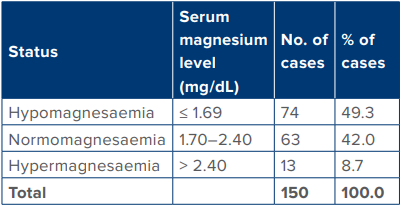
Table 1: Distribution of prevalence of hypomagnesaemia and hypermagnesaemia in the study group.
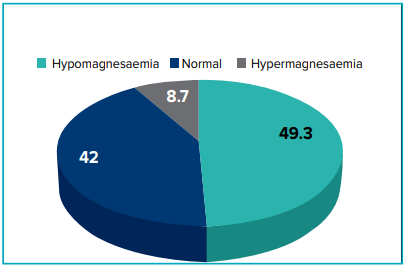
Figure 1: Distribution of prevalence of hypomagnesaemia and hypermagnesaemia in the study group.

Table 1: Distribution of median APACHE II score according to levels of serum magnesium. Abbreviations: ANOVA: Analysis of Variance; APACHE II: Acute Physiology and Chronic Health Evaluation II.
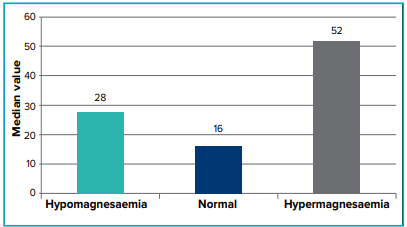
Figure 2: Distribution of median APACHE-II score according to levels of serum magnesium. Abbreviations: ANOVA: Analysis of Variance; APACHE II: Acute Physiology and Chronic Health Evaluation II.

Table 3: Distribution of mean ICU duration according to levels of serum magnesium. Abbreviations: APACHE II: Acute Physiology and Chronic Health Evaluation II, ANOVA: Analysis of Variance, ICU: Intensive Care Unit.
The median APACHE-II score among the cases studied in the hypomagnesaemia group, normal magnesium group and hypermagnesaemia group was 28.00, 16.00, and 52.00, respectively. The distribution of median APACHE-II score differs significantly across various levels of serum magnesium (p < 0.001) (Table 2) (Figure 2). Notably, patients with abnormal serum magnesium levels exhibited significantly higher median APACHE II scores than those with normal magnesium levels (p < 0.001).
The mean ± standard deviation (SD) of duration of ICU stay, among the cases studied in the hypomagnesaemia group, normal magnesium group, and hypermagnesaemia group was 7.28 ± 4.29 days, 4.78 ± 1.83 days, and 9.92 ± 3.43 days, respectively (Table 3) (Figure 3).
The distribution of mean duration of ICU stay differs significantly across various levels of serum magnesium (p < 0.001). The distribution of mean duration of ICU stay is significantly higher among the group of cases with abnormal serum magnesium levels compared to the group of cases with normal magnesium levels in the study group (p < 0.001).
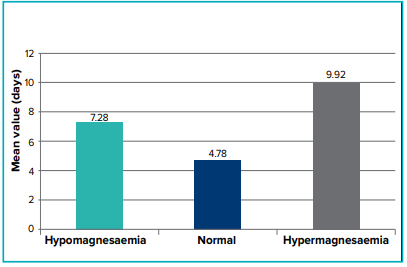
Figure 3: Distribution of mean ICU stay duration according to levels of serum magnesium. Abbreviation: ICU: Intensive care unit.
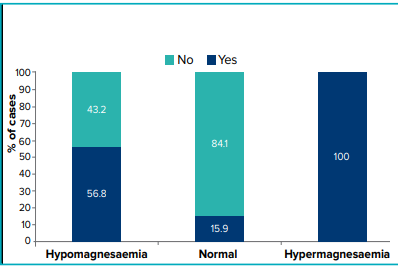
Figure 4: The distribution of incidence of need for ventilation according to levels of serum magnesium.
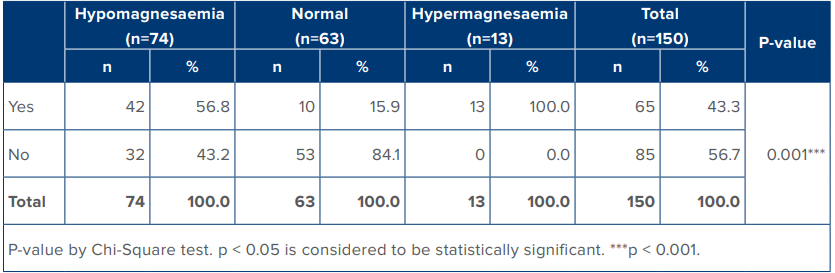
Table 4: The distribution of incidence of need for ventilation according to levels of serum magnesium.
The distribution of incidence of requirement of ventilation differs significantly across various serum magnesium levels in the study group (p < 0.05). Significantly higher proportion of cases in hypomagnesaemia and hypermagnesaemia groups had higher incidence of requirement of ventilation compared to the group of cases with normal serum magnesium levels (p < 0.05).
Out of the 74 cases with hypomagnesaemia, 42 (56.8%) required ventilation. Among the 63 cases with normal serum magnesium levels, 10 (15.9%) required ventilation. All 13 cases with hypermagnesaemia required ventilation (Table 4) (Figure 4).
Among the 74 cases that had hypomagnesaemia, 28 (37.8%) expired. Out of the 63 cases that had normal serum magnesium levels, 1 (1.6%) expired. and of the 13 cases who had hypermagnesaemia, 7 (53.8 %) expired (Table 5) (Figure 5).
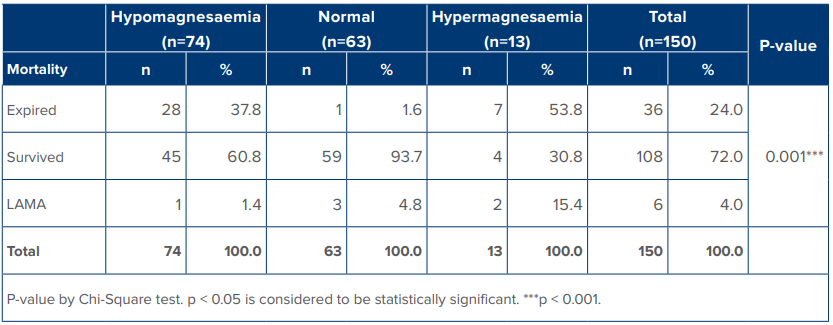
Table 5: The distribution of incidence of mortality according to levels of serum magnesium. Abbreviations: LAMA: Leave Against Medical Advice.
The distribution of incidence of mortality differs significantly across the three magnesium levels in the study group (p < 0.05). Significantly higher proportion of cases in hypomagnesaemia and hypermagnesaemia groups had higher incidence of mortality compared to the group of cases with normal serum magnesium levels (p < 0.05).
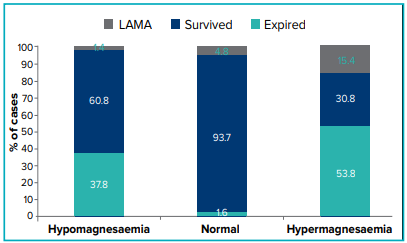
Figure 5: The distribution of incidence of mortality according to levels of serum magnesium. Abbreviation: LAMA: Leave Against Medical Advice.
Discussion
This study highlights the prognostic value of serum magnesium levels in critically ill patients. Both hypoand hypermagnesaemia were associated with worse clinical outcomes. Hypomagnesaemia, found in nearly half of the cohort, was linked to increased ventilation requirements and prolonged ICU stays. Hypermagnesaemia, though less prevalent, showed the highest mortality rate. These findings align with previous research suggesting magnesium’s role in cellular stability, cardiovascular health, and inflammatory response modulation. The results advocate for routine monitoring of serum magnesium in ICU protocols. It is well documented that older adults are at a higher risk of magnesium deficiency due to factors such as decreased dietary intake, reduced intestinal absorption, and increased renal excretion.3
In our study, we observed that individuals with hypomagnesaemia had a median APACHE-II score of 28, with a range of 15 to 64. This suggests that patients with low serum magnesium levels tend to have a higher severity of illness. Magnesium plays a crucial role in cellular metabolism and immune function, and its deficiency is associated with increased inflammatory responses, oxidative stress, and critical illness severity.4 Patients with normal magnesium levels had a significantly lower median APACHE-II score of 16, ranging from 10 to 62. This indicates that maintaining normal magnesium levels may be associated with less severe illness. Normal magnesium levels contribute to physiological stability, including neuromuscular function, cardiovascular regulation, and immune response, which may contribute to better clinical outcomes.5
Interestingly, individuals with hypermagnesaemia had the highest median APACHE-II score of 52, with a range of 14 to 68. This suggests that excessive magnesium levels may also be associated with severe illness. Hypermagnesaemia is often seen in critically ill patients with renal impairment or those receiving excessive magnesium supplementation, which can contribute to neuromuscular dysfunction, hypotension, and arrhythmias.6 The high APACHE-II scores in this group may reflect the presence of severe underlying conditions that result in magnesium accumulation.
The high mortality rate in hypomagnesaemic patients may be attributed to several factors, including cardiovascular instability, increased incidence of sepsis, and neuromuscular dysfunction. Hypomagnesaemia has been associated with arrhythmias, increased inflammation, and impaired immune response, which can contribute to adverse outcomes and increased mortality risk. Similarly, the highest mortality rate in hypermagnesaemic patients may be due to magnesiuminduced neuromuscular blockade, leading to respiratory depression, hypotension, and cardiac conduction abnormalities.7,8 Hypermagnesaemia can suppress the central nervous system, impairing haemodynamic stability and further complicating patient outcomes. Conversely, patients with normal magnesium levels had a significantly lower mortality rate (1.6%), emphasising the potential protective role of maintaining magnesium homeostasis in critically ill patients.
Conclusion
Magnesium is an essential cation involved in a variety of biological processes, including myocardial energy metabolism, electrical conductivity, and vascular tone regulation. In critically ill patients, especially those with ischaemic heart disease (IHD) admitted to ICUs, altered magnesium homeostasis has been implicated in poorer outcomes.
Significant association observed between serum magnesium levels and clinical outcomes in critically ill patients. Both hypomagnesaemia (low magnesium) and hypermagnesaemia (high magnesium) were found to correlate with worse clinical parameters, prolonged ICU stays, and increased need for ventilatory support, emphasising the critical role of magnesium homeostasis in patient prognosis. Early recognition and correction of these imbalances may contribute to improved patient outcomes.
Nitin Dambhare, Al Ameen M. Serum Magnesium Levels as a Predictor of Morbidity and Mortality in Critically Ill Patients: An Observational Study in a Tertiary Care Intensive Care Unit. MMJ. 2025, December. Vol 2 (4).
References
-
Safavi M, Honarmand A. Admission hypomagnesemia-impact on mortality or morbidity in critically ill patients. Middle East J Anaesthesiol. 2007;19(3):645–60.
-
Panahi Y, Mojtahedzadeh M, Najafi A, et al. The role of magnesium sulfate in the intensive care unit. EXCLI J. 2017;16:464–82.
-
Barbagallo M, Veronese N, Dominguez LJ. Magnesium in Aging, Health and Diseases. Nutrients. 2021;13(2):463.
-
Saglietti F, Girombelli A, Marelli S, et al. Role of Magnesium in the Intensive Care Unit and Immunomodulation: A Literature Review. Vaccines (Basel). 2023;11(6):1122.
-
Mazur A, Maier JA, Rock E, et al. Magnesium and the inflammatory response: potential physiopathological implications. Arch Biochem Biophys. 2007;458(1):48–56.
-
Limaye CS, Londhey VA, Nadkart MY, et al. Hypomagnesemia in critically ill medical patients. J Assoc Physicians India. 2012;60(1):19–22.
-
Gonuguntla V, Talwar V, Krishna B, et al. Correlation of Serum Magnesium Levels with Clinical Outcome: A Prospective Observational Study in Critically Ill Patients Admitted to a Tertiary Care ICU in India. Indian J Crit Care Med. 2023;27(5):342–347.
-
Agus ZS. Hypomagnesemia. J Am Soc Nephrol. 1999;10(7): 1616–22.