 WhatsApp Us (24/7)
 +91 926 888 0303 (24/7)


Abstract:
Patients with lung adenocarcinoma harbouring epidermal growth factor receptor (EGFR) mutations are usually treated with tyrosine kinase inhibitors (TKIs). However, patients with lung adenocarcinoma harbouring EGFR exon 20 insertion mutations are generally resistant to TKIs. Herein, we report the case of a woman who presented with right shoulder pain for 6 months after undergoing left lower lobectomy for lung adenocarcinoma in 2017. Imaging revealed extensive disease spread, and biopsy confirmed adenocarcinoma, with EGFR exon 20 insertion and exon 21 L858R mutations. After treatment with palliative intensity-modulated radiotherapy to the right shoulder, the patient was prescribed osimertinib 80mg. However, a month into the treatment, the patient developed neutropenia. Osimertinib was discontinued and later restarted at half the initial dose. The patient subsequently showed a dramatic improvement in both haematological and oncological parameters, suggesting that reduced-dose osimertinib is effective for patients with adenocarcinoma harbouring EGFR exon 20 insertion and exon 21 L858R mutations.
Key words: Epidermal Growth Factor Receptor (EGFR), Mutation, Insertion, Tyrosine Kinase Inhibitor (TKI), Osimertinib, Neutropenia
Introduction
Up to 30% patients with lung adenocarcinoma, a type of non-small-cell lung cancer (NSCLC), have epidermal growth factor receptor (EGFR) mutations.1 In these patients, approximately, 4%-10%, 38%, and 46% harbour EGFR exon 20 insertion mutations, exon 21 L858R point mutations, and exon 19 deletion mutations, respectively.2 EGFR mutation-positive NSCLCs are treated with tyrosine kinase inhibitors (TKIs), which include afatinib, gefitinib, erlotinib, and osimertinib, among others. However, NSCLCs with EGFR exon 20 insertion mutation are generally resistant to TKI therapy.3
Herein, we present the case of a woman who was treated with standard osimertinib therapy for metastatic lung adenocarcinoma but developed grade III neutropenia. The patient responded very well to a reduced dose, resulting in complete remission.
Case Report
A 63-year-old woman presented to us with right shoulder pain for 6 months, which had increased in intensity and was not relieved by nonsteroidal anti-inflammatory drugs. She was diagnosed with lung adenocarcinoma in 2017 and underwent surgical resection (left lower lobectomy) in the same year without any adjuvant treatment. Positron emission tomography (PET)– computed tomography (CT) performed at our centre revealed extensive active peribronchovascular and subpleural nodules distributed in the bilateral upper lobes, lower lobes, lingula, and right middle lobe. The nodules varied from 0.3cm to 1.5cm in axial diameter, with few nodules having central umbilication/ cavitation (Figure 1).
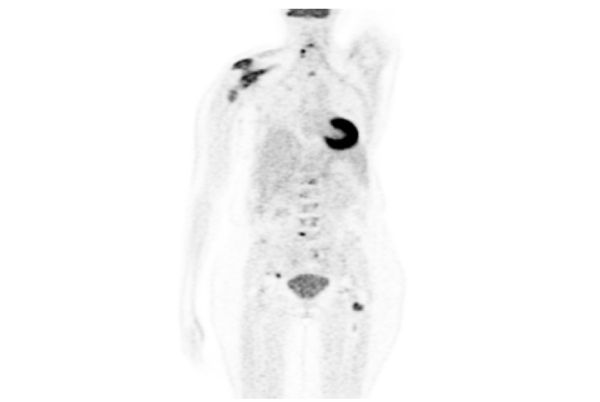
Figure 1: PET–CT performed at initial presentation.
Additionally, many metabolically active focal lesions were observed in the axial and appendicular skeletal system, several with an expansile lytic appearance (Figure 1). Ultrasonographyguided biopsy from a right scapular lesion was performed. The biopsy was suggestive of adenocarcinoma. The lesion tested positive for cytokeratin 7, napsin A, and thyroid transcription factor 1. Genetic analysis further showed that the patient was positive for EGFR exon 20 insertion and exon 21 L858R mutations. Genetic tests for anaplastic lymphoma receptor tyrosine kinase, ROS proto-oncogene 1 receptor tyrosine kinase, and programmed death ligand 1 were negative.
The patient was administered palliative intensity-modulated radiotherapy (hypofractionation, 20 Gy/5 fractions for 1 week) to the painful bony sites, including the right scapular and cervicodorsal regions. As per the genetic analysis results, the patient was treated with osimertinib 80mg along with a monthly dose of zoledronic acid. However, 1 month after starting treatment, the patient developed grade III neutropenia. Thus, osimertinib was stopped for 5 days and then restarted at half the initial dose, i.e., 40mg. This dose resolved the patient’s neutropenia, and a follow-up PET–CT (10 weeks after the first scan and 7 weeks after initiating osimertinib) revealed a partial metabolic response to therapy. This included reduced activity in the lung nodules and osseous lesions, with some osseous lesions showing complete resolution. The areas of nodular interstitial thickening were bilaterally unchanged, and no new lesions were detected (Figure 2).
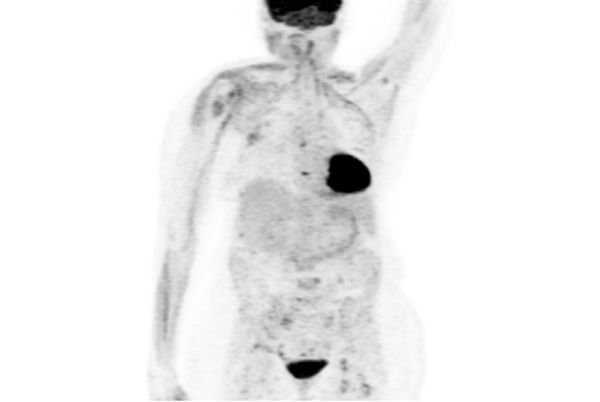
Figure 2: PET–CT performed 7 weeks after initiating osimertinib treatment
Treatment with osimertinib 40mg was continued for 14 more weeks, and another PET–CT was performed to monitor the progress of therapy. The scans revealed a dramatic decrease in the size and number of bilateral pulmonary nodules. Further, the metabolic activity in nearly all osseous lesions was virtually resolved, and no new lesions were observed, suggesting complete remission (Figure 3). The patient is being maintained on the same therapy.
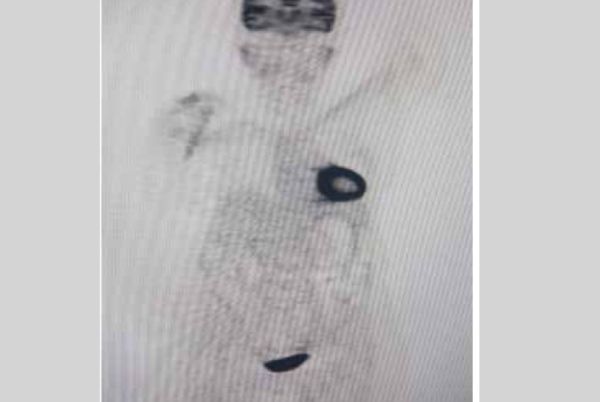
Figure 3: PET–CT performed 14 weeks after the second scan.
Discussion
The leading cause of cancer-related death worldwide is lung cancer.3 However, the development of targeted drugs, including TKIs, has improved the overall survival of patients with lung cancer.
EGFR, a tyrosine kinase receptor, is ubiquitous in human tissues and regulates various signalling pathways, including apoptosis, cell proliferation, and metastasis. Mutations in its gene may lead to continuous activation of these signalling pathways, thereby inhibiting apoptosis and promoting malignant cell proliferation.4 These mutations are mostly found in exons 18, 19, 20, and 21 of the EGFR gene, and the primary treatment for such mutations is TKIs, which bind to EGFR’s structural kinase domain and inhibit the signalling process.4 While EGFR exon 19 deletion mutations and exon 21 L858R point mutations are sensitive to TKI treatment, exon 20 insertion mutations have lower sensitivity.5 EGFR exon 20 insertion mutations are primarily C-helix insertions of one to four amino acids, and these insertions move the ATP-binding pocket inward, limiting the binding of traditional TKIs.3 However, preclinical and clinical studies have shown that osimertinib, a third-generation TKI, is effective in treating those with EGFR exon 20 insertion mutations.3
The present case was initially treated with the standard dose of osimertinib (80mg) but was later switched to a reduced dose (40mg) due to the development of haematological toxicity. A study has shown that haematological adverse events, including neutropenia, thrombocytopenia, and anaemia, can occur in up to 2% of patients undergoing treatment with osimertinib.6 Indeed, pancytopenia and aplastic anaemia have been observed as serious adverse events in patients with lung cancer and EGFR mutations treated with osimertinib.7 The pathogenesis of these adverse events is unknown. Although acquired aplastic anaemia may be caused by immune-related mechanisms, metabolite-associated toxicity, or direct toxicity,8 the present case developed neutropenia in the absence of other causes, suggesting that standard-dose osimertinib (80mg) led to neutropenia. Discontinuation and the subsequent resumption of osimertinib at a reduced dose (40mg) showed excellent response to therapy, without the development of neutropenia.
The effect of different doses of osimertinib in patients with exon 20 insertion mutations has been reported with varying results.9 Hirano et al.10 suggested that osimertinib may be more effective than other TKIs based on their study on the effect of various EGFR-TKIs on cell lines transfected with exon 20 insertion mutations. In addition, Murano et al.9 indicated that the effect of osimertinib may be independent of the type of exon 20 insertion mutation. In the present case, 40mg osimertinib showed an excellent response in the patient, possibly because of the concomitant presence of the exon 21 L858R mutation.
In conclusion, osimertinib may be effective for patients with NSCLC harbouring EGFR exon 20 insertion and exon 21 L858R mutations. However, caution must be exercised as osimertinib may lead to severe neutropenia, and dose titration may be required on a case-to-case basis.
Acknowledgments
None.
Funding
None.
Conflict of Interest
The authors declare no conflicts of interest.
Declaration of Patient Consent
The authors certify that they have obtained appropriate patient consent. In the consent form, the patient has given their consent for the study and other clinical information to be reported in the journal. The patient understands that their names and initials will not be published, and due efforts will be made to conceal their identity, but that anonymity cannot be guaranteed.
Shruti Arora, Muzammil Shaikh, Nikhil Bardeskar. Osimertinib for Epidermal Growth Factor
Receptor Exon 20 Insertion and Exon 21 L858R Mutations in Lung Adenocarcinoma. MMJ. 2024, Dec. Vol 1 (4).
DOI: XXXXXXXXXXXXXXXXXX
References
- Jordan EJ, Kim HR, Arcila ME, et al. Prospective comprehensive molecular characterization of lung adenocarcinomas for efficient patient matching to approved and emerging therapies. Cancer discovery. 2017;7(6):596-609.
- Arcila ME, Nafa K, Chaft JE, et al. EGFR exon 20 insertion mutations in lung adenocarcinomas: prevalence, molecular heterogeneity, and clinicopathologic characteristics. Molecular cancer therapeutics. 2013;12(2):220-9.
- Hou J, Li H, Ma S, et al. EGFR exon 20 insertion mutations in advanced non-small-cell lung cancer: current status and perspectives. Biomarker Research. 2022;10(1):21.
- da Cunha Santos G, Shepherd FA, Tsao MS. EGFR mutations and lung cancer. Annual Review of Pathology: Mechanisms of Disease. 2011;6(1):49-69
- Hirose T, Ikegami M, Endo M, et al. Extensive functional evaluation of exon 20 insertion mutations of EGFR. Lung Cancer. 2021;152:135-42.
- Yi L, Fan J, Qian R, et al. Efficacy and safety of osimertinib in treating EGFR mutated advanced NSCLC: A meta analysis. International journal of cancer. 2019;145(1):284-94.
- Di Marino P, Chiapperino C, Primavera FC, et al. Pancytopenia during osimertinib treatment in a patient with EGFR-mutated non-small cell lung cancer. OncoTargets and therapy. 2022:407-10.
- Young NS, Maciejewski J. The pathophysiology of acquired aplastic anemia. New England journal of medicine. 1997;336(19):1365-72.
- Murano C, Igarashi A, Yamauchi K, et al. Osimertinib as treatment for EGFR exon 20 insertion-positive lung adenocarcinoma. EXCLI journal. 2019;18:893.
- Hirano T, Yasuda H, Tani T, et al. In vitro modeling to determine mutation specificity of EGFR tyrosine kinase inhibitors against clinically relevant EGFR mutants in non-small-cell lung cancer. Oncotarget. 2015;6(36):38789.