 WhatsApp Us (24/7)
 +91 926 888 0303 (24/7)


Abstract: Ultrashort bowel syndrome occurs when the length of the small bowel is below 10–25 cm, or 10% of that expected for age. It is a rare occurrence in neonates; however, when it occurs, it results in high morbidity and mortality. Surviving newborns face significant growth and developmental detriments due to malabsorption of nutrients. A multidisciplinary approach with aggressive parenteral nutrition is the mainstay of management. Our case presented at 20 days of life, with malrotation and midgut volvulus resulting in post-surgical ultrashort bowel syndrome. Despite having only 20 cm of remaining bowel, the infant survived on conservative management and is thriving well, having been completely off parenteral nutrition since 11 months of age.
Keywords: Malrotation, Short Bowel Syndrome, Ultrashort Bowel Syndrome, Parenteral Nutrition, Malabsorption.
Introduction
Short bowel syndrome (SBS) causes malabsorption of macronutrients as well as micronutrients, which can have a great impact on a neonate’s growth and development. Ultrashort bowel syndrome (USBS) is a more severe form, when the length of the small bowel is below 10–25 cm, or 10% of that expected for age.1,2 The normal expected small bowel length for a term newborn is between 200 and 300 cm.3,4 Early and aggressive parenteral nutrition is essential in the management of SBS. Here, we report a case of malrotation with volvulus in a 20-day-old term neonate, leading to post-surgical USBS, which was managed conservatively.
Case Report
A 20-day-old male neonate presented in a critical condition with lethargy, loose stools, bilious vomiting and gross blood in the stools for one day. The neonate required intubation and invasive ventilation upon admission. Abdominal examination revealed a tense distended abdomen with a palpable lump on the lower left side. X-ray of the abdomen showed grossly dilated bowel loops. Abdominal ultrasound was suggestive of gaseous distension with minimal interloop collection; superior mesenteric vessels could not be visualised. A sepsis screen was positive, and broad-spectrum antibiotics were initiated. An exploratory laparotomy was performed by a paediatric surgeon due to suspected malrotation (probable volvulus indicated by blood in stool and bilious vomiting). Intraoperatively, malrotation with midgut volvulus was detected (Figures 1 and 2).
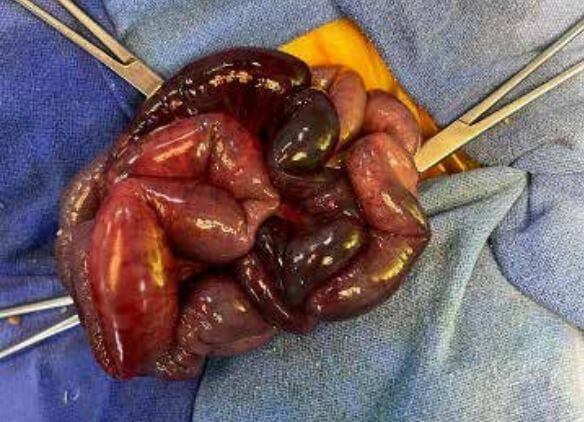
Figure 1: Malrotation with midgut volvulus seen during the first laparotomy.
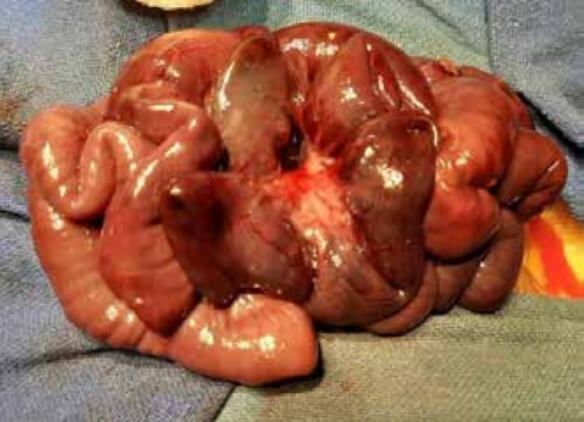
Figure 2: Bowel after detorsion during the first laparotomy
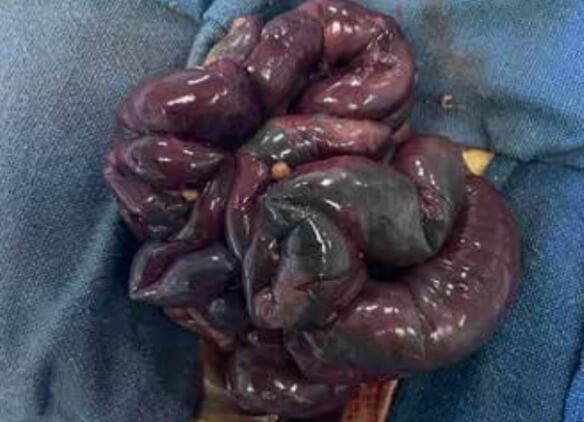
Figure 3: Necrotic bowel seen during the second laparotomy.
An end-to-end jejuno-ileal anastomosis was performed, preserving 20 cm of small bowel along with a normal stomach, duodenum, ileo-caecal junction, and complete colon. The neonate was extubated on post-operative day 3 and started on total parenteral nutrition (TPN) via a peripherally inserted central catheter on post-operative day 5. Amino acids were started at 2 g/kg/day and gradually increased to 3.5 g/kg/day. Lipids were given in the form of soyabean oil, medium-chain triglycerides, olive oil and fish oil (SMOF), started at 1.5 g/kg/ day and gradually increased to 3 g/kg/day. The glucose infusion rate was started at 6 mg/kg/min and titrated depending upon sugar values, which were kept between 60 and 100 mg%. Bilious aspirates persisted for five days post-surgery, after which oral feeding began. Lansoprazole was administered to counter hypergastrinemia in the acute phase of SBS. The neonate was initially given expressed breast milk, but tolerance was poor, as evidenced by a very high purge rate and watery consistency of the stools; hence, he was shifted to a partially hydrolysed formula. When partially hydrolysed formula also poorly tolerated, an extensively hydrolysed formula was introduced.
A brief trial of continuous enteral feed through a nasogastric tube was given with the hope of improving absorption. However, there was no reduction in stool output, and we reverted to bolus feeds. Bolus enteral feeds had to be given every two to three hours, despite evidence of no absorption initially, due to the child’s frequent demand for feeds. Enteral feeds could not be restricted based on stool output due to the child’s increasing demand for feeds. As a result of the high stool output, the total fluid requirement was initially as high as 250 ml/kg/day (intravenous plus enteral). An amino acid–based formula was also initially poorly tolerated. Frequent dehydration due to high-output diarrhoea led to the addition of loperamide (an anti-motility drug).
Medium-chain triglyceride (MCT) oil, multivitamins, magnesium and zinc were also supplemented. The infant was regularly screened for complications by testing for liver function test, kidney function test, complete blood count and C-reactive protein. After 15 days of TPN, the infant developed TPNassociated cholestasis, resolving within two weeks of conservative therapy with cholestyramine and ursodeoxycholic acid. Two episodes of central line-associated sepsis required antibiotics for 14 days each. Serum citrulline levels done after two months of surgery revealed a low value of 8 micromole/L. The tolerance for the extensively hydrolysed formula improved gradually over three months, and transitioning from continuous TPN to intermittent parenteral nutrition was achieved by five months post-surgery.
Once this was achieved, a chemoport was inserted to facilitate intermittent parenteral nutrition on an out-patient basis. Plasma citrulline, repeated at five months of age, improved to 12 micromole/L. After six months in the NICU, the infant could be discharged on intermittent parenteral nutrition, weighing 7 kg with age-appropriate milestones. At discharge, the baby required parenteral nutrition three days a week. Parents were able to administer it themselves—a conscious choice made by them given the financial constraints. After discharge, there was an initial weight loss as the infant transitioned from ICU to home care. The infant also developed an allergy to the extensively hydrolysed formula, which manifested as bloody diarrhoea; this subsided after switching to an amino acid–based formula. There was initial resistance to accepting the amino acid–based formula, possibly due to the different taste. Stool output also increased initially with the amino acid–based formula. Both of these factors necessitated an increase in parenteral nutrition frequency for three weeks. However, after the initial adjustment, the frequency of intermittent parenteral nutrition was progressively reduced, and by 11 months of age, the infant was completely off parenteral nutrition. Currently, the baby is 15 months old, taking solids, weighs 11 kg, and has normal milestones (Figure 4).

Figure 4: Current picture of the baby.
Discussion
Neonatal intestinal failure is defined as an intrinsic bowel disease resulting in an inability to sustain growth, hydration or electrolyte homeostasis. SBS is a subset of this condition that arises from a significant loss or resection of the small intestine.5 The incidence of SBS has been variously reported between 0.1% and 0.7%, depending on the subgroup studied, with lower birth weights and prematurity associated with a higher incidence.6-8 The most common causes of neonatal SBS are necrotising enterocolitis (NEC), gastroschisis and intestinal atresias. Our patient had underlying malrotation of the gut; the incidence of symptomatic malrotation is reported to be 1 in 6,000 live births.9 Wales et al. have reported an SBS case fatality rate of 37.5%.7 The mortality associated with SBS has a bimodal distribution; mortality in the early post-operative period is due to complications associated with the underlying disease process and surgery, whereas intestinal failure-associated liver disease and sepsis are the causes of mortality in the late phase. In a retrospective review, Nucci et al. reported a fiveyear survival rate of 95% in SBS patients who were weaned from TPN, compared to 52% in those remaining on TPN.10 The long-term survival of these infants has improved over the past decade, with survival rates ranging between 89% and 94%.11
There are three stages of SBS. Stage I is the acute phase, begins after recovery from post-operative ileus and lasts up to three weeks. It is characterised by large fluid and electrolyte losses in ostomy effluent/stool, requiring intravenous fluids and parenteral nutrition. Stage II, the adaptive phase, can start as early as 48 hours after surgery and continue for several months. This phase includes a gradual improvement in diarrhoea and ostomy output, the cautious initiation of enteral nutrition, and the gradual weaning of parenteral nutrition. Stage III, the maintenance phase, indicates successful intestinal adaptation.12,13 In this stage, enteral nutrition is tolerated, and parenteral nutrition can be discontinued. The time required to reach this stage is variable, depending on the infant’s clinical course and complications. The length of the remaining small intestine is a crucial factor in determining the dependency on parenteral nutrition.4 In the absence of any surgical bowel lengthening and tapering procedures, 35 cm of neonatal small bowel is associated with a 50% probability of weaning from parenteral nutrition.14 Additionally, prematurity increases the likelihood of subsequent inadequate intestinal growth. The presence of an ileo-caecal valve is another favourable prognostic sign in SBS; this was preserved in our case.15
Citrulline is secreted by the intestinal mucosa; serum citrulline levels reflect mucosal mass and co-relates with intestinal length and the ability to wean from parenteral nutrition. Intestinal failure patients with a serum citrulline level persistently below 12 micromole/L are usually unable to wean from parenteral nutrition.16 Our infant had a serum citrulline level of 8 micromole/L to begin with; however, this increased to 12 micromole/L by five months of age. Treatment includes supplementation of parenteral nutrition, enteral nutrition, fat-soluble vitamins, zinc, prokinetic agents, loperamide, and lansoprazole. Parenteral nutrition provides the required calories, fat, and protein for growth while anti-diarrhoeal agents like loperamide help reduce gut motility. Zinc inhibits cyclic-AMP-induced chloridedependent fluid secretion by inhibiting basolateral potassium channels. Hypergastrinemia is seen in SBS due to increased release of gastrin and/or decreased degradation of the hormone (due to resection of the jejunum). Lansoprazole, a proton pump inhibitor, helps in counteracting hypergastrinemia.17
Surgical procedures for bowel conservation include longitudinal intestinal lengthening and tailoring operations (LILT) and serial transverse enteroplasty (STEP).18-20 These procedures are indicated when there is a failure to advance enteral feeds or the development of complications like refractory bacterial overgrowth or intestinal failure-associated liver disease (IFALD).21 In our case, feeds were advanced successfully, and no parenteral nutrition–associated complications were observed (except an initial episode of cholestasis that was conservatively managed), so these procedures were not necessary. The role of an intestinal transplant is limited to infants with concomitant irreversible, life-threatening hepatic and intestinal failure. Moreover, the techniques to preserve hepatic function in TPN-dependent neonates have improved, and therefore, the necessity for intestinal transplants has decreased.
SBS is associated with numerous complications. The cause of IFALD is multifactorial and includes prematurity, parenteral nutrition toxicity, and recurrent sepsis. Areas of disordered motility and bowel dilation offer an ideal environment for abnormal bacterial propagation; therefore, patients have a very high incidence of catheter-associated blood stream infections (CABSI).22 Bacterial overgrowth can occur in up to 60% of children with SBS.23 Our infant had two episodes of CABSI during the hospital stay. D-lactic acidosis, a classic issue in SBS patients with bacterial overgrowth, is another concern.24 Enteral probiotics are not recommended, as CABSI (with the organism administered) is seen in parenteral nutrition– dependent patients. Novel medical therapies are upcoming, like glucagon-like peptide-2 (GLP-2) analogues, which facilitate intestinal adaptation. Teduglutide is one such pharmacological agent which has been approved for use in children over one year of age. It improves intestinal absorption in patients with SBS by increasing villous height and crypt depth. However, its effects are temporary, lasting only as long as the drug is administered.25 Currently, teduglutide is not available in the Indian market.
Statement regarding Ethics Committee Approval and informed consent from subjects
The authors declare taking informed written consent for the publication of clinical photographs/materials from the legal guardian of the patient, with an understanding that every effort will be made to conceal the identity of the patient. No ethical committee approval is required as this is a review article.
Conclusion
Our case presented with volvulus in the neonatal period due to underlying malrotation. Despite best efforts, only 20 cm of small bowel could be preserved, leading to post-surgery USBS. However, with closely monitored TPN and slow but persistent attempts at oral feeds, the newborn survived with satisfactory growth and neurodevelopment. The requirement for parenteral nutrition gradually decreased as the infant grew. After six months of hospital stay, the child could be discharged on intermittent home parenteral nutrition through a chemoport. The child is now 15 months old, weighs 11 kg and has been entirely off parenteral nutrition since 11 months of age. With patience and perseverance, infants with USBS can achieve positive outcome
Kaushaki Shankar, Bhavya Kukreja, Vishnu Dutta Agrawal. Post-operative Ultrashort Bowel Syndrome:
Review of the Literature on Short Bowel Syndrome in Infants. MMJ 2024, Dec. Vol 1 (4).
DOI: XXXXXXXXXXXXXXXXXX