 WhatsApp Us (24/7)
 +91 926 888 0303 (24/7)


Abstract: Evidence suggests a high-risk association between periodontal disease and coronary heart disease. Oral inflammation and its potential to escalate the systemic inflammatory response leading to atherogenesis has been well explained in published literature. The aim of this scoping review is to highlight the inflammatory mechanisms involved in the risk associations for oral - heart axis.
Introduction
The global burden of oral diseases is among the most common NCD (non-communicable diseases). Their impact on individuals and communities is considerable in terms of pain and suffering, impairment of function and reduced quality of life and cost of treatment (FDI, World Den Parliament, 2012). Amongst the oral diseases, pperiodontal disease (periodontitis / gum disease) is one of the most common chronic multifactorial inflammatory disease caused by microorganisms and characterised by progressive destruction of the tooth supporting apparatus leading to tooth loss. Periodontitis is a major public health issue because it reduces chewing function and impairs aesthetics, it causes tooth loss and disability, it is responsible for a substantial proportion of edentulism and masticatory dysfunction, it has an impact on escalating dental costs and it is a chronic disease with possible impact on general health.[1]
Periodontitis alone has been an independent risk factor contributing to the development of atherosclerotic vascular disease and the underlying mechanism is systemic inflammation.[2] Atherosclerosis is a chronic inflammatory process affecting the intima of mainly large and medium calibre arteries, leading to formation of lipid build-ups created as a result of accumulation of inflammatory cells and the formation of a fibrolipid structure, referred to as atherosclerotic plaque. Theories regarding the pathogenesis of atherosclerosis have changed over time. It is now widely accepted that a major component of pathology in cardiovascular disease (CVD) and particularly in atherosclerosis involves multiple components of the innate and adaptive immune systems leading to an inflammatory response within the atheromatous lesion.[3]
Understanding the intricate relationship between obesity and liver fibrosis is imperative, considering the profound impact on morbidity and mortality during surgical procedures[6]. The study delves into evaluating the diagnostic methods employed for identifying and managing liver fibrosis.
Rationale for inflammatory link between periodontitis and coronary artery disease[4]
Chronic oral infection periodontitis leads to entry of bacteria (or their products) into the blood stream. The bacteria activate the host inflammatory response by multiple mechanisms. The host immune then favours atheroma formation, maturation and exacerbation.
Potential mechanisms
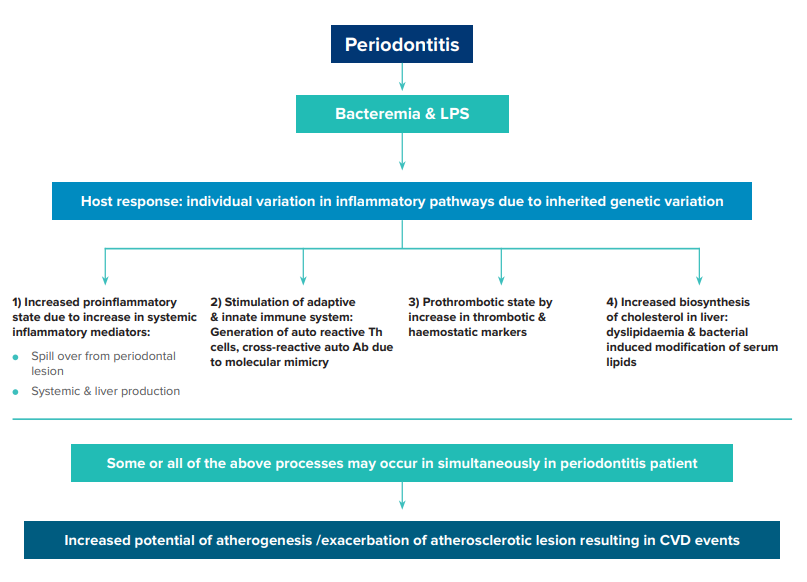
Figure 1: Inflammatory mechanisms linking Periodontitis and Atherosclerotic cardiovascular disease[14]
Role of systemic biomarkers and inflammatory mediators as found in periodontal infections
Periodontitis patients have frequent bacteremic episodes associated with detectable concentrations of lipopolysaccharide (LPS), which are frequently found in the circulation. Animal models of infection utilising periodontal disease pathogens such as Porphyromonas gingivalis indicate that oral or systemic infection can promote inflammatory responses in sites distant from the oral cavity, such as in the atheroma.[5,6] Thus, bacteria, or their pro-inflammatory components, stimulate systemic inflammatory responses as well as local inflammatory responses in atheromatous lesions.[7] This would follow their association with or modification of serum lipids, engagement of receptors on inflammatory cells and endothelium, invasion of endothelial cells, or seeding of atheromatous lesions with bacteria or bacterial components. Bacteria or their products could then promote inflammatory changes that would contribute to the development of atheromatous lesions.
Role of antibodies in relevance to atherogenesis that can be induced by oral microorganisms
Periodontitis patients are known to have elevated systemic antibody responses to a variety of periodontal microorganisms, and these organisms are known to be able to induce crossreactive and specific antibodies of relevance to atherosclerosis risk. These antibodies in turn may promote or influence inflammatory responses systemically and within atheromatous lesions. Measures of such antibodies have both been associated with increased cardiovascular risk in periodontitis by exhibiting ‘molecular mimicry’ wherein cross-reactive antibodies induced by periodontal pathogens recognising host antigens and modulate their function. In some cases, these antibodies increase the risk for atherosclerosis by enhancing endothelial inflammation, promoting uptake of lipids into macrophages, or blocking antiatherogenic effects of protective molecule. Few examples of such antibodies liberated by periodontal pathogens include: P gingivalis expressed antibody HSP8 (GRoEL), anticardiolipin9, anti-phosphorylcholine10 (anti-PC) and anti-oxidized LDL11 (anti-oxLDL).
Serum lipids whose levels and potential modification by oral infection influences atherogenesis
Serum concentrations of potentially inflammatory lipids, including LDLs, triglycerides (TGs) and very low-density lipoproteins (vLDLs) are elevated in periodontitis patients. These lipid sub-forms may easily enter the blood vessel wall, e being susceptible to modification and therefore more likely to be incorporated in to the atherosclerotic lesion. This would accelerate development of the local lesions and promote the maturation of the lesions (Table 1).
| Inflammatory mediator or marker | Association(s) with CVD | References |
|---|---|---|
| C-reactive protein (CRP) | Serum levels increased in chronic periodontitis (CP) | Amar et al. 2003[15] |
| CRP, fibrinogen, interleukin (IL)-6, and other markers | Serum levels decreased following therapy | Tonetti et al. 2007[16] Hussain Bokhari et al.[17] 2009 |
Table 1: Clinical studies highlighting the role of biomarkers and increased systemic mediators of inflammation in periodontitis as a link to inflammation in cardiovascular diseases (CVD)
Thrombotic and hemostatic markers raised by oral inflammation as in relevance to inflammatory process underlying atheroma
The coagulation and fibrinolytic systems are intimately associated with vascular inflammation and play an important role in atherogenesis and thrombosis.[12,13] A number of hemostatic factors are associated with the development of atherosclerosis including fibrinogen, von Willebrand factor, tissue plasminogen activator (tPA), plasminogen-activator inhibitor-1 (PAI-1) and factors VII and VIII. PAI-1 is a protease inhibitor that decreases fibrinolysis by inhibiting tPA and uPA (urokinase). Plasminogen-activator is an indicator of raised systemic inflammation and is a risk marker for atherosclerosis and results in increased blood viscosity, thus causing endothelial cell activation and platelet aggregation. Periodontitis has been associated with higher plasma fibrinogen levels and white blood cell counts as reported in several studies and are decreased following periodontal therapy (Table 2).
| Thrombotic or hemostatic marker or mediator | Association(s) with CVD | References |
|---|---|---|
| Plasminogen-activator inhibitor (PAI)-1 | Serum levels in patients with advanced periodontitis decrease following full-mouth extraction | Taylor et al. 2006[18] |
| Serum levels increased in chronic periodontitis (CP) | Bizzarro et al. 2007,[19] | |
| Fibrinogen | Serum levels increased in CP | Schwahn et al. 2004,[20] |
| Serum levels increased in patients with CVD and CP compared to either condition alone | ||
| von Willebrand factor and PAI-1 | Significant association with periodontal measures in periodontitis patients with CVD | |
| CRP, fibrinogen, interleukin (IL)-6, and other markers | Serum levels decreased following therapy | Tonetti et al. 2007[16] Hussain Bokhari et al.[17] 2009 |
Table 2: Clinical studies suggesting role of thrombotic and hemostatic mediators and markers in periodontitis and cardiovascular diseases (CVD)
CONCLUSION:
Published data support the concept that periodontitis can contribute to systemic levels of inflammatory mediators and markers associated with increased risk for CVD. A variety of mechanisms that depend on exposure of the oral microflora or components thereof to organs distant from the oral cavity are affected. Periodontitis patients have frequent bacteremias and that sera from such individuals contain elevated LPS. Thus, promotion of a systemic inflammatory response with production of CRP or other mediators most likely occurs.
References
- Baehni P, Tonetti M S. Group 1 of the European Workshop on Periodontology. Conclusions and consensus statements on periodontal health, policy and education in Europe: A call for action–consensus view 1. Consensus report of the 1st European Workshop on Periodontal Education. European Journal of Dental Education2010; 14, Suppl 1:2–3
- Kim J, Amar S. Periodontal disease and systemic conditions:a bidirectional relationship. Odontology 2006;94(1):10-21
- Libby P, Ridker P M, Hansson G K. Inflammation in atherosclerosis: from pathophysiology to practice. J Am Coll Cardiol 2009; 54(23): 2129–2138
- Schenkein HA, Loos BG. Inflammatory mechanisms linking periodontal diseases to cardiovascular diseases. J Clin Periodontol 2013;40 :S51-69
- Gibson F C, 3rd, Genco C A. Porphyromonas gingivalis mediated periodontal disease and atherosclerosis: disparate diseases with commonalities in pathogenesis through TLRs. Current Pharmaceutical Design 2007; 13:3665–3675
- Hayashi C, Gudino, C. V., Gibson, F. C. 3rd &Genco, C. A. Review: Pathogen-induced inflammation at sites distant from oral infection: bacterial persistence and induction of cells pecific innate immune inflammatory pathways. Mol Oral Microbiol2010; 25, 305–316
- Teles R , Wang C Y. Mechanisms involved in the association between periodontal diseases and cardiovascular disease. Oral Diseases 2011; 17: 450–461
- Maeda H, Miyamoto M, Hongyo H, Nagai A, Kurihara H, Murayama Y. Heat shock protein 60 (GroEL) from Porphyromonas gingivalis: molecular cloning and sequence analysis of its gene and purification of the recombinant protein. FEMS Microbiology Letters1994; 119: 129–135
- Schenkein H A, Best A M, Brooks C N,Burmeister J A, Arrowood J A, Kontos M C , Tew J G. Anti-cardiolipin and increased serum adhesion molecule levels in patients with aggressive periodontitis. J Periodontol 2007; 78: 459–466
- Schenkein H A, Berry C R, Burmeister J A,Brooks C N, Best A M , Tew J G. Locally produced anti-phosphorylcholine and anti-oxidized low-density lipoprotein antibodies in gingival crevicular fluid from aggressive periodontitis patients. J Periodontol 2004; 75:146–153
- Monteiro A M, Jardini M A, Alves S, Giampaoli V, Aubin E C, Figueiredo Neto AM, Gidlund M. Cardiovascular disease parameters in periodontitis. J Periodontol2009; 80: 378–388
- Davalos D , Akassoglou K. Fibrinogen as a key regulator of inflammation in disease. Semin Immunopathol 2012;34: 43–62
- Popovic M, Smiljanic K, Dobutovic B, SyrovetsT, Simmet T , Isenovic E R. Thrombin and vascular inflammation. Mol Cell Biochem 2012; 359: 301–313
- Schenkein HA , Loos BG . Inflammatory mechanisms linking periodontal diseases to cardiovascular diseases. J Clin Periodontol 2013; 40 (Suppl. 14): S51–S69
- Amar S, Gokce N, Morgan S, Loukideli M, Van Dyke T E , Vita J A. Periodontal disease is associated with brachial artery endothelial dysfunction and systemic inflammation. Arterioscler Thromb Vasc Biol2003; 23:1245–1249
- Tonetti M S, D’Aiuto F, Nibali L, Donald A, Storry C, Parkar M, et al. Treatment of periodontitis and endothelial function. NEJM2007;356: 911–920
- Bokhari S A, Khan A A, Tatakis D N, Azhar M, Hanif M , Izhar, M. Non-surgical periodontal therapy lowers serum inflammatory markers: a pilot study. J Periodontol2009; 80: 1574–1580
- Taylor B A, Tofler G H, Carey H M, Morel-Kopp M C, Philcox S, Carter T R, Elliott M J, Kull A D, Ward C , Schenck K. Fullmouth tooth extraction lowers systemic inflammatory and thrombotic markers of cardiovascular risk. J Dent Res2006; 85: 74–78
- Bizzarro S, Velden V, Heggeler HT, Leivadaros JM, Hoek FJ, Gerdes V E, etal (Periodontitis is characterized by elevated PAI-1 activity. Journal of Clinical Periodontol 2007;34: 574–580
- Schwahn C, Volzke H, Robinson D M, Luedemann J, Bernhardt O, Gesch,etal Periodontal disease, but not edentulism, is independently associated with increased plasma fibrinogen levels. Results from a population-based study. Thrombosis and Haemostasis 2004; 92: 244–252
- Montebugnoli L, Servidio D, Miaton R A,Prati C, Tricoci P, Melloni C , Melandri G. Periodontal health improves systemic inflammatory and haemostatic status in subjects with coronary heart disease. J Clin Periodontol 2005;32: 188–192