 WhatsApp Us (24/7)
 +91 926 888 0303 (24/7)


Abstract: Total knee replacement (TKR) is a commonly done surgery in cases of high-grade arthritis of knee affecting activity of daily living in patients. Conventional zig based TKR (CTKR) with manual instruments provides a balanced knee according to the surgeons’ subjective assessment of ligament balance, still some percentages of patients are found to have dissatisfaction in regards to persistent pain, lack of range of motion and walking unaided. In this study we are sharing our experience in a consecutive series of 200 Robotic-Assisted Primary TKRs. Robotic assisted TKR (RATKR) has multiple advantages over conventional jig based TKR (CTKR), such as it improves the accuracy of implant positioning and reduces outliers in achieving the planned limb alignment, minimal soft tissue dissection, thus reducing pain and need of analgesia, early recovery and giving a natural arc of motion postoperatively. Robotic assisted TKR is associated with reduced iatrogenic injury to the periarticular soft tissue envelope compared to conventional jig-based TKR. A clear advantage of robot-assisted TKR seems to be the ability to execute a highly precise preoperative plan based on computed tomography (CT) scans, minor modification up to submillimetre accuracy in implant positioning can be done which is impossible to differentiate with human eyes. Due to improved alignment of the prosthetic components and improved boneimplant fit, implant loosening is anticipated to be reduced. Limitations of robotic TKR include high installation costs, increased surgical time, implant specificity of the robots and nonavailability of long-term literature due to being a recently evolved technology.
Keywords: Total knee replacement, Robotic assisted total knee replacement
Introduction
Total knee replacement (TKR) is an established and highly effective treatment for patients with symptomatic end-stage knee osteoarthritis.[1][2] United Kingdom registry data shows that this procedure is performed in over 90,000 patients per year in the United Kingdom. 3 Pooled registry data has shown that implant survivorship, assessed with revision as the primary endpoint, is approximately 82% at 25 years follow-up.[4][5] Recent studies have shown that up to 20% of patients remain dissatisfied following TKR in terms of pain, instability and range of motion, despite advances in implant design, implant material, enhanced recovery programmes, thromboembolic prophylaxis, antibiotic prophylaxis, patient-specific implants and computer navigation. [2,6–11] Important surgeon-controlled variables are accurate implant positioning, balanced flexion-extension gaps, proper ligament tensioning and preservation of the periarticular soft tissue envelope that affect functional outcomes, implant stability and long-term implant survivorship.[12-19] Thus, technology that caters to these factors with superior accuracy and reproducibility may lead to further enhance results in TKR.
Over the last decade, Robotic TKR has shown evidence to provide the accuracy of implant positioning and reducing outliers in limb alignment compared to conventional jig-based TKR.[20-26] A clear advantage of robot-assisted TKR seems to be the ability to execute a highly precise preoperative plan based on computed tomography (CT) scans, minor modification up to submillimetre accuracy in implant positioning can be done which is impossible to differentiate with human eyes. Robotic assisted TKR (RATKR) has multiple advantages over conventional jig based TKR (CTKR) such as, accurate implant positioning and achieving the planned limb alignment, minimal soft tissue dissection, thus, reducing pain and need of analgesia, early recovery and giving a natural arc of motion postoperatively. However, many clinicians still remain sceptical about robotic TKR owing to the substantive set-up costs and limited longterm evidence comparing clinical and functional outcomes to conventional manual TKR. In this study, we are sharing our experience in a consecutive series of 200 Robotic-Assisted Primary TKRs, the benefits of this technology on accuracy of implant positioning and periarticular soft tissue preservation and highlights the limitations of robotic TKR compared to conventional jig-based TKR.
Material and methods
The study cohort consists of 200 patients who underwent total knee replacement using fully automated CT based robotic system (CUVIS Joint, MERIL Maxx) with a haptic arm with burr to perform the bony cuts (Figure 1).
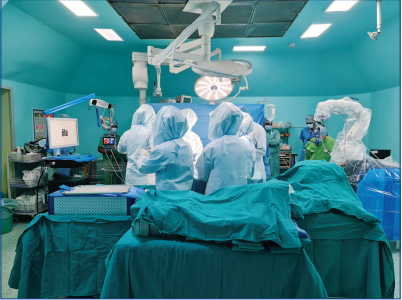
Figure 1: Intraoperative pictures during Robotic Assisted Total Knee Replacement showing haptic
All cases were performed by a single surgeon (Dr (Prof.) Anil Arora) using a Posterior Stabilised implant system (Opulent bionik Gold knee, Meril Maxx) which is the most biocompatible non-allergic surface material with Titanium Niobium Nitride (TiNbN) coating.
According to Figure 2(a), the distribution of patients by age shows that 28% are between 50-60 years, 56% between 60-70 years and 16% between 70-80 years. Additionally, as depicted in Figure 2(b), regarding Body Mass Index (BMI), 33% are categorised as normal, 37% as overweight and 30% as obese. The surgeon’s goal for each case was to achieve quantitative balance throughout the range of motion.
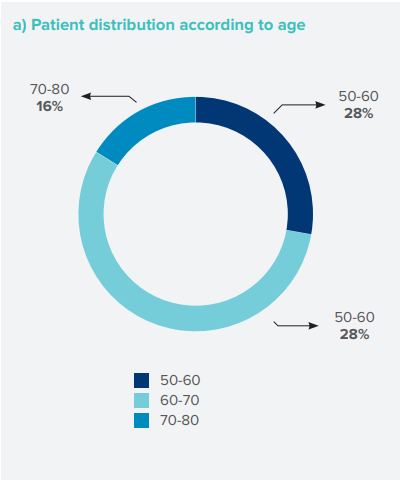
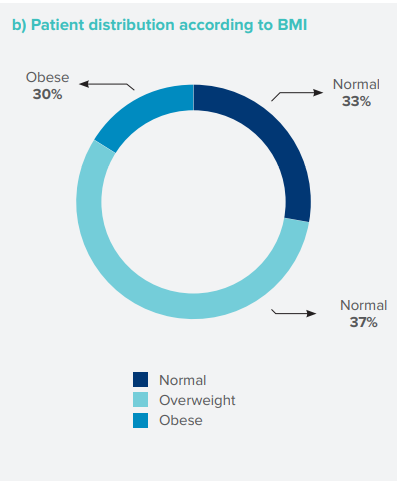
Figure 2: Pie chart showing distribution of patients according to a) Age group; b) BMI
The surgical technique involved a pre-operative CT scan and planning based on bone anatomy (Figure 3),
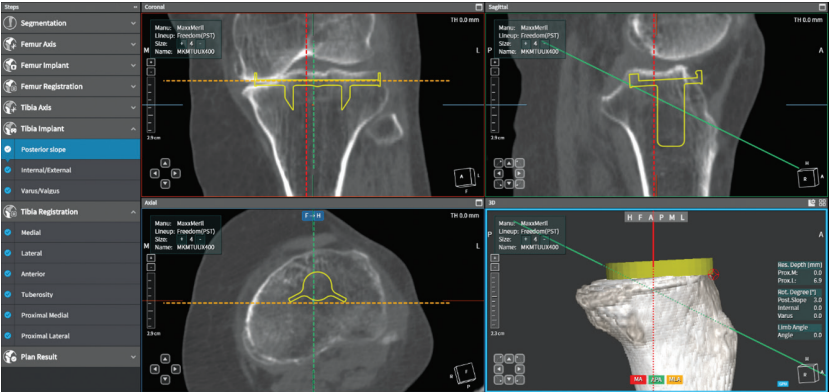
Figure 3: Pre-operative CT based surgical pre-planning screen creating a preplan which is fed to the robot in the operating room. After putting tibial and femoral arrays, the 3D models of the bones and the associated plan were registered intra-operatively (Fig.4) to the actual bone surfaces
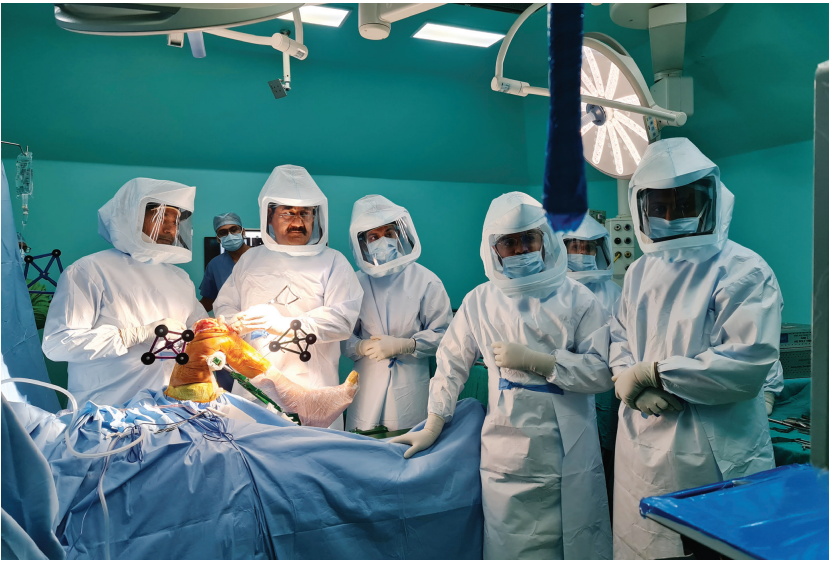
Figure 4: Intra-operative picture showing surgeon Dr (Prof.) Anil Arora doing bony registration with robotic probe
Coronal alignment, sagittal alignment (contracture) gaps in flexion [fig. 5(a)] and extension [fig. 5(b)] were assessed and modifications are made to the femur and tibia preplan to optimise the flexion and extension space. The surgeon assessed the correctable coronal alignment in extension first. This system gives the surgeon the liberty to do a dynamic assessment of alignment and stability, permits micro adjustments to the preplan to achieve optimum component position before any actual bony cuts are performed. The displayed gaps on the screen are the predictive distance between the femoral and tibial virtual cut surfaces and were checked at full extension, 30°, 60° and 90° flexion. To capture the gaps at 90° flexion and extension, the leg was physically manipulated with valgus and varus to stress the collaterals.
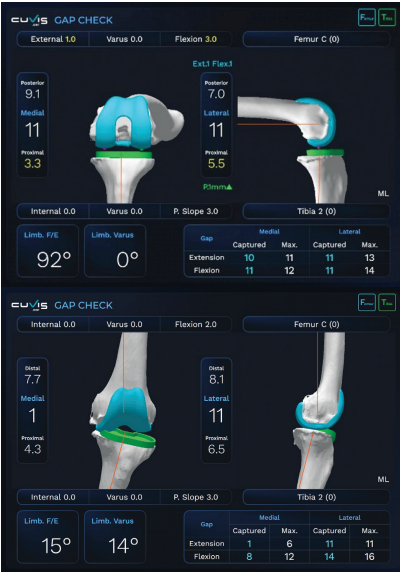
Figure 5: Gap check with trial implants (a): in flexion (b): in extension - showing correction of varus deformity with balanced medial and lateral gaps
After the cuts were made (fig. 6) and the trials were implanted and the joint tension/balance was checked against the prescribed cuts. This was followed by fine tuning either the bony cuts or the soft tissues to achieve a balanced knee, as described in the methods above. This makes sense in patients with fixed deformities that are not correctable to satisfactory alignment during the manipulation of the leg before cuts are made. Robotic technologies in TKR gives the liberty to optimisation of both patient specific component placement and soft tissue driven adjustments to create well-aligned, well-balanced TKR. During subsequent trialling, the gaps were recorded at 0°, 30°, 60° and 90° flexion, while also recording the coronal and sagittal alignment. Following the surgical corrections, the alignment was assessed and recorded again at the given flexion angles. After quantitively balancing the knee in flexion and extension the final implantation is done.
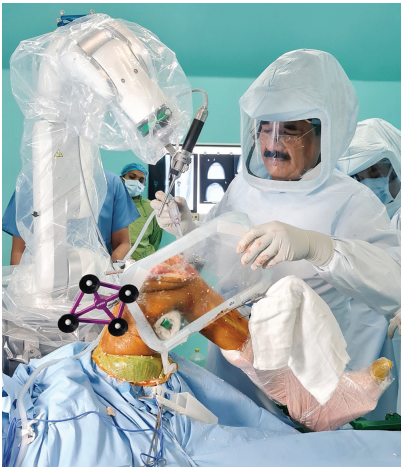
Figure 6: Intra-operative picture showing CUVIS Joint haptic robotic arm performing bony cuts.
Results
- Postoperative pain following total knee replacement was objectively studied using VAS score and that showed no significant difference in the first 3 weeks but after 3 weeks patients had better pain control with low VAS score at 6 weeks and 3 months with decreased requirement of analgesia.
- Blood loss was studied which showed a drop of 2(+0.5) gm/ dl as the tourniquet was released following bony registration and then inflated after the bony cuts were completed, but the hidden loss postoperatively was less which was attributed to the less soft tissue dissection and no need of opening the medullary canal for alignment in robotic assisted TKR.
- On follow-up visits patients were enquired about the need for a support while walking and the day when they stopped using supports like a walker or stick, majority of the patients were able to walk without any support in 21(+3) days from the day of surgery
- Range of motion was examined and majority had a satisfactory knee range at 3 weeks and a near complete range at 6 weeks. Western Ontario and McMaster university Osteoarthritis Index (WOMAC) scores [range (0-96), where 0 represents best status and 96 represents worst possible status] were studied which showed scores of (87+4) preoperatively which were reduced to (9+3) at 3 months post-operatively.
- Patients were advised to take a full length scanogram of both lower limbs with an intermalleolar distance of 10cm, the alignment was studied and the alignment outliers between the 3-degree varus and valgus from neutral were found to be nil. [fig. 7(a,b)]
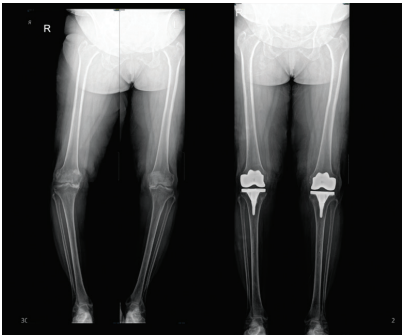
Figure 7: Bilateral full-length lower limb X-ray scanogram a) Preoperative; b) Post-operative
Discussion
In this paper, we are sharing our experience of achieving a quantitatively balanced knee using the CUVIS Joint, Meril Maxx platform.
While TKR has proven to be an effective operation for relieving pain and restoring function in patients with end stage degeneration of the knee joint, failures continue to occur [27,28]. Modes of failure, such as aseptic loosening, polyethylene wear and instability, can often be attributed to the technical performance of the operation [29,30,31,32.]. Traditional methods of component alignment and ligament balance are either performed without objective measurement or are subject to measurement errors [33], which ultimately contribute to failures of TKR. Although patient factors, such as obesity, comorbid conditions and mental disorders, influence TKR outcomes [34,35], some technical factors may play a role in patient dissatisfaction. Robotic technology permits various changes to the preplan to optimise final component position before actual bony cuts are made, thus, reduce coronal plane alignment outliers [36,37]. Robotic systems have given the objective feedback to micro manipulation in cuts, thus, improve outcomes of TKR.
Robotics provide intraoperative objective feedback which gives a guide for various balancing manipulations to make the fine adjustment while balancing the knee which can be done from 1 degree to 5 degree which is impossible to do with conventional jig based TKR. A situation known to create mid-flexion instability and/or tightness in deep flexion, attributed to joint line elevation in TKR [38]. Well balanced knee gaps in flexion and extension by doing fine tuning of the bony cuts provides mid-flexion stability. Interestingly, with the use of robotic technology we can recreate the joint line and by avoiding the shift in joint line excessively, mid-flexion instability can be prevented. Using the Robotic Platform which is CT based, this can be quantitatively verified intraoperatively.
During the course of this study, we did not report any of the known complication related to the robotic assisted TKR such as pin track infection, iatrogenic fracture neither any iatrogenic soft tissue injuries.
Postoperatively, various outcome measures were studied, such as pain with the VAS score, blood loss, recovery status by ability to walk without support, the range of motion achieved at 3 weeks, 6 weeks and 3 months postoperatively and alignment outliers using a full length scanogram of bilateral lower limbs.
CONCLUSION:
This study, primarily is focussed on sharing our experience of robotic total knee replacement done in first 200 cases, achieving a quantitatively balanced knee using the CUVIS joint, Meril Maxx platform. Robotic total knee replacement showed a remarkable benefit in the various postoperatively studied outcome measures such as blood loss, recovery status by ability to walk without support, pain with the VAS score, WOMAC scores, the range of motion achieved at 3 weeks, 6 weeks and 3 months postoperatively and alignment outliers using a full length scanogram of bilateral lower limbs.
References
- Haddad FS. What is the optimal level of expectation? Bone Joint J 2017; 99-B: 1121–1122
- Scott CEH, Turnbull GS, MacDonald D , Breusch SJ. Activity levels and return to work following total knee replacement in patients under 65 years of age. Bone Joint J 2017; 99-B: 1037–1046
- National Joint Registry for England and Wales. 15th Annual Report, 2018. http://www.njrcentre.org.uk (date last accessed 22 March2019)
- Evans JT, Walker RW, Evans JP , Blom AW, Sayers A, Whitehouse MR. How long does a knee replacement last? A systematic review and meta-analysis of case series and national registry reports with more than 15 years of followup. Lancet 2019; 393: 655–663
- Vertullo CJ, Lewis PL, Lorimer M , Graves SE. The effect on long-term survivorship of surgeon preference for posteriorstabilized or minimally stabilized total knee replacement: an analysis of 63,416 prostheses from the Australian Orthopaedic Association National Joint Replacement Registry. J Bone Joint Surg Am 2017; 99: 1129–1139
- Luna IE, Kehlet H, Peterson B , Wede HR, Hoevsgaard SJ, Aasvang EK . Early patient-reported outcomes versus objective function after total hip and knee replacement: a prospective cohort study. Bone Joint J 2017; 99-B: 1167–1175
- Pinsornsak P, Nangnual S , Boontanapibul K. Multimodal infiltration of local anaesthetic in total knee replacement; is posterior capsular infiltration worth the risk? A prospective, double-blind, randomised controlled trial. Bone Joint J 2017; 99-B: 483–488
- Ogonda L, Hill J , Doran E, Dennison J, Stevenson M, Beverland D. Aspirin for thromboprophylaxis after primary lower limb replacement: early thromboembolic events and 90 day mortality in 11,459 patients. Bone Joint J 2016; 98-B: 341–348
- Lee GC. Patient-specific cutting blocks: of unproven value. Bone Joint J 2016; 98-B: 78–80
- Chen JY, Lo NN & Chong HC et al. The influence of body mass index on functional outcome and quality of life after total knee replacement. Bone Joint J 2016; 98-B: 780–785
- Ahmed I, Salmon LJ, Waller A, Watanabe H, Roe JP, Pinczewski LA. Total knee replacement with an oxidised zirconium femoral component: ten-year survivorship analysis. Bone Joint J 2016; 98-B: 58–64
- Devers BN, Conditt MA , Jamieson ML, Driscoll MD, Noble PC, Parsley BS . Does greater knee flexion increase patient function and satisfaction after total knee replacement? J Replacement 2011; 26: 178–186
- Chawla H, Nwachukwu BU, van der List JP, Eggman AA, Pearle AD, Ghomrawi HM. Cost effectiveness of patellofemoral versus total knee replacement in younger patients. Bone Joint J 2017; 99-B: 1028–1036
- Abdel MP, Ledford CK, Kobic A , Taunton MJ, Hanssen AD. Contemporary failure aetiologies of the primary, posteriorstabilised total knee replacement. Bone Joint J 2017; 99-B: 647–652
- Vince K. Mid-flexion instability after total knee replacement: woolly thinking or a real concern? Bone Joint J 2016; 98- B(1):84–88
- Boonen B, Schotanus MG, Kerens B, van der Weegen W, Hoekstra HJ, Kort NP . No difference in clinical outcome between patient-matched positioning guides and conventional instrumented total knee replacement two years post-operatively: a multicentre, double-blind, randomised controlled trial. Bone Joint J 2016; 98-B: 939–944
- Scott CE, Oliver WM, MacDonald D, Wade FA, Moran M, Breusch SJ . Predicting dissatisfaction following total knee replacement in patients under 55 years of age. Bone Joint J 2016; 98-B: 1625–1634
- Park SE, Lee CT. Comparison of robotic-assisted and conventional manual implantation of a primary total knee replacement. J Replacement 2007; 22: 1054–1059
- Bellemans J, Vandenneucker H, Vanlauwe J. Robot-assisted total knee replacement. Clin Orthop Relat Res 2007; 464: 111–116
- Hampp EL, Chughtai M & Scholl LY et al. Robotic-arm assisted total knee replacement demonstrated greater accuracy and precision to plan compared with manual techniques. J Knee Surg 2019; 32: 239–250
- Moon YW, Ha CW & Do KH et al. Comparison of robotassisted and conventional total knee replacement: a controlled cadaver study using multiparameter quantitative three-dimensional CT assessment of alignment. Comput Aided Surg 2012; 17: 86–95
- Sultan AA, Samuel LT & Khlopas A et al. Robotic-arm assisted total knee replacement more accurately restored the posterior condylar offset ratio and the Insall-Salvati index compared to the manual technique: a cohort-matched study. Surg Technol Int 2019; 34: 409–413
- Song EK, Seon JK, Yim JH, Netravali NA , Bargar WL. Roboticassisted TKR reduces postoperative alignment outliers and improves gap balance compared to conventional TKR. Clin Orthop Relat Res 2013; 471: 118–126
- Song EK, Seon JK, Park SJ, Jung WB, Park HW, Lee GW. Simultaneous bilateral total knee replacement with robotic and conventional techniques: a prospective, randomized study. Knee Surg Sports Traumatol Arthrosc 2011; 19: 1069–1076
- Losina, E.; Walensky, R.P.; Kessler, C.L.; Emrani, P.S.; Reichmann, W.M.; Wright, E.A.; Holt, H.L.; Solomon, D.H.; Yelin, E.; Paltiel,A.D.; et al. Cost-effectiveness of Total Knee Replacement in the United States: Patient Risk and Hospital Volume. Arch. Intern. Med. 2009, 169, 1113. [CrossRef] [PubMed]
- Skou, S.T.; Roos, E.M.; Laursen, M.B.; Rathleff, M.S.; ArendtNielsen, L.; Simonsen, O.; Rasmussen, S. A Randomized, Controlled Trial of Total Knee Replacement. N. Engl. J. Med. 2015, 373, 1597–1606. [CrossRef] [PubMed]
- Chang, M.J.; Lim, H.; Lee, N.R.; Moon, Y.-W. Diagnosis, Causes and Treatments of Instability Following Total Knee Replacement. Knee Surg. Relat. Res. 2014, 26, 61–67. [CrossRef] [PubMed]
- Dalury, D.F.; Pomeroy, D.L.; Gorab, R.S.; Adams, M.J. Why are Total Knee Arthroplasties Being Revised? J. Arthroplast. 2013, 28,120–121. [CrossRef]
- Pietrzak, J.; Common, H.; Migaud, H.; Pasquier, G.; Girard, J.; Putman, S. Have the frequency of and reasons for revision total knee replacement changed since 2000? Comparison of two cohorts from the same hospital: 255 cases (2013–2016) and 68 cases (1991–1998). Orthop. Traumatol. Surg. Res. 2019, 105, 639–645. [CrossRef]
- Postler, A.; Lützner, C.; Beyer, F.; Tille, E.; Lützner, J. Analysis of Total Knee Replacement revision causes. BMC Musculoskelet. Disord. 2018, 19, 55. [CrossRef]
- Risitano, S.; Karamian, B.; Indelli, P.F. Intraoperative loadsensing drives the level of constraint in primary total knee replacement: Surgical technique and review of the literature. J. Clin. Orthop. Trauma 2017, 8, 265–269. [CrossRef]
- Liddle, A.D.; Pandit, H.; Judge, A.; Murray, D.W. Patientreported outcomes after total and unicompartmental knee replacement: A study of 14 076 matched patients from the National Joint Registry for England and Wales. Bone Jt. J. 2015, 97, 793–801.[CrossRef]
- Van Onsem, S.; van der Straeten, C.; Arnout, N.; Deprez, P.; van Damme, G.; Victor, J. A New Prediction Model for Patient Satisfaction After Total Knee Replacement. J. Arthroplast. 2016, 31, 2660–2667.e1. [CrossRef]
- Chen, J.Y.; Chin, P.L.; Tay, D.K.J.; Chia, S.-L.; Lo, N.N.; Yeo, S.J. Less outliers in pinless navigation compared with conventional surgery in total knee replacement. Knee Surg. Sports Traumatol. Arthrosc. 2014, 22, 1827–1832. [CrossRef]
- Seon, J.K.; Song, E.K. Navigation-Assisted Less Invasive Total Knee Replacement Compared with Conventional Total Knee
- Luyckx, T.; Vandenneucker, H.; Scheys, L.; Vereecke, E.; Victor, A.; Victor, J. Raising the Joint Line in TKR is Associated with Mid-flexion Laxity: A Study in Cadaver Knees. Clin. Orthop. 2018, 476, 601–611. [CrossRef]