 WhatsApp Us (24/7)
 +91 926 888 0303 (24/7)


Abstract: We know that vaccination reduces the risk of hospitalisation and death but how these vaccines impact long-COVID is under debate. The current study analyses the patterns of long-COVID amongst vaccinated and unvaccinated hospitalised patients during the three waves in India.
From the computerised medical records of COVID patients admitted to a group of hospitals in and around Delhi every 3rd case of wave-1 and wave-2 and all cases of wave-3 were telephonically contacted in April 2022 for symptoms and their duration of long-COVID and their vaccination status. Of the 6676 contacted, 6056 (90.7%) responded. These were compared for two groups: fully vaccinated (913) and unvaccinated at the time of admission (4616). Others and deaths were excluded. “Symptom-weeks” was calculated as the sum of weeks of symptoms in case of two or more symptoms. The fully vaccinated cases had reduced length of stay in the hospital and had a milder disease. When all the cases are combined, almost three-fourths had symptoms lasting up to a month. In the first two waves, 15.6% (95% CI: 14.6%–16.7%) reported a duration of exceeding 4 weeks including 11.5% (95% CI: 10.6%–12.4%) even one year or more. During wave-3, more vaccinated patients reported short-term long-COVID than the unvaccinated group. The cases with diabetes (OR = 1.96, 95% CI: 1.45–2.66) and hypertension (OR = 1.60, 95% CI: 1.25–2.04) had higher odds of reporting at least one symptom when the effect of vaccination, age, sex, severity and length of stay was adjusted. Most common symptoms reported by both the groups were fatigue, insomnia and myalgia. There were differences in the duration and the type of long-COVID symptoms between the vaccinated and the unvaccinated groups but overall, no difference could be detected.
Nearly 15% reported symptoms of duration at least 4 weeks including 11% at last one year. Some symptoms were more common in the vaccinated and some others more common in the unvaccinated but overall, the vaccination did not alter either the incidence or the duration of long-COVID.
Keywords: COVID-19, post-acute sequelae, long-COVID, vaccine, waves
Introduction
Since the declaration of Coronavirus disease COVID-19 as a global pandemic by the World Health Organization on 11th March 2020, India witnessed continued surges and declines in the incidence of coronavirus cases, causing waves. Wave-1 occurred from March 2020 till December 2020 by the wild Wuhan strain, wave-2 from January 2021 till June 2021 caused mainly by Delta strain and wave-3 from December 2021 till February 2022 caused mainly by Omicron strain.
The SARS-CoV2 virus has not only resulted in acute symptoms in many cases lasting up to 4 weeks but also post-COVID-19 symptoms beyond 4 weeks. A distinct new entity of the post-COVID syndrome emerged wherein the patients had unexplained symptoms for long duration. The National Institute for Health and Care Excellence (NICE) UK guidelines[1] say that the long-COVID syndrome encompasses a constellation of fluctuating, overlapping systemic symptoms, both the ongoing symptomatic COVID (4-12 weeks) and post-COVID syndrome (>12 weeks). All these together may be called post-acute sequelae of COVID-19 (PASC).[2] The magnitude of the problem is huge with far-reaching mental, physical and financial implications. The Office of National Statistics (ONS) recorded 600,000 patients with long-COVID during the Omicron outbreak in the UK.[3]
Vaccines against SARS-CoV2 were developed at a war-footing, got emergency use approval and wide acceptance in a world fighting a losing battle against an unknown enemy. We now know that vaccination reduces the risk of hospitalisation and death but not of re-infections. Whether these vaccines have any impact on long-COVID is under debate. While most studies reported that vaccination prior to getting COVID-19 infection reduces the incidence and severity of long-COVID,4-8 some studies reported no effect[9] to perhaps increasing the risk of getting long-COVID.[10] Castanares-Zapatero et al.[11] searched 11 bibliographic databases and discussed a variety of reasons for neurological, cardiovascular, respiratory and gastrointestinal symptoms.
The current study analyses data collected through computerised medical records and telephonic conversations for the patterns of long-COVID during the three waves amongst vaccinated and unvaccinated patients. These waves also largely correspond to Wuhan, Delta and Omicron variants of Corona virus.
Methods
The study included patients admitted to a group of tertiary care hospitals in the National Capital Region of Delhi. Their clinical records were accessed from electronic medical records of the hospitals. The diagnosis of COVID-19 was made by a positive RT-PCR test for SARS-CoV-2 from nasopharyngeal swab. The patients were admitted over the three waves starting March 2020 (Wave 1: March–December 2020; Wave 2: January–June 2021; Wave 3: December 2021–February 2022). The records had information on their age, sex, length of stay, admission to ICU, severity and comorbidities. The severity of COVID-19 was classified as mild, moderate and severe, as per the criteria of India’s Ministry of Health and Family Welfare.[12] Only those cases with complete data were considered. There were 11730 admissions in wave-1, 3604 in wave-2 and 1565 in wave-3 in these hospitals. Because of large numbers, we randomly selected every 3rd case from the master sheet for wave-1 and wave-2 by systematic random sampling and all cases for wave-3 in view of smaller numbers admitted in this wave. This yielded a total of 6676 patients. These were contacted telephonically for symptoms and their duration and vaccination status for COVID-19. Of these, 6056 (90.7%) responded after clearly understanding the purpose of the survey. A structured questionnaire, which took an average 10 minutes per call, was administered. Of the total respondents, 3878 (64.0%) were admitted in wave-1, 1163 (19.2%) admitted in wave-2 and 1015 (16.8%) admitted in wave-3. The tele-calling was done during second and third weeks of April 2022 and April 15 was considered as the cut-off date for the analysis. Since all these patients were discharged from hospitals over varying periods of time between 2020 till Feb 2022, the period of follow-up varied from 2 months for those discharged in February 2022 to as much as 2 years for those discharged in March 2020. The mean follow-up period was 83.1 weeks for patients admitted in wave-1, 56.8 weeks for wave-2 and only 12.6 weeks for wave-3. The cases of all the waves are pooled in this communication as the wave-wise comparison was making it lengthy and complex.
A total of 133 deaths out of 6056 (2.2%) were reported from the discharge to the tele-calling. It was unethical to ask for longCOVID symptoms in these cases and they were excluded from the analysis. This left a sample of size 5923. A group of 394 patients had taken either one dose of COVID vaccine within 14 days before admission or had taken only one dose of vaccine prior to getting admitted for COVID-19, were excluded.
The final sample size of 5529 patients was divided into 2 groups:
Fully vaccinated group (913) – Patients who received both doses of COVID vaccine at least 14 days before admission.
Unvaccinated at the time of admission (4616) – Unvaccinated or those who received vaccination after discharge from the hospital.
The two vaccines used in India during this period were Covishield by Serum Institute and Covaxin by Bharat Biotech. The patients discharged in 2020 (wave-1) were all unvaccinated, as the vaccine drive in India started only in January 2021. The patients discharged during wave-2 included both vaccinated and unvaccinated groups and the patients discharged during wave-3 were largely vaccinated but had some unvaccinated cases as well.
Statistical analysis
The patients in the vaccinated and the unvaccinated groups were compared by chi-square test for qualitative characteristics such as disease severity and by student t-test for quantitative characteristics such as age. A multivariable logistic regression was done to estimate the odds ratio of reporting of symptoms in the vaccinated group vs. the unvaccinated group without and with adjustment for covariates such as age, sex, length of stay, disease severity and comorbidities. Symptoms were continuing in some cases at the time of the survey. Symptoms-weeks were calculated as the sum of duration (in nearest weeks) of all symptoms in a person because both the duration and the number of symptoms affect the quality of life. The hazard ratio for symptom-weeks was obtained by Cox proportional hazards model, adjusting for the covariates. Because of multiple use of the data and in view of our large sample, the significance level was kept at 1%[13] and SPSS 22 was used for calculations.
Results
Baseline characteristics of the cases in the study
On average, the vaccinated patients were older, particularly of age 75 years or more (22.6%) against the unvaccinated group (9.1%) (Table 2). Females were more (P < 0.001) in the vaccinated group (41.2% vs. 34.3%). Vaccinated patients stayed in the hospital for a shorter period (P < 0.001) (median 5.0 days vs. 7.4 days) – 45.7% of these stayed for less than 5 days against 18.8% of the unvaccinated (P <0.001). ICU admission rate was same – nearly 25% in both the groups. At the time of admission, the disease was mild in more (61.6% vs. 53.4%) (P < 0.001) of the vaccinated and the moderate cases were less frequent (9.5% vs. 18.3%) (P < 0.001) but the severe disease was in nearly the same (28%) percentage of cases. Vaccinated group had less (P < 0.001) patients with diabetes and hypertension but more with dyslipidaemia and hypothyroidism (Table 1).
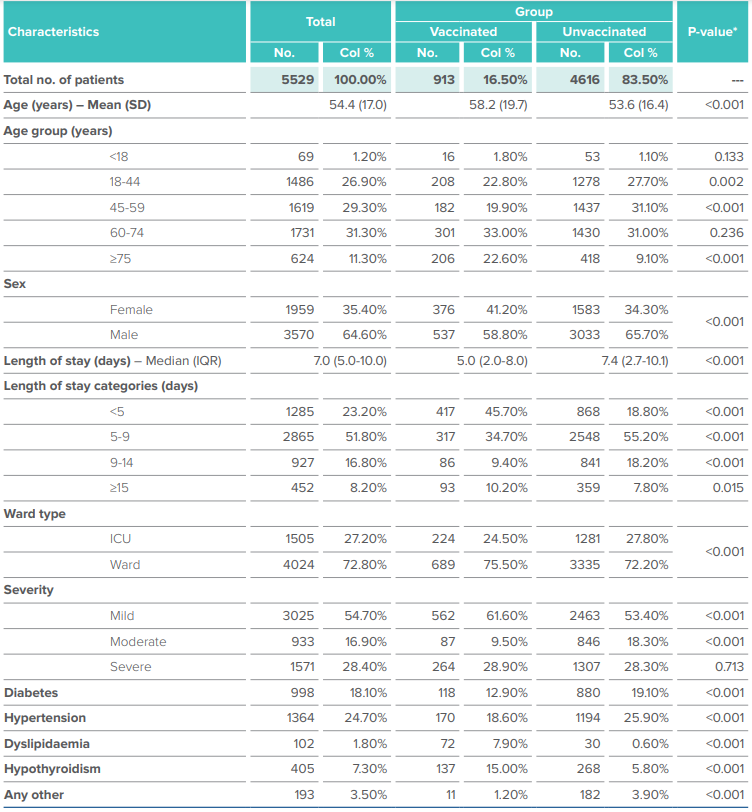
Table 1: Basic characteristics of the patients in the two groups
*In case of multiple categories, comparison of one with the rest combined
Number and duration of symptoms
Out of a total of 5529 cases in the two groups, only (78 + 464=) 542 (9.8%) reported no long-COVID symptom (Table 2). These were 8.5% of vaccinated and 10.1% of unvaccinated cases (P = 0.161). The other nearly 90% reported at least one long-COVID symptom. Mild cases at the time of admission reporting no long-COVID symptom were slightly less (P = 0.010) in the vaccinated (4.3%) than in the unvaccinated (5.6%) group. The patients with moderate severity at admission with two or more long-COVID symptoms were less (1.9%) in vaccinated group compared with the unvaccinated group (5.8%) although the difference was not significant at 1% level (P = 0.018), possibly because of relatively small numbers. There was not much difference (P > 0.665) in the number of long-COVID symptoms between vaccinated and unvaccinated cases in those who recovered from severe form of COVID-19 (Table 2).
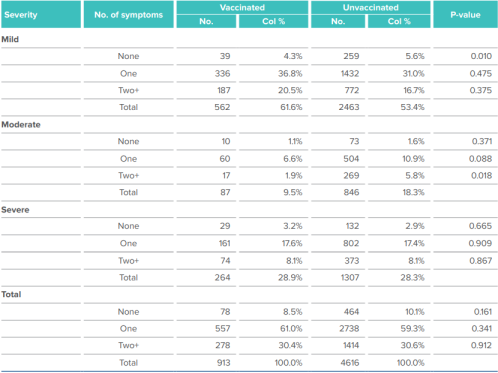
Table 2: Number of symptoms in cases with different severity of disease in the vaccinated and the unvaccinated cases
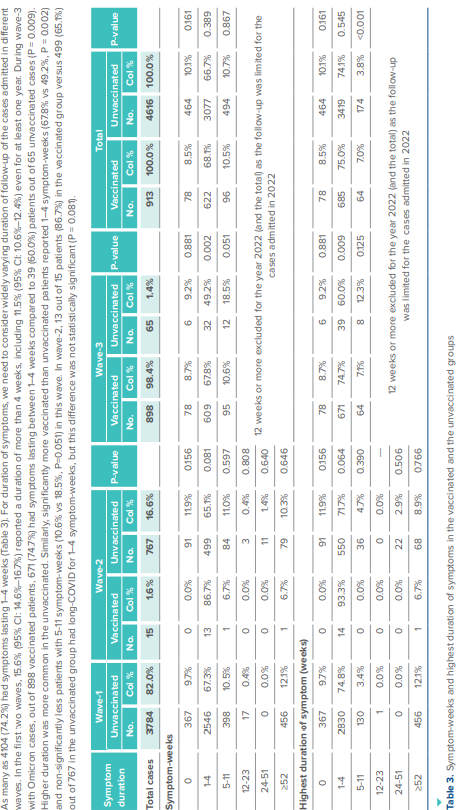
When all the waves are combined, only (64+174 =)238 (4.3%) patients out of a total of 5529 continued to have symptoms for 5–11 weeks post-discharge and this percentage was not different in the vaccinated and unvaccinated groups. Only one patient of wave-1 had symptoms persisting between 12–23 weeks. The follow-up of those who continued to have symptoms for 24 weeks or more was restricted to only those patients who were admitted to the hospital during wave-1 and wave-2 (total numbers 4566). Of these, 547 (12.0%) reported symptoms duration at least 24 weeks. In this subgroup also, there was not much difference between vaccinated and unvaccinated groups. Many patients continued to have long-COVID symptoms for at least 52 weeks. This number was 456 patients out of a total of 3784 (12.1%) (95% CI: 10.8%–13.4%) during wave-1, where all the patients were unvaccinated. During wave-2 (Delta), only one out of 15 vaccinated cases (6.7%) (95% CI: 5.9%–19.4%) and 68 out of 767 unvaccinated cases (8.9%) (95% CI: 6.9%–10.9%) continued to have long-COVID symptoms for more than 52 weeks; this difference, however, was not statistically significant (P = 0.766) (Table 4).
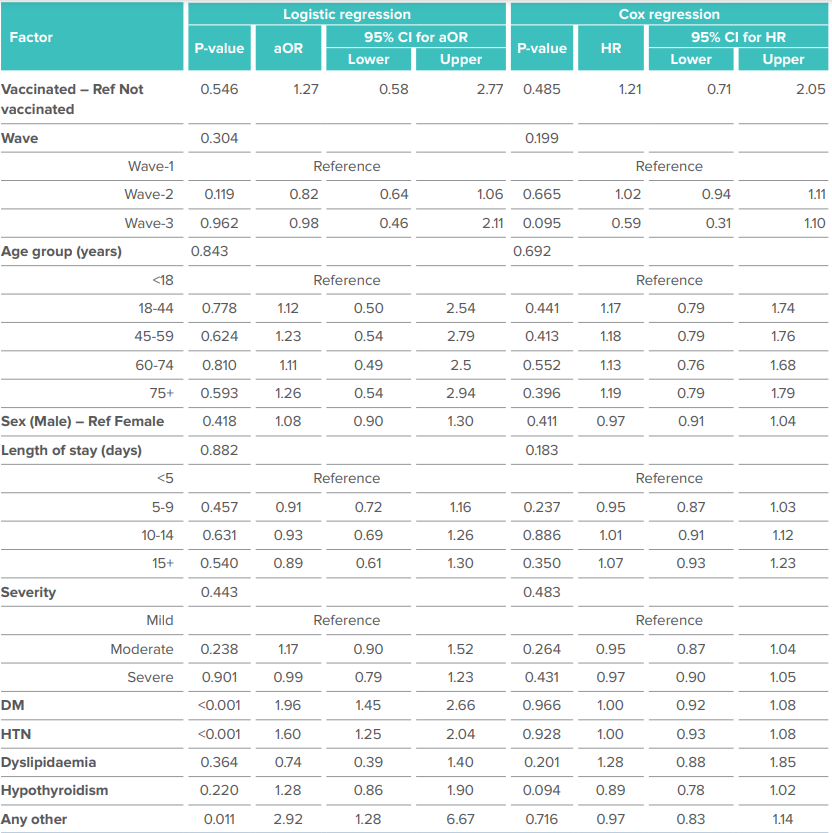
Table 4: Results of the logistic regression of reporting of symptoms and Cox regression for symptom-weeks aOR: Adjusted odds ratio
HR: Hazards ratio. In this case, the ‘hazard’ of completing the duration (as opposed to continuing at the time of the survey) or getting rid of the symptoms by the time of the survey in vaccinated vs. unvaccinated group.
When the effect of wave which also corresponds to corona variant, age, sex, length of stay, severity, and comorbidities is eliminated through multivariable logistic regression, the adjusted odds ratio (aOR = 1.27) (95% CI: 0.58–2.77) for reporting of symptoms was higher in the vaccinated group, this failed to be statistically significant (P = 0.546) despite large sample (Table 4). This indicates that there was no overall difference between the two groups in the reporting of symptoms, despite significant difference in their characteristics (Table 1). There were, however, differences in specific symptoms, as reported later in this communication. The results of logistic regression also show that hypertension and diabetes were more common in those who reported symptoms (P < 0.001) (Table 4). The odds ratio was 1.96 (95% CI: 1.45–2.66) for diabetes and 1.60 (95% CI: 1.25–2.04) for hypertension.
In some cases, symptoms were ongoing at the time of the survey. Thus, their duration is censored. Cox regression results in Table 4 show that symptom-weeks were also not affected by the covariates. The vaccination effect (HR = 1.21; 95% CI: 0.71–2.05; P = 0.485) on the symptom-weeks also was not significant when the effect of the covariates is adjusted.
Specific symptoms
Fatigue (17.0%; 95% CI: 16.0%–18.0%), was the most commonly reported symptom by both the groups followed by insomnia (10.8% in vaccinated and 15.9% in unvaccinated, combined 15.1%) and myalgia (9.7% in vaccinated and 15.9% in unvaccinated, combined 15.0%). The symptoms significantly more often (P < 0.01) reported by vaccinated group were memory loss, cold, fever (five times), dyspnoea, eyesight (seven times), weight loss and headache (Table 5). The symptoms reported significantly less often (P < 0.01) in the vaccinated group were anxiety, mental fogging, gastric issues, insomnia, myalgia and cough. Other symptoms were not affected by vaccination (Table 5).
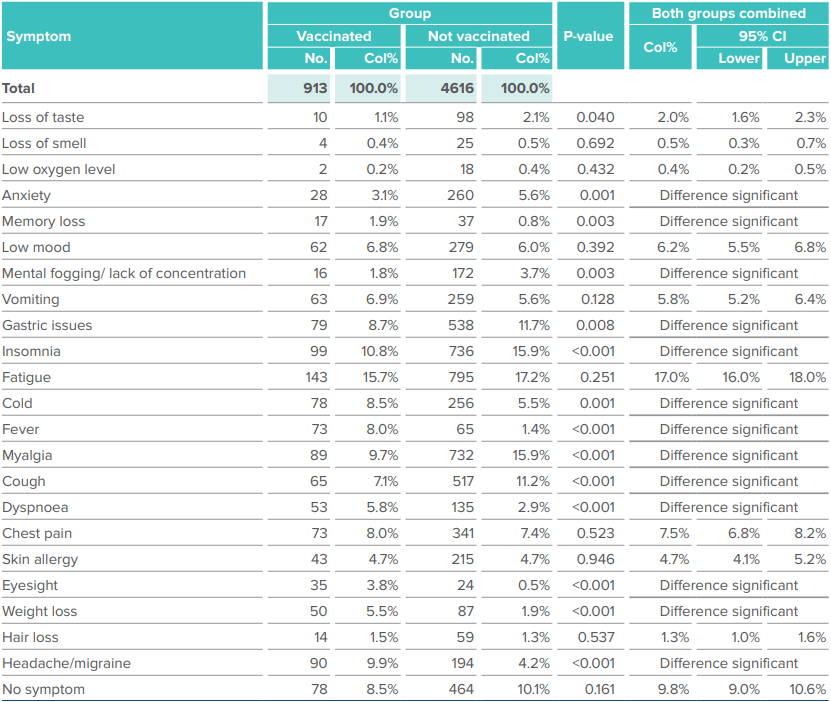
Table 5: Comparison of vaccinated and unvaccinated for reporting of specific symptoms
*Only for those where the percentages in the two groups is not statistically significant at 1% level
The odds ratios confirm these findings. Higher odds (P < 0.01) of reporting were observed for eyesight, fever, weight loss, headache, memory loss, dyspnoea and cold in the vaccinated patients, and lower odds (P < 0.01) of reporting of insomnia, cough, myalgia, anxiety, loss of taste (marginal) and mental fogging (Table 6). Note especially high ORs for eyesight (aOR=7.54; 95% CI: 4.25–13.38) and fever (aOR=4.79; 95% CI: 3.24–7.07) in the vaccinated group. After adjustment for the covariates (age, sex, length of stay, severity and comorbidities), the aORs continued to be nearly the same as the unadjusted ORs, implying that the effect of the covariates on the reporting of symptoms in the vaccinated relative to the unvaccinated group was minimal. The adjusted ORs and their 95% CI are shown in Figure 1 in decreasing order.
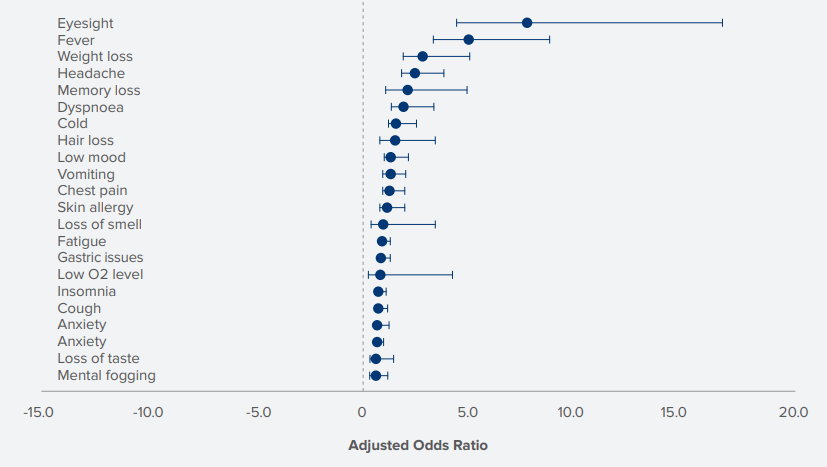
Figure 1: Comparison of vaccinated and unvaccinated for reporting of specific symptoms
Table 6: Odds ratio (in order from maximum to minimum) of reporting various symptoms in the vaccinated patients vs. the unvaccinated patients
*Adjusted for age, sex, length of stay, severity at admission, and comorbidities
The duration of symptoms is severely affected by the period of follow-up and this period was widely different in the vaccinated and unvaccinated cases. Thus, these two groups are not comparable for the duration of symptoms in our study and therefore the P-values are not shown in (Table 7). However, the durations of different symptoms within each group are comparable. In the vaccinated cases, the longest duration symptoms on average were hair loss, memory loss and loss of smell. In the unvaccinated cases also, the long duration symptoms were memory loss, weight loss, eyesight and hair loss. Among other symptoms, gastric issue, loss of taste and myalgia were the longest in both the groups (5 to 7 weeks in the vaccinated and 17 to 26 weeks in the unvaccinated because of longer follow-up). Vaccinated group had been followed up for longer duration, perhaps the durations would be the same. Despite shorter follow-up, the vaccinated group had significantly higher duration of low mood, mental fogging, vomiting, cold, fever, dyspnoea and chest pain (Table 7).
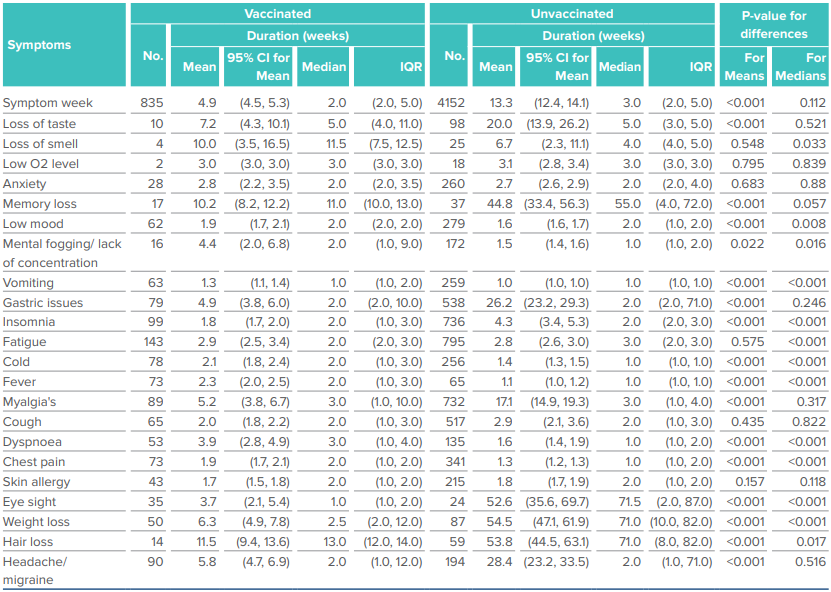
Table 7. Mean and median duration of different symptoms in the cases in vaccinated and unvaccinated (*)
*542 cases with no symptom excluded
Discussion
Effect of vaccine on COVID severity
Effectiveness of vaccination in reducing the severity of COVID-19 disease, including the need for hospitalisation and death from COVID-19, is now well established by various studies.[14,15] Our study was conducted in patients admitted over the three waves and, in these patients also, the vaccinated group had a shorter average length of stay compared to the unvaccinated group (5.0 vs 7.4 days) (P < 0.001). More patients had mild COVID-19 at the time of admission in the vaccinated group (61.6%) compared to the unvaccinated group (53.4%) (P < 0.001) and moderate cases were lesser. It seems that vaccination helped in modifying severity from moderate to mild in some cases. Being tertiary care hospitals, ICU occupancy was higher due to direct referrals of sicker patients and ICU admissions were not different in the two groups.
Effect of vaccine on occurrence of long-COVID
There is no universally accepted definition of long-COVID. The National Institute for Health and Care Excellence (NICE)[1] defined long-COVID as signs and symptoms that continue or develop after acute COVID-19, including both ongoing symptomatic COVID-19 (from 4 to12 weeks) and post-COVID-19 syndrome (>12 weeks). The Centres for Disease Control and Prevention (CDC) defined long-COVID as a post-COVID condition with a wide range of new, returning or ongoing health problems people experience four or more weeks after first being infected with the virus that causes COVID-19.16 WHO,7 in Oct 2021, defined long-COVID as a condition that occurs in individuals with a history of probable or confirmed (SARS-COV-2) infection, usually three months from the onset of COVID-19, with symptoms that last for at least two months and cannot be explained by an alternative diagnosis.[17] Most of the studies included in the review by UK Health Security Agency used different definitions of long-COVID[18]. In the present study, we have taken symptoms persisting or developing after discharge from the hospital as long-COVID.
Castanares-Zapatero et al.[11] have proposed several reasons for long-COVID. The incidence was widely different in different studies, from 5% to 87% in hospitalised patients.[19-23] An Indian study on 773 patients by Senjam et al.[7] reported overall incidence of 33% with short-term long-COVID symptoms (4 to 12 weeks) and 13% with long-term long-COVID symptoms (≥ 12 weeks). Kuodi et al.[6] reported 35% of their patients in Israel experienced long-COVID. The incidence 90% in our cases is higher. This could be because we have not restricted to the criteria of > 4 weeks from the time of COVID-19 diagnosis and our duration is from the discharge and not diagnosis. If the patients with symptoms of duration 4 weeks or less are excluded, the incidence in our cases too steeply declines to 15%.
UK Health Security Agency[18] published rapid evidence briefing on the effectiveness of vaccination against long-COVID.
In their analysis, six of the 8 studies suggested that vaccinated cases were less likely to develop symptoms of long-COVID in the short term (within four weeks after infection), medium term (12 to 20 weeks after infection) and long term (6 months after infection). Antonelli et al.[24] found that fully vaccinated patients were almost half as likely to have symptoms lasting ≥ 28 days than unvaccinated patient (OR = 0.51; 95% CI: 0.32–0.82, P = 0.005). Al–Aly et al.[4] reported that vaccinated cases were less likely to have at least one post-acute sequelae of COVID-19 at 6 months compared with the unvaccinated cases (HR = 0.87; 95% CI: 0.83–0.92). A retrospective cohort study by Herman et al.5 observed that fully vaccinated patients were less likely to develop olfactory dysfunction after infection than unvaccinated patients (OR = 0.31; 95% CI: 0.10–0.94) but found little evidence for an association between full vaccination and olfactory dysfunction at 4 weeks after the end of infection (P = 0.59). An Israeli study by Koudi et al.[6] reported that those with 2 or 3 doses of vaccine were 54% to 83% less likely to report 7 of the 10 most commonly reported symptoms than the unvaccinated. Senjam et al.[7] from India reported that fully vaccinated patients were less likely to have long-COVID symptoms than unvaccinated patients (OR = 0.55; 95% CI: 0.37–0.85). A retrospective study by Simon et al.8 revealed that patients who received at least one dose of any of the three COVID vaccines in the USA prior to their diagnosis with COVID-19 were 7–10 times less likely to report two or more long-COVID symptoms compared to the unvaccinated patients.
Another matched case-control study by Taquet et al.[9] from the USA included 9,479 vaccinated and a similar number of unvaccinated cases who were followed up for 6 months after infection and studied a composite long-COVID outcome. The study found no association between vaccination and composite long-COVID outcome in 6 months after infection with hazard ratio (HR = 1.00; 95% CI: 0.95–1.06). In their study, 64.9% and 65.5% of vaccinated and unvaccinated patients had longCOVID, respectively. There was no significant difference in the overall reporting of long-COVID between the vaccinated and the unvaccinated in our study and no effect could be detected of the covariates (except comorbidities) but there was significant difference in the specific symptoms as discussed in a short while. In our series, 8.5% of vaccinated and 10.1% of unvaccinated cases reported no symptoms; this difference was not statistically significant (P = 0.161). However, in the mild COVID-19 group, slightly higher number of unvaccinated patients had no long-COVID symptoms (5.6%) compared to the vaccinated group (4.3%) (P = 0.010).
The results of logistic regression showed in our study that hypertension and diabetes were more common in those who reported long-COVID symptoms (P <0.001). The study by Senjam et al.[7] also indicated a strong association between the pre-existing comorbidity and the presence of post COVID sequelae. Pre-existing co-morbidity such as hypertension, chronic respiratory diseases, diabetes mellitus were shown to be associated with the prolonged COVID-19 symptoms in other studies also.[25-27]
Effect of vaccine on duration of long-COVID
Groff et al.[2] identified 57 studies with 250,351 survivors of COVID-19, of which 197,777 (79%) were hospitalised during acute COVID-19. More than half of these were experiencing long-COVID 6 months after recovery. They divided patients into 3 categories of symptom duration, Short term: up to 1 month (median – IQR 54% – 45% to 69%; 13 studies); intermediate term: 2-5 months (median – IQR 55% – 34.8% to 65.5%; 38 studies), long-term: ≥ 6 months (median – IQR 54% – 31% to 67%; 9 studies).
In our study, 74.7% of the vaccinated patients in wave-3 versus 60.0% of the unvaccinated patients reported symptoms that lasted 1-4 weeks after discharge from the hospital (P = 0.009). Although a similar trend was observed during wave-2, the difference was not statistically significant. A retrospective cohort study by Arjun et al.[10] from India, involving 487 patients, also reported reverse finding that fully vaccinated participants were more likely to have long-COVID symptoms 4 weeks from the date of diagnosis compared to the unvaccinated patients (OR = 2.32; 95% CI: 1.17 - 4.58, P = 0.01).
We did not find any difference in the occurrence of intermediate and long term PASC between vaccinated and unvaccinated groups. More than 11% of the patients during the first two waves continued to have long-COVID symptoms 52 weeks or more and there was no significant difference between the vaccinated and the unvaccinated groups.
Effect of vaccine on occurrence of specific symptoms of long-COVID
When the effect of wave, age, gender, length of hospital stays, severity of COVID-19 and comorbidities is eliminated through multivariate logistic regression, the adjusted odds ratio (aOR = 1.27; 95% CI: 0.58–2.77) for reporting of symptoms was statistically not significant between vaccinated and unvaccinated groups in our cases. When all three waves and both groups (vaccinated and unvaccinated) are combined, the most commonly reported long-COVID symptoms in our study were fatigue (17.0%), followed by insomnia (15.1%) and myalgia (15.0%). In a study by Senjam et al.[7], the most commonly reported long-COVID symptoms were fatigue, pain in the joints and muscle, hair loss, headache, cough, breathlessness, sleep disorders, sore throat and decrease in smell and taste. These are somewhat different from what we observed.
In the vaccinated group, we found particularly higher odds of reporting eyesight issues (aOR = 7.54; 95% CI: 4.25–13.38; P < 0.001) and fever (aOR=4.79; 95% CI : 3.24–4.07; P < 0.001). In a study by Senjam et al.[7], some patients experienced both near and distance visual impairment and dry eyes. They surmised these eye symptoms could be side effects of medication such as hydroxychloroquine, which was commonly used during their acute management. Since the post-COVID assessment was done by them four or more weeks after recovery, symptoms like red and painful eyes could be due to immunological mechanisms.
Kuodi et al.[6] compared participants with 2 or 3 doses of vaccine with the unvaccinated participants and observed that the vaccinated had less of fatigue, headache, weakness in arms and legs, persistent muscle pain, loss of concentration, hair loss, sleeping problems, dizziness, persistent cough, shortness of breath and more feeling fully recovered from COVID-19. Taquet et al.9 found no association between vaccination and composite long-COVID. Patients with 2 doses of vaccine were found to be less likely to be diagnosed with anosmia, fatigue, hair loss, intestinal lung disease, myalgia and any other pain. Our findings suggest that vaccinated group had higher odds of reporting eyesight issues, fever, weight loss, headache, memory loss, dyspnoea, cold and a lower odds of reporting insomnia, cough, myalgia, and anxiety.
CONCLUSION:
This may be the first large scale study in India with up to a 2-year follow-up of hospitalised COVID-19 cases for the effect of vaccination on long-COVID symptoms and possibly the first to use the metric “symptom-weeks” that considers both the number of symptoms and duration of symptoms that may have combined effect on a patient’s overall quality of life.
Our findings indicate that the vaccination helped in modifying the disease from moderate to mild in some cases. The proportion of severe cases remained unaffected.
Nearly 90% of COVID-19 patients reported at least one long-COVID symptom in both the vaccinated and the unvaccinated groups but almost three-fourth of these had symptoms lasting up to a month. Nearly 11% reported symptoms with duration one year or more. Interestingly, during wave-3, significantly more vaccinated patients reported short-term post-acute sequelae of COVID-19 than did the unvaccinated group. The cases with diabetes and hypertension had higher odds of reporting at least one symptom when the effect of vaccination, age, sex, severity and length of stay was adjusted.
Most common symptoms reported by both the groups were fatigue, insomnia and myalgia. Some symptoms, such as eyesight issues, fever, weight loss, headache, memory loss, dyspnoea and cold were more common in the vaccinated and some others such as insomnia, cough and myalgia in the unvaccinated. Overall, vaccination did not seem to alter either the incidence or the duration of long-COVID.
Limitations
The present study included only those COVID-19 patients who were admitted in hospitals. Thus, it does not represent the overall burden of the long-COVID in a community. The symptoms of long-COVID were self-reported although a structured questionnaire may have reduced the error. The follow-up of wave-3 patients was up to a maximum period of 15 weeks only. Hence, the percentage of wave-3 cases who would have continued to have symptoms have been missed in the present analysis. The definition of long-COVID is still not fully standardised and the comparison between various studies becomes difficult and at times erroneous.
Acknowledgements
We wish to acknowledge and thank the logistic help given by Taruna Sharma, Rajesh Saxena, Bhavana Sharma and Cheshtha Kaila in conducting this study.
Conflict of Interestingly
None of the authors reported any conflict of interest.
Ethics committee approval and patient consent
The study was approved by the Institutional Ethics Committee vide no. BHR/RS/MSSH/DDF/SKT-2/IEC/IM/22-12, dated 5th July 2022.
Funding
This study did not receive any financial contribution from any funding agency/source.
References
- NICE. Overview. COVID-19 rapid guideline: managing the long-term effects of COVID-19. NICE Guidelines [NG188] 2020 Dec 18. https://www.nice.org.uk/guidance/ng 188 (last accessed 26 August 2022)
- Goff BA, Sun A, Ssentongo AE, et al. Short-term and longterm rates of postacute sequelae of SARS-CoV-2 infection: A systematic review. JAMA Network Open. #2021;4: e2128568
- Office for National Statistics. Prevalence of ongoing symptoms following coronavirus (COVID-19) infection in the UK: 1 June 2022
- Al-Aly Z, Bowe B, Xie Y. Long-COVID after breakthrough COVID-19: the post-acute sequelae of breakthrough COVID-19. Research Square. 2021..https://www. researchsquare.com/article/rs-1062160/v1. Preprint
- Herman B, Viwattanakulvanid P, Dzulhadj A, Oo AC, Patricia K, Pongpanich S. Effect of full vaccination and post-COVID olfactory dysfunction in recovered COVID-19 patient. A retrospective longitudinal study with propensity matching. medRxiv. 2022. doi:10.1101/2022.01.10.22269007. Preprint
- Kuodi P, Gorelik Y, Zayyad H, et al. Association between vaccination status and reported incidence of post-acute COVID-19 symptoms in Israel: a cross-sectional study of patients infected between March 2020 and November 2021. medRxiv. 2022. doi:10.1101/2022.01.05.22268800. Preprint
- Senjam SS, Balhara YPS, Kumar P, et al. Assessment of post- COVID-19 health problems and its determinants in North India: A descriptive cross section study. medRxiv. 2021. doi:10.1101/2021.10.03.21264490. Preprint
- Simon MA, Luginbuhl RD, Parker R. Reduced incidence of long-COVID symptoms related to administration of COVID-19 vaccines both before COVID-19 diagnosis and up to 12 weeks after. medRxiv. 2021. doi:10.1101/2021.11.17. 21263608. Preprint
- Taquet M, Dercon Q, Harrison PJ. Six-month sequelae of post-vaccination SARS-CoV-2 infection: a retrospective cohort study of 10,024 breakthrough infections. medRxiv. 2021. doi:10.1101/2021.10.26.21265508h. Preprint
- Arjun MC, Singh AK, Pal D,, et al. Prevalence, characteristics, and predictors of long-COVID among diagnosed cases of COVID-19. medRxiv. 2022. doi:10.1101/2022.01.04.212685 36. Preprint
- Castanares-Zapatero D, Chalon P, Kohn L, et al. Pathophysiology and mechanism of long-COVID: a comprehensive review. Annals of Medicine. 2022; 54:1473- 87. doi: 10.1080/07853890.2022.2076901
- Ministry of Health and Family Welfare. Clinical Management Protocol: COVID-19 Mohfw.gov.in. 2021. https://www.mohfw.gov.in/pdf/ ClinicalManagementProtocolforCOVID19dated27062020. pdf. (last accessed 26 August 2022)
- Wasserstein RL, Schirm AL, Lazar NA. Moving to a world beyond “p <0.05”. The American Statistician. 2019;73, sup 1:1-19. doi:10.1080/00031305.2019.1583913.
- Mohammed I, Nauman A, Paul P, et al. The efficiency and effectiveness of the COVID-19 vaccines in reducing infection, severity, hospitalisation, and mortality: a systematic review. Hum Vaccine Immunother. 2022;18:2027160. doi:1 0.1080/21645515.2022.2027160.
- Silva TC, Andrew JR, Boaventura VS, et al. Effectiveness of Coronavac, ChAdox1nCoV-19, BNT162b2, and Ad26COV2.S among individuals with previous SARS-CoV-2 infection in Brazil: a test-negative, case-control study. Lancet Infectious Diseases. 2022; 22:791-801. doi:10.1016/S1473-3099 (22) 00140-2.
- CDC. Long COVID or Post-COVID Conditions. CDC 2021 July 11. https://www.cdc.gov/coronavirus/2019-ncov/longterm-effects/index.html (last accessed 26 August 2022)
- WHO. A clinical case definition of post COVID-19 condition by a Delphi consensus, 6 October 2021. https://www.who. int/publications/i/item/WHO-2019-nCoV-Post_COVID-19_ condition-Clinical_case_definition-2021.1 (last accessed 26 August 2022)
- UK Health Security Agency. The effectiveness of vaccination against long-COVID. A rapid evidence briefing. www.pslhub. org (last accessed 26 August 2022)
- Nalbandian A, Sehgal K, Gupta A, et al. Post-acute COVID-19 syndrome. Nat Med. 2021;27:601-15. doi:10.1038/s41591- 021-01283-2
- Carfi A, Bernabei R, Lendi F. Persistent symptoms in patients after acute COVID-19. JAMA. 2020; 324: 603-5. doi:10.1001/ jama.2020.12603
- Garrigues E, Janvier P, Kherabi Y, et al. Post-discharge persistent symptoms and health-related quality of life after hospitalization for COVID-19. J Infect. 2020; 81: e4-6. doi:10.1016/j.jinf.2020.08.029
- Mandal S, Barnett J, Brill SE, et al. “Long-COVID”: a crosssectional study of persisting symptoms, biomarker and imaging abnormalities following hospitalization for COVID-19. Thorax. 2021;76: 396-8. doi:10.1136/thoraxjnl-2020-215818
- Nehme M, Braillardo O, Alcoba G, et al. COVID-19 symptoms: Longitudinal evolution and persistence in outpatient setting. Ann Intern Med. 2021;174:723-5. doi:10.7326/m20-5926
- Antonelli M, Pujol JC, Spector TD, Ourselin S, Steves CJ. Risk of long-COVID associated with delta versus omicron variants of SARS-CoV-2. Correspondence. The Lancet. 2022;399:2263-4. doi:10.1016/S0140-6736(22)00941-2
- Kamal M, Abo Omirah, Hussein A, Saeed H. Assessment and characterisation of post-COVID-19 manifestations. Int J Clin Pract. 2021;75(3):e13746. doi:10.1111/ijcp.13746.
- Galal I, Mohamed Hussein AAR, Amin MT, et al. Determinants of persistent post-COVID-19 symptoms: value of a novel COVID-19 symptom score. Egypt J Bronchol. 2021;15:1-8. Doi:10.1186/s43168-020-00049-4
- Fatima G, Bhatt D, Idrees J, Khalid B, Mahdi F. Elucidating Post-COVID-19 manifestations in India. MedRxiv. 2021. https:// www.medrxiv.org/content/10.1101/2021.07.06.21260115v1. Preprint