 WhatsApp Us (24/7)
 +91 926 888 0303 (24/7)


Abstract: Dasatinib is an efficacious and highly potent second-generation oral tyrosine kinase inhibitor used in the therapy of Philadelphia chromosome-positive acute lymphoblastic leukaemia (ALL) or BCR-ABL-positive chronic myeloid leukaemia (CML). Pulmonary complications are commonly seen with Dasatinib therapy out of which pleural effusion is the most frequent finding. Pleural effusion in these cases is caused secondary to fluid retention, however, chylothorax causing pleural effusion is exceptionally rare. A 58-year-old man treated with second-line Dasatinib for CML presented to us with Empyema thoracis for a chest tube insertion. Thoracentesis showed thick dirty haemorrhagic aspirate, which was then inferred as chylothorax by cholesterol and triglyceride concentrations. After the exclusion of other common causes, drug-induced chylothorax was confirmed. Dasatinib was stopped, a short course of prednisolone was given and the chylothorax resolved. A substitute drug as suggested by the haematologist was started. There was no reoccurrence of pleural effusion.
Keywords: Chylothorax, dasatinib, medication withdrawal
Introduction
Dasatinib is a highly efficacious and potent second-generation oral tyrosine kinase inhibitor, used in the treatment of newly diagnosed adult chronic-phase chronic myeloid leukaemia (CML), imatinib-resistant or -intolerant CML therapy, or Philadelphia chromosome-positive (Ph+) acute lymphoblastic leukaemia. Pulmonary complications are commonly seen after the use of dasatinib in chronic myeloid leukaemia of which pleural effusion is seen in about 20% of patients taking the drug. A dasatinibrelated chylothorax is a rare event seen in less than 15 cases in literature.[2] Herein, we describe a rare event in a patient with Dasatinib-induced chylothorax with CML.
Case: A 58-year-old male patient diagnosed six years previously with CML, was initially managed with 400mg daily. The patient suffered a relapse after four years of therapy after which his treatment was changed to Dasatinib in the dose of 100mg daily. The patient subsequently developed breathlessness on mild exertion after two years of Dasatinib use. His chest radiography showed pleural effusion, right more than left (Figure 1). A chest computed tomography scan showed a moderate amount of fluid on the right pleural space and minimal on the left side without any mediastinal lymphadenopathy or mass (Figure 2). An ultrasound-guided right pleural aspiration was done which revealed a thick pus-like aspirate. An inference of Empyema Thoracic was made and further evaluation was cancelled. The patient was then referred to us for a chest drain insertion. However, we insisted on evaluating the aspirate first, a repeat diagnostic thoracocentesis was done which showed a thick dirty haemorrhagic aspirate. The pleural fluid evaluation showed an exudate – total protein of 5.8 g/dL, glucose 112mg/ dl, cell count 1150/mm3 , Adenosine Deaminase (ADA) 12U/L, lymphocytes predominance (80%), lactate dehydrogenase level of 111 U/L, very high globulin, triglycerides of 419 mg/dL, cholesterol of 94mg/dl. Bacterial and Tubercular cultures were negative. The other possible causes of chylothorax, including previous surgery, malignancy and trauma were excluded. Hence there arose a suspicion of chylothorax induced by Dasatinib. Chylothorax was diagnosed based on the elevated triglyceride level (419 mg/dL). A therapeutic aspirate was done, a short course of prednisolone 40mg once a day for seven days was initiated, dasatinib was stopped and another drug Nilotinib was started. Further, no relapse of pleural effusion occurred in the follow-up scans (Figure 3).
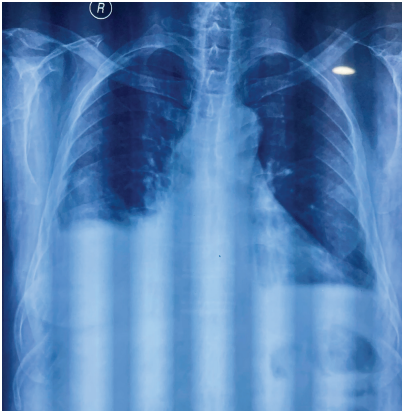
Figure 1: Chest radiography showing pleural effusion on the right side more than the left
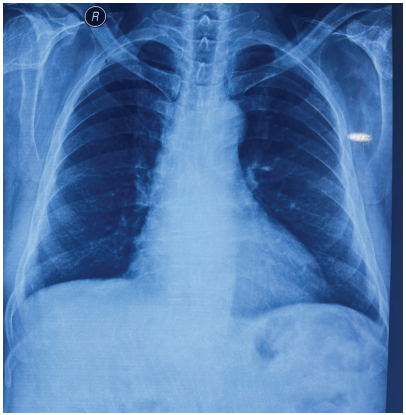
Figure 2: Chest computed tomography scan showing a moderate amount of fluid on the right pleural space and minimal on the left side without any mediastinal lymphadenopathy or mass
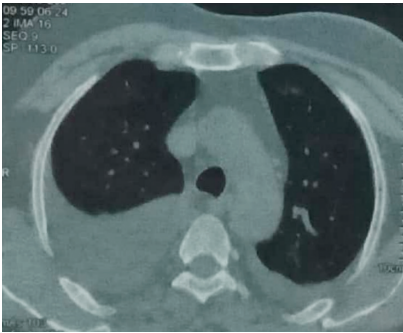
Figure 3: No relapse of pleural effusion occurred in the followup scans
Discussion
Chronic myeloid leukaemia (CML) is an abnormal disorder of hematopoietic stem cells resulting from an abnormal chromosome, the Philadelphia (Ph) chromosome, caused by the chromosomal translocation (9;22)(q34; q11). This translocation results in the juxtaposition of the ABL gene (chromosome 9) and the BCR gene (chromosome 22), forming a BCR–ABL fusion gene. The resulting abnormal chimeric protein is a constitutively active ABL tyrosine kinase.[3]
Dasatinib is a potent and effective multikinase inhibitor targeting BCR–ABL that inhibits kinases including PDGFR-β and SRC family of kinases, among others. It has been extensively used as a first and second-line treatment for CML.
Chylothorax is a result of leakage of the chyle resulting from obstruction or disruption of the thoracic duct into the pleural space. Chyle typically has a turbid milky appearance and contains high levels of triglycerides. Triglyceride levels in pleural effusion of more than 110 mg/dL (1.24 mmol/L) highly support the diagnosis. In our case, the patient’s triglyceride concentrations were 419 mg/dL which supported the diagnosis of chylothorax.
Common causes of chylothorax include trauma and surgery accounting for more than 50% of the cases reported previously. The other causes include lymphomas, non-malignant tumours, Goitre, chronic lymphocytic leukaemia (CLL), Sarcoidosis, Amyloidosis, superior vena cava thrombosis, congenital ductal abnormalities, lymph Duct abnormalities like yellow nail syndrome, lymphangioleiomyomatosis, and hemangiomatosis. There is no previous reported incidence of CML illness per se leading to chylothorax. Medications are not known to cause chylous effusions and dasatinib is only one of the very few medications to cause chylous effusion.
Pleural effusions related to Dasatinib are generally lymphocytic exudates which suggests etiology other than fluid retention. The exact mechanism however remains poorly understood. The possible mechanism includes inhibition of tyrosine kinase platelet-derived growth factor receptor beta (PDGFR-β) which results in the formation of abnormal lymphatics resulting in significant fluid retention.[5]
Another mechanism is dasatinib-induced inhibition of Src kinase. Src is a proto-oncogene that encodes a non-receptor tyrosine kinase, widely expressed in hematopoietic cells in lung tissue. It is mainly responsible for capillary integrity by induction of the expression of vascular endothelial growth factor. The inhibition of Src leads to changes in vascular permeability and pleural epithelium. Both mechanisms could eventually affect the lymphatic drainage, resulting in chylous effusions.[6]
The treatment of dasatinib-induced chylothorax/ pleural effusions includes a short course of diuretics and corticosteroids. A short-duration therapy with prednisone (40 mg per day for four days) has been described. With regards to chylothorax, there is no standard treatment. All of the previous similar cases in the literature suggest corticosteroids, diuretics, reduction of dosage and complete stoppage of medication as management options.[5] We therefore substituted his treatment with another tyrosine kinase inhibitor, Nilotinib.
In conclusion, dasatinib-induced chylothorax should always be considered in patients on Dasatinib who develop pleural effusion. Not all turbid pleural effusions are empyema-related, hence proper drug history and further analysis of empyema is important.
References
- Huang YM, Wang CH, Huang JS, Yeh KY, Lai CH, Wu TH, Chang PH, Chang PH, Chang YS, Lan YJ. Dasatinibrelated chylothorax. Turk J Haematol. 2015 Mar 5;32(1):68- 72. doi: 10.4274/tjh.2012.0196. PMID: 25805678; PMCID: PMC4439910
- Hsu CC, Hsu JF, Wu KL. Dasatinib-induced chylothorax in a patient with chronic myeloid leukaemia: a case report and literature review. Respirol Case Rep. 2021 May 7;9(6):e00753. doi: 10.1002/rcr2.753. PMID: 33976882; PMCID: PMC8103079
- Hochhaus, A., Kantarjian, H. The development of dasatinib as a treatment for chronic myeloid leukemia (CML): from initial studies to application in newly diagnosed patients. J Cancer Res Clin Oncol 139, 1971–1984 (2013). https://doi. org/10.1007/s00432-013-1488-z
- Doerr CH, Allen MS, Nichols FC 3rd, et al. 2005. Etiology of chylothorax in 203 patients. Mayo Clin. Proc. 80(7):867–870
- Phan C, Jutant EM, Tu L, et al. 2018. Dasatinib increases endothelial permeability leading to pleural effusion. Eur. Respir. J. 51(1):1701096
- Al-Abcha A, Iftikhar MH, Abu Rous F, Laird-Fick H. Chylothorax: complication attributed to dasatinib use. BMJ Case Rep. 2019 Dec 16;12(12):e231653. doi: 10.1136/ bcr-2019-231653. PMID: 31848139; PMCID: PMC6936595