 WhatsApp Us (24/7)
 +91 926 888 0303 (24/7)


Abstract: Hyperuricemia is associated with all risk factors of Metabolic syndrome and is viewed as a biomarker and therapeutic target for cardiometabolic treatments. This comprehensive review examines the multifaceted landscape of hyperuricemia delving into its epidemiology, intricate pathophysiology, diverse associations with health conditions and contemporary approaches to its management.
Introduction
Hyperuricemia (HU) is a common disorder that affects patients of all ages and genders. Hyperuricemia occurs in 8.9 to 24.4% of the general population. Hyperuricemia does not indicate a pathological state as up to 21% of the general population and 25% of hospitalised patients are estimated to have asymptomatic hyperuricemia and uric acid levels can be elevated 10 to 15 years before clinical manifestations of gout. The worldwide incidence of hyperuricemia is increasing due to adoption of Western diet and lifestyle.
The most common manifestation of hyperuricemia is gout, Hyperuricemia is also associated with uric acid and calcium nephrolithiasis. The prevalence of HU has steadily increased worldwide in the past 40 years.
Hyperuricemia is defined as:
- Serum uric acid level > 7 mg/dL in men and post-menopausal women
- Serum uric acid level > 6 mg/dL in pre-menopausal women.
The difference is attributed to estrogen’s stimulatory effect on renal excretion of uric acid.[1]
Hyperuricemia results from a) increased uric acid production b) decreased excretion, or c) a combination of both processes. Dietary purines contribute 1/3rd body’s daily serum uric acid production, and 2/3rd is from endogenous sources. About 2/3rd of uric acid is excreted through the kidney and 1/3rd through the gastrointestinal tract.
Hyperuricemia and hyperuricosuria have also been linked with other disorders such as metabolic syndrome, diabetes mellitus, cardiovascular disease, hypertension, atherosclerosis, obesity and chronic renal disease. Furthermore, Hyperuricemia is a prognostic marker of mortality in patients with stable coronary artery disease, Chronic Obstructive Pulmonary Disease and terminally ill cancer patients.[2][3]
There are clear guidelines for the management of hyperuricemia in acute conditions such as gout, urolithiasis and acute urate nephropathy, the role of uric acid in the pathogenesis of CKD, cardiovascular diseases, heart failure and treatment of asymptomatic hyperuricemia in is still unclear.
Uric acid production, metabolism and elimination
Production
Uric acid is the result of purine breakdown. The daily endogenous purine production is estimated to be about 500-600mg as opposed to dietary exogenous purine which is only 100-200mg per day. Purine-rich diets (meat, anchovies, sardines, legumes, yeast, beer), endogenous purine production (DNA, RNA, ATP, GTP, c-AMP, NADH) and high cell breakdown accelerate uric acid production.
Purine metabolism mainly occurs in the liver but can also happen in any tissue containing xanthine oxidase, such as cardiac or pulmonary tissue.[4][5]
Metabolism
Uric acid is metabolised by the enzyme uricase to the more soluble allantoin which is subsequently excreted in the urine. Humans lack a functional uricase enzyme, so uric acid is the final breakdown product of the pathway.
Elimination
Approximately two-thirds of Urate is excreted in urine with normal uricosuria levels of 620 ± 75 mg/day in adults, while one-third is excreted via the gastrointestinal tract.
Despite the high fraction of renally excreted uric acid, approximately 91–95% of filtered urate is reabsorbed in the proximal tubule. Reabsorption is a key factor underpinning the comparatively high levels of circulating urate and is primarily mediated by transporters that exchange intracellular anions for urate.
Ultimately, around 3–10% of the filtered urate emerges in the urine. Several transporters playing a role in reabsorption and secretion have been identified.
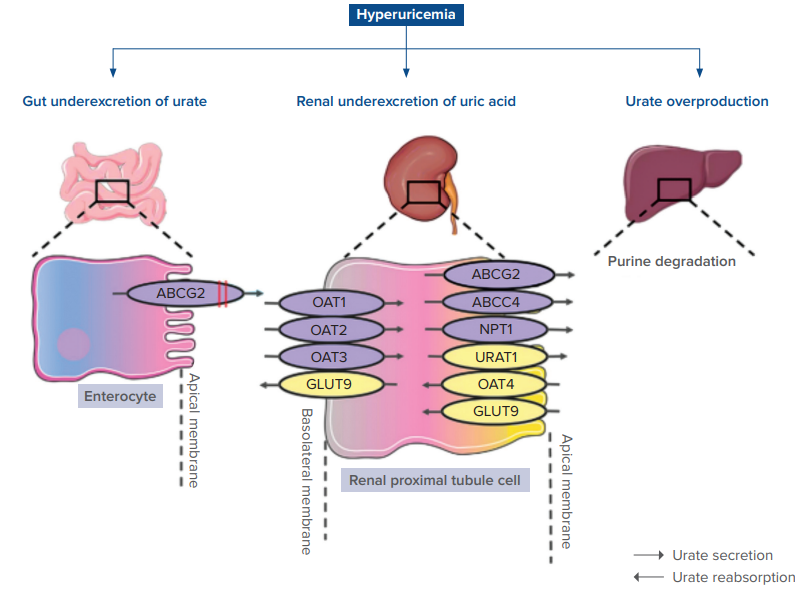
Table 1: Uric acid elimination from human body
Li L, Zhang Y, Zeng C. Update on the epidemiology, genetics, and therapeutic options of hyperuricemia. Am J Transl Res. 2020 Jul 15;12(7):3167-3181. PMID: 32774692; PMCID: PMC7407685
Etiology and pathophysiology/span>
Hyperuricemia due to uric acid overproduction
a. Diet and drug induced:
- Excess Dietary Purine intake of seafood, sugarsweetened beverages, dried beans, meat.
- High fructose in the diet causes hyperuricemia as the hepatic metabolism of fructose through the aldolase reductase pathway produces uric acid.
- Alcoholic beverages, among men, beer and whiskey had the highest increase in the levels of serum uric acid whereas, among women, only beer had the steepest slope when serum uric acid levels were plotted against alcohol consumption, the wine had moderate while whiskey had less steep slopes. This is because beer contains the highest amount of purines when compared to other beverages.[6]
- Iron-rich food and supplements can enhance serum uric acid levels indicating a causal connection between hyperferritinaemia and hyperuricemia.[7]
- Cytotoxic drugs.
b. Errors of purine metabolism: inherited enzyme defects
- Hypoxanthine-guanine phosphoribosyltransferase (HGPRT) deficiency.
- Phosphoribosylpyrophosphate (PRPP) synthetase overactivity
- Glucose 6 phosphatase deficiency.
- Glycogen Storage Disease type-1.
c. High cell breakdown or turnover
- Lymphoproliferative diseases
- Myeloproliferative disease
- Hemolytic disorders
- Paget disease
- Psoriasis
- Tissue Hypoxia
- Extreme exercise
- Glycogen storage disease (type III, V, VII)
Hyperuricemia due to decreased uric acid excretion
Impaired urinary excretion is responsible for hyperuricemia in 90% of individuals. Underexcretion is a combination of decreased glomerular filtration, reduced tubular secretion, and enhanced tubular reabsorption.
It is seen in conditions like
a. Variants in gene-encoding transporters regulating renal and gut uric acid clearance
- SLC2A9; ABCG2, PDZK1, etc
b. Monogenic disorders
- Tubulointerstitial kidney disease: AD
- Glomerulocystic kidney disease
c. Clinical disorders
- Chronic kidney disease
- Lactic acidosis
- Starvation or Diabetic Ketoacidosis
- Hypovolemia
- Lead Nephropathy
- Obesity and Insulin Resistance
- Pre-Eclampsia
d. Drug or diet-induced
- Diuretics: Loop and Thiazide
- Niacin
- Pyrazinamide
- Ethambutol
- Cyclosporine and Tacrolimus
- Low dose salicylates
- Levodopa
- Laxative abuse
- Salt restriction
Proximal tubular reabsorption of uric acid is controlled by uric acid transporter 1 (URAT1) located in the apical cell membrane. This transporter can be stimulated by organic acids medications and reduced extracellular fluid volume resulting in hyperuricemia.
Hyperuricemia may also be associated with hyperuricosuria (urinary excretion >800 mg/day in men and >750 mg/day in women). Fractional excretion of urate (FEUA) indicates the net urate excretion by the kidney (normal males: 7.25 ± 2.98%).
Healthy subjects have an average FEUA in the range of 6–8%, whereas gout patients generally have an average FEUA of 3–5%.
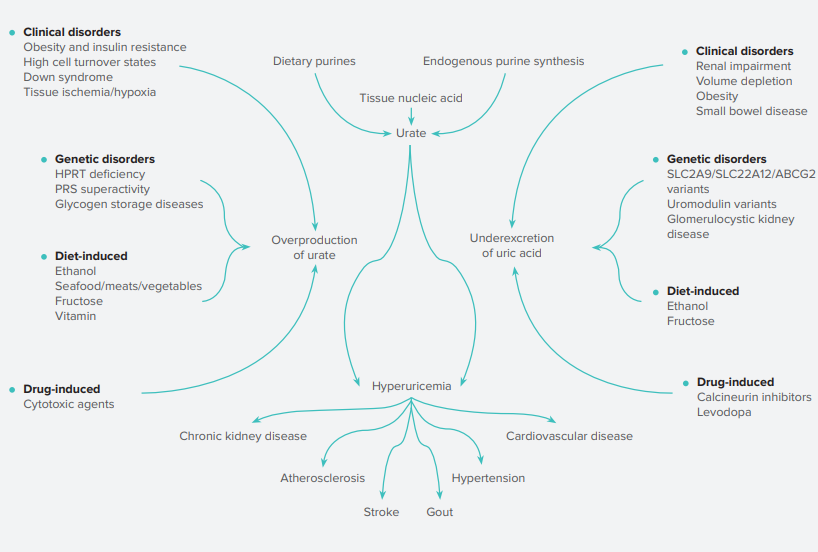
Figure 2: Uric acid secretion
Li L, Zhang Y, Zeng C. Update on the epidemiology, genetics, and therapeutic options of hyperuricemia. Am J Transl Res. 2020 Jul 15;12(7):3167-3181. PMID: 32774692; PMCID: PMC7407685
Hyperuricemia in special situations
Hypertension
Hyperuricemia is often accompanied by hypertension and other metabolic disorders. It is an independent modifiable risk factor for hypertension.[8]. Hyperuricemia (40%) is found in both primary and renal hypertension. The incidence is higher among patients with hypercholesterolemia and in patients with azotemic.
It does not result from the overproduction nor is genetically linked. Hyperuricemia is not correlated with the duration of hypertension, level of blood pressure, or serum potassium concentration. Impaired excretion of uric acid from low glomerular filtration rate and reduced tubular secretion due to disturbed lactic acid metabolism contributes to pathophysiology.
Elevated serum urate in primary or secondary gout, familial hyperuricemia, or glycogen storage disease induce or accelerate kidney damage. High concentrations of uric acid in renal blood and filtrate precipitates in the renal medulla, induces degeneration thereby contributing to renal damage that accompanies hypertensive disease. The correlation between Hyperuricemia and Hypertension risk exists irrespective of the presence of metabolic syndrome.[9]
Hypertension
There is a significant positive relationship between PTH level and uric acid levels, independent of the renal function of the subject. Uric acid levels have been found to decrease after parathyroidectomy and Teriparatide, a recombinant PTH used as an anti-osteoporotic agent has been found to increase the incidence of hyperuricemia in a dose-dependent manner. The exact mechanism is unclear but PTH is thought to affect the transport of uric acid in PT in the kidney through an unknown mechanism.
Thus, it is suggested that gouty patients, particularly with recurrent gouty urolithiasis, should be screened for hyperparathyroidism and that hyperuricemia should be sought in suspected cases of primary hyperparathyroidism.[10]
Cardiovascular system
There is emerging evidence of hyperuricemia in patients with uncontrolled gout playing a role in contributing to cardiometabolic comorbidities. Studies have shown that increases in serum uric acid levels may be tied to an increased risk of cardiovascular disease and mortality.
Both gout and cardiovascular disease are associated with systemic inflammation and oxidative stress, which accelerates atherosclerosis. In addition, hyperuricemia is associated with endothelial dysfunction as well as the oxidation of lipoproteins within atherosclerotic plaques.[11]
Heart failure
Elevated Uric Acid level is an independent risk factor for poor prognosis, disease progression, and mortality in patients with heart failure. In patients with an ICD, UA above 6.1 mg/dl may be a predictor of ventricular tachyarrhythmias.[12]
According to experts’ opinion, the targeted Uric Acid level should be below 5mg/dl in patients with hyperuricemia and high cardiovascular risk (with two out of 6 risk factors: hypertension, dyslipidemia, diabetes, CKD, history of MI/stroke).
Diuretic-induced hyperuricemia
Thiazide and loop diuretics tend to cause a dose-dependent type of hyperuricemia and possibly even gout. They tend to increase renal uric acid reabsorption either directly or indirectly through volume depletion. The net increase in relative risk of gout by diuretics is almost 80%. An alternate or concurrent antihypertensive, including an angiotensin II receptor blocker (especially losartan) or an angiotensin-converting enzyme inhibitor, is recommended in patients with gout flares. Most patients with diuretic-induced gout are treated with a xanthine oxidase inhibitor, such as allopurinol. However, if the patient is asymptomatic, no treatment is needed.[13]
Chronic kidney disease
The relationship between hyperuricemia and renal impairment has been a subject of debate till 2019, the KNOW-CKD trial, a prospective cohort study of patients with CKD, tried to investigate the relationship between the level of serum UA and the prevalence of CKD[14]. This study classified patients into quartiles based on their serum uric acid level and revealed that the prevalence of advanced CKD was higher in patients with a high uric acid level. Hyperuricemia is not only the result of renal impairment or sharing the risk factors with CKD but is also the cause of renal function impairment.
Mechanism of renal damage:
- Crystalline effects: Deposition of Uric Acid crystals causes crystal-induced inflammation and macrophage activation, inflammasome-mediated inflammatory response and activation of the nuclear factor-κB signalling pathway. Uptake of Uric Acid by the tubular epithelial cells induces the epithelial cell to mesenchymal transition.[15]
- RAAS Stimulation: Stimulation of the renin–angiotensin– aldosterone system and activation of the vasoconstrictors due to hyperuricemia results in elevated intrarenal pressure and afferent arteriolar hypertrophy.[16]
- Intracellular effects of Uric Acid: Soluble uric acid (UA) activates inflammasome-mediated inflammatory response and intracellular UA increases oxidative stress leading to mitochondrial dysfunction.[17]
Tumour lysis syndrome (TLS)
Acute urate nephropathy, defined as UA precipitating in tubules with plasma levels usually above 15mg/dl, develops most often due to TLS induced by radio or chemotherapy received for myeloproliferative and lymphoproliferative disorders.
Treatment of hyperuricemia
Most patients with hyperuricemia are asymptomatic and do not need medical therapy, except for patients undergoing cytolytic therapy for malignancy to prevent tumour lysis syndrome.
Gout: The American College of Rheumatology recommends that patients with 2 or more gout attacks a year should be treated, but a lower threshold can be used based on the severity of the gout flares and patient preference. Other indications for treatment include gouty bone erosion, structural joint injury, polyarticular disease, hyperuricosuric nephrolithiasis and tophi.
Colchicine is frequently used to treat acute gout. It binds the tubulin protein, preventing microtubule formation and polymerization. It also has anti-inflammatory and anti-fibrotic effects. Patients starting uric acid lowering therapy should be considered for prophylactic colchicine to minimise the risk of an acute gouty flare. Slowly introducing hyperuricemia medications can also decrease the risk of gout flare attacks
Tumour Lysis Syndrome (TLS) is treated with aggressive hydration and pharmacotherapy. Prevention of TLS in cancer patients is the gold standard. Pharmacologic prophylaxis should begin at least 24 hours before the start of antitumour therapy. Allopurinol due to the risk of xanthine nephropathy is only used in patients at intermediate risk whereas rasburicase should be the standard therapy for high-risk patients. In case of G6PD deficiency or renal dysfunction, febuxostat may be considered.[18]
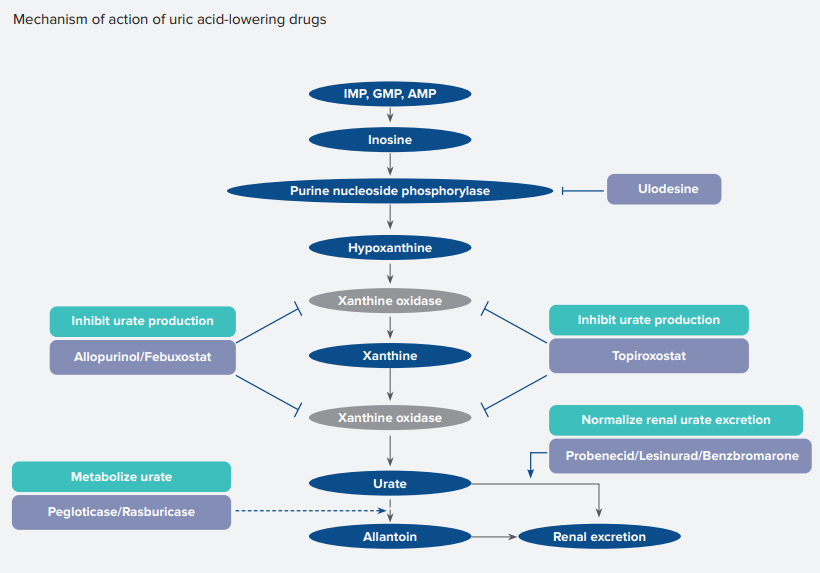
Figure 3: Mechanism of urate-lowering therapy for hyperuricemia. Numerous agents can be applied to inhibit urate production, promote renal urate excretion, and increase purine metabolism to allantoin
Li L, Zhang Y, Zeng C. Update on the epidemiology, genetics, and therapeutic options of hyperuricemia. Am J Transl Res. 2020 Jul 15;12(7):3167-3181. PMID: 32774692; PMCID: PMC7407685
There are three types of uric acid-lowering medications:
-
Xanthine Oxidase inhibitors: They block the hepatic oxidation of xanthine to uric acid. Xanthine does not cause gout, is nontoxic until very high concentrations, and is much more soluble in urine than uric acid.
-
They block the hepatic oxidation of xanthine to uric acid. Xanthine does not cause gout, is nontoxic until very high concentrations, and is much more soluble in urine than uric acid.
The usual starting dose is 100mg /day with CrCl > 60 ml/min with dose titration every 2-4 weeks. A fall in uric acid occurs within 2 days with steady-state levels in 2 weeks. Target Uric acid is < 6 mg/dl and < 5 mg/ dl in patients with tophaceous gout. Generally used as a single dose unless GI disturbances warrant split doses. In Renal disease, stage 3 or more CKD start with 50 mg/ day and up titrate every 4 weeks.
Allopurinol can cause rash, hypersensitivity and severe cutaneous reactions. This generally occurs within the first 3 months of drug initiation. HLA-B*5801 positive patients are at increased risk of cutaneous reactions. Hypersensitivity reactions are more common in patients with asymptomatic hyperuricemia accompanied by cardiovascular or renal diseases.[19]
Patients with high CV risk and intolerant to Allopurinol, Pegloticase works well if available otherwise guarded use of Febuxostat at a lower dose is advisable.
-
Febuxostat: Febuxostat is a non-purine xanthine oxidase inhibitor. The metabolism of Febuxostat is dependent on uridine diphosphate glucuronosyltransferase (UGT) enzymes cytochrome P450 (CYP) enzymes and non-P450 enzymes.
The recommended starting dose is 40-80mg/day and can be increased after 2 weeks depending on the target uric acid levels achieved.[20] Febuxostat works well even at CrCl as low as 15 mL/Min. It is associated with gout flares, thromboembolic CV events
-
Topiroxostat: It is a non-purine xanthine oxidase inhibitor. Additionally, Topiroxostat can restrain ATP-binding cassette transporter G2 (ABCG2), which is involved in the restoration of renal uric acid and uric acid secretion from the intestines.[21]
-
-
Uricosuric agents: Uricosuric agents work by increasing the renal and urinary excretion of uric acid. Uricosuric agents work by inhibiting the URAT1 anion-exchanging uric acid transporter system in the brush border of renal proximal tubular cells. This causes increased urinary excretion with a corresponding drop in serum uric acid levels. These agents are not generally suitable for patients with hyperuricosuric nephrolithiasis and are most useful when urinary uric acid is less than 800 mg daily. Thus an increased fluid intake during the therapy may reduce the rate of urolithiasis.
-
Probenecid: It inhibits URAT1 and several other anion transporters, increasing renal uric acid excretion by reducing reabsorption. It is typically used as secondline therapy for gout as it is considered less potent than other uric acid-lowering medications. It is started at a dose of 500mg once or twice daily and the dose is titrated to achieve the therapy target.
Probenecid can be used in patients who cannot tolerate xanthine oxidase inhibitors and is often used with colchicine for gout prophylaxis. It has many drug interactions limiting its clinical use. Probenecid can also increase the incidence of uric acid nephrolithiasis, so this should be closely monitored. It is also relatively contraindicated in patients with grade 3 or higher CKD.[22]
-
Lesinurad: Lesinurad, a common URAT1 inhibitor, restrains the levels of serum uric acid via the suppression of URAT1 and OAT4. URAT1, a uric acid transporter, is associated with uric acid reabsorption from the renal tubule. Organic anion transporter 4 (OAT4), a uric acid transporter, is linked with the sodium-independent transport and excretion of organic anions, involved in diuretic-induced hyperuricemia.[23]
-
Dotinurad: It is a highly selective URAT1 inhibitor and effective uricosuric agent available only in Japan that appears to be equivalent to benzbromarone and febuxostat in overall uric acid lowering ability. It is being evaluated for possible approval in the US and Europe.[24]
-
Benzbromarone: It is a URAT1 inhibitor type uricosuric drug, more effective but less selective than Probenecid, used earlier for gout and hyperuricemia but has been withdrawn from the market due to grave hepatotoxicity
-
-
Recombinant uricase: Recombinant uricase drug use is limited for severe and recurrent gout inadequately controlled by xanthine oxidase inhibitors or uricosuric agents alone due to parenteral administration and risk of infusion reactions.
It is estimated that about 2% of all patients with gout may be refractory to standard therapy. Such patients either have intractable hyperuricemia, two or more gout attacks while on therapy, or persistent subcutaneous tophi unresponsive to maximum dosages of conventional therapy.
Recombinant uricase drugs do not interfere with uric acid production or change its excretion. They are effective in lowering uric acid in serum and urine but their long-term use is associated with the production of anti-drug antibodies and reduced efficacy.
-
Rasburicase: Rasburicase, a recombinant uricase, catalyses the conversion of uric acid to allantoin, which is a metabolite existing in an inactive and soluble form. Rasburicase seems to have an advantage in the speedy correction of hyperuricemia compared with allopurinol. However, it has no clinical benefit in cancer patients with tumour lysis syndrome (TLS) in patients with concurrent renal failure.[25]
The dose is 0.2 mg/kg IV daily for 5 days, no dose adjustment is required for kidney dysfunction. It can lead to peripheral edema, skin rash, GI symptoms, Headache and Anxiety. It also leads to severe hemolysis.
-
Pegloticase: Pegloticase is a recombinant uricase (uric acid oxidase) that was FDA-approved in 2010 for chronic gout refractory to standard therapy. It is given as 8 mg IV every 2 weeks.
-
Losartan, atorvastatin and fenofibrate have mild uricosuric effects and can be considered adjunctive agents in patients with hypertension (losartan) or hyperlipidemia (atorvastatin, fenofibrate).[26][27][28]
Figure 4: Approach to hyperuricemia
Li L, Zhang Y, Zeng C. Update on the epidemiology, genetics, and therapeutic options of hyperuricemia. Am J Transl Res. 2020 Jul 15;12(7):3167-3181. PMID: 32774692; PMCID: PMC7407685
References
- Chen C, Lü J-M, Yao Q. Hyperuricemia-related diseases and xanthine oxidoreductase (XOR) inhibitors: an overview. Med Sci Monit 2016; 22: 2501-2512, DOI: 10.12659/msm.899852
- Zhang X, Liu L, Liang R, Jin S. Hyperuricemia is a biomarker of early mortality in patients with chronic obstructive pulmonary disease. Int J Chron Obstruct Pulmon Dis 2015; 10: 2519-2523, DOI: 10.2147/COPD.S87202
- Shin HS, Lee HR, Lee DC, et al. Uric acid as a prognostic factor for survival time: a prospective cohort study of terminally ill cancer patients. J Pain Symptom Manage 2006; 31: 493-501, DOI: 10.1016/j.jpainsymman.2005.11.014
- Desideri G, Castaldo G, Lombardi A, et al. Is it time to revise the normal range of serum uric acid levels? Eur Rev Med Pharma- col Sci 2014; 18: 1295-1306
- The physiologic approach to hyperuricemia Asghar Rastegar MD, Samuel O. Their MD
- Fukui S, Okada M, Rahman M, Matsui H, Shiraishi A, Nakai T, Tamaki H, Kishimoto M, Hasegawa H, Matsuda T, Yoshida K. Differences in the Association Between Alcoholic Beverage Type and Serum Urate Levels Using Standardized Ethanol Content. JAMA Netw Open. 2023 Mar 1;6(3):e233398. doi: 10.1001/jamanetworkopen.2023.3398. PMID: 36930152; PMCID: PMC10024203
- Richette P and Latourte A. Hyperferritinaemia and hyperuricaemia-a causal connection? Nat Rev Rheumatol 2018; 14: 628-629
- Anchala R, Kannuri NK, Pant H, Khan H, Franco OH, Di Angelantonio E, Prabhakaran D. Hypertension in India: a systematic review and meta-analysis of prevalence, awareness, and control of hypertension. J Hypertens. 2014 Jun;32(6):1170-7. doi: 10.1097/HJH.0000000000000146. PMID: 24621804; PMCID: PMC4011565
- Hyperuricemia in primary and renal hypertension by PaulJ. Cannon, MD William B. Stason MD
- Hyperuricemia in hyperparathyroidism by Daniel H. Mintz, MD, John J. Canary, MD
- Hyperuricemia and cardiovascular risk by Lauren Shahin and Komal M. Patel
- Nodera M, Suzuki H, Matsumoto Y, et al. Association between serum uric acid level and ventricular tachyarrhythmia in heart failure patients with implantable cardioverter-defibrillator. Cardiology 2018; 140: 47-51, DOI: 10.1159/000488851
- Desideri G, Castaldo G, Lombardi A, et al. Is it time to revise the normal range of serum uric acid levels? Eur Rev Med Pharma- col Sci 2014; 18: 1295-1306
- Oh, T.R.; Choi, H.S.; Kim, C.S.; Bae, E.H.; Ma, S.K.; Sung, S.A.; Kim, Y.S.; Oh, K.H.; Ahn, C.; Kim, S.W. Hyperuricemia has increased the risk of progression of chronic kidney disease: Propensity score matching analysis from the KNOW-CKD study. Sci. Rep. 2019, 9, 6681. [CrossRef]
- Xiao, J.; Zhang, X.L.; Fu, C.; Han, R.; Chen, W.; Lu, Y.; Ye, Z. Soluble uric acid increases NALP3 inflammasome and interleukin- 1beta expression in human primary renal proximal tubule epithelial cells through the Toll-like receptor 4-mediated pathway. Int. J. Mol. Med. 2015, 35, 1347–1354. [CrossRef]
- Watanabe, S.; Kang, D.H.; Feng, L.; Nakagawa, T.; Kanellis, J.; Lan, H.; Mazzali, M.; Johnson, R.J. Uric acid, hominoid evolution, and the pathogenesis of salt-sensitivity. Hypertension 2002, 40, 355–360. [CrossRef] [PubMed]
- Kang, D.H.; Nakagawa, T.; Feng, L.; Watanabe, S.; Han, L.; Mazzali, M.; Truong, L.; Harris, R.; Johnson, R.J. A role for uric acid in the progression of renal disease. J. Am. Soc. Nephrol. 2002, 13, 2888–2897. [CrossRef] [PubMed]
- Middeke JM, Schetelig J, Bornhäuser M. Prevention and treatment of tumor lysis syndrome, and the efficacy and role of rasburicase. Onco Targets Ther 2017; 10: 597-605, DOI: 10.2147/OTT.S103864
- Yang CY, Chen CH, Deng ST, Huang CS, Lin YJ, Chen YJ, Wu CY, Hung SI and Chung WH. Update on hyperuricemia 3181 Am J Transl Res 2020;12(7):3167-3181 Allopurinol use and risk of fatal hypersensitivity reactions: a nationwide population-based study in Taiwan. JAMA Intern Med 2015; 175:1550-1557
- Zhang M, Solomon DH, Desai RJ, Kang EH, Liu J, Neogi T and Kim SC. Assessment of cardiovascular risk in older patients with gout initiating febuxostat versus allopurinol: population-based cohort study. Circulation 2018; 138:1116- 1126
- Strilchuk L, Fogacci F and Cicero AF. Safety and tolerability of available urate-lowering drugs: a critical review. Expert Opin Drug Saf 2019; 18:261-271
- Granados JC, Bhatnagar V , Nigam SK. Blockade of Organic Anion Transport in Humans After Treatment With the Drug Probenecid Leads to Major Metabolic Alterations in Plasma and Urine. Clin Pharmacol Ther. 2022 Sep;112(3):653-664. [PMC free article: PMC9398954] [PubMed:35490380]
- Lesinurad/Allopurinol (Duzallo) for gout-associated hyperuricemia. JAMA 2018; 319: 188-189
- Hosoya T, Furuno K, Kanda S. A non-inferiority study of the novel selective urate reabsorption inhibitor dotinurad versus febuxostat in hyperuricemic patients with or without gout. Clin Exp Nephrol. 2020 Mar;24(Suppl 1):71-79. [PMC free article: PMC7066279][PubMed: 31970593]
- Martens KL, Khalighi PR, Li S, White AA, Silgard E, Frieze D, Estey E, Garcia DA, Hingorani S and Li A. Comparative effectiveness of rasburicase versus allopurinol for cancer patients with renal dysfunction and hyperuricemia. Leuk Res 2020; 89: 106298
- Milionis HJ, Kakafika AI, Tsouli SG, Athyros VG, Bairaktari ET, Seferiadis KI, Elisaf MS
- Feher MD, Hepburn AL, Hogarth MB, Ball SG, Kaye SA. Fenofibrate enhances urate reduction in men treated with allopurinol for hyperuricemia and gout. Rheumatology (Oxford). 2003 Feb;42(2):321-5. [PubMed: 12595630]
- Würzner G, Gerster JC, Chiolero A, Maillard M, FallabStubi CL, Brunner HR, Burnier M. Comparative effects of losartan and irbesartan on serum uric acid in hypertensive patients with hyperuricaemia and gout. J Hypertens. 2001 Oct;19(10):1855-60. [PubMed:11593107]